GURU TV – How To Free Up Your Driver Swing Using Visualization


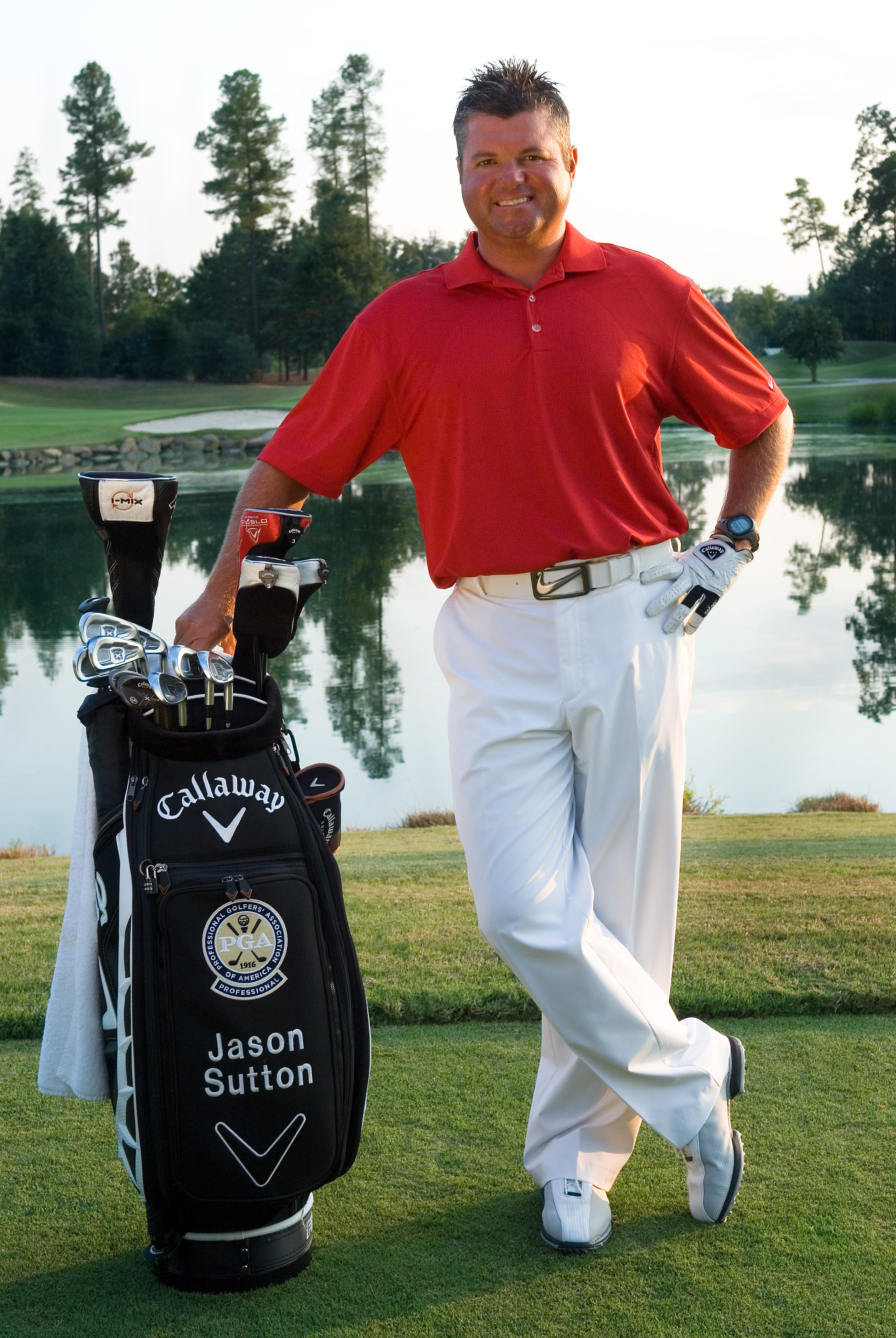
As I wrapped up my last day of family vacation at Beautiful Fripp Island, I couldn’t resist the urge to shoot some video. So I hired my daughter as my film crew (which cost me several virgin Pina Colata’s) and my wife even shot some behind the scenes footage of Guru TV. I included this really cool shot of me hitting the shot as she got me just after impact. This a great image that I think will help you hit more fairways. I hope you enjoy it and feel free to share with your friends and leave a comment below.
 
Check out our website @www.danarader.com
follow me on twitter @twitter.com/golfgurutv
 
See you on the lesson tee,
 
Guru
 

Rory Mcilroy: Golfs Next Star wins first major: How did he do it?


iron swing

I first heard of Rory when he was 16 and was playing in European tour events and making cuts. A curly haired, freckled face kid. Looking more like Howdy Doody than an athletic icon, McIlroy has grown and matured into a world beater. I followed Rory around the back nine at Quail Hollow as he shot 62 to win the Wachovia Championship going away. As he faced a 40 footer on 18 with a couple of shot lead, he took no time and knocked it in like it was a five footer in a practice round. I saw the same look in his eyes this week as he destroyed the best of what the golf world has to offer by eight shots….and he left a few out there which is scary. As we watch these twenty something golfers come up through the ranks, Rory is by far the most talented and seems to be able to handle the pressure of Championship golf. As a coach, it is interesting to see how everyone marvels at the swing or technique of the hottest players going. Just like in the late 90’s and early 2000’s, we all wanted to swing like Tiger and I guarantee we loved to compare our students to Mr. Woods swing because he was playing better than anyone in the world for a unbelieveable extended time. (now he has changed it 3 times?) Would you have taught your students to swing like Jim Furyk if he would have been so dominant? hmmm? Well? So now we all want Rorys swing and what is not to like? He has great basics, athleticism, hits all the right positions, flow and power. But this is the same guy that missed several cuts in the past at big events and collapsed at this past April’s Masters, right. So I think aside from his wonderful golfing motion, first class short game and putting…It is the mental maturity and attitude that allowed him to stay out of his own way throughout the U.S. Open and win going away. I love the press conferences and learn so much about a player by listening close to what they say and how they say it. Rory mentioned (and was asked many times so he had no choice) about Tiger Woods. He said he thought a lot about what Tiger would do (2000 Open) which helped him keep his fire even when he had a big lead. This was very apparent when he got so upset after making a bogey on the 17th even though he had a huge lead but that is how you have to play in that situation. Tiger’s goal in the 2000 Open was to go bogey free even though he had a huge lead. He played a tournament against himself, set mini 3 hole goals which is what Rory did and it helped keep him in the moment up till the last putt. So we will see how this plays out as one major is just a start a legendary career. A lot of great players have won only a single major.   So lets not start comparing this young phenom to Tiger or Jack until we see some consistency over a long period of time as golf is a very fickle game and can come and go as you all know. Let Rory enjoy his unbelievable performance and be a young man who I already admire so much, not as much by his golf game but they way he has handled failure and now how he will handle success. His dad should be very proud of the man that he has become. Wise beyond his years for sure.

I am sure that I was not alone as I stood in my man room and chanted,”Let’s Go Rory” as he simply was spectacular for 4 rounds in our major championship. The U.S. players need to take notice. Who is going to step up and stop him? Only time will tell. I am so fortunate to have been able to watch Jack Nicklaus at the end of his run, Tiger Woods in his prime and now Rory McIlroy starting his.

Check out our website @www.danarader.com and follow me on twitter @www.twitter.com/golfgurutv or friend me up on facebook.com/jasonsuttongolf

See you on the lesson tee,

Jason

Pre-Shot Routine: A Live Look In with The Guru


This is a custom two day school that I do for James Donnelly, Todd Halpin, Kevin Clark and Chris Caso every year. I thought I would just turn the camera on, let it run and see what came out of it. This is a talk that I give my students in how to get their changes from the lesson tee to the golf course. In part 2, listen for the ball flight question from JD, a very educated golfer asks these questions. Our customers are getting smarter and more educated so you have to be ready. Let me know what you think of this impromptu look at what I do on a daily basis. Here is part 1: 

Here is part 2:

Please share this if you think it is useful and leave a comment at the bottom

follow me on twitter @twitter.com/onplanegolf

To schedule a lesson with the Guru please call 704-542-7635

See you on the lesson tee,

Jason

20 Days With the Guru, Day 16:The Forgotten Pre-Swing Fundamental


You have heard the saying,”It is hard to make a putt with hour hands around your neck,” we have all been in situations where we get nervous or uptight on the golf course. It usually involves a first tee or a shot that applies pressure because it has a special meaning to us. It could be a final putt or a drive in which we have a chance to break a career low barrier or win a big tournament. Our mind and our thoughts become our worst enemy. We can sabotage a great opportunity to succeed by tightening up our muscles, owe mouth gets dry and we can’t swallow or what?………….Breathe dawg, breathe! That was my caddy bringing me out of my coma on the last hole. We have all heard how important a sound pre shot routine is to transferring a skill that is easily executed on the practice range by ourselves, yet being able to pull it off under pressure become quite difficult.
Several years ago, I attended a teaching summit where I saw a popular sports psychologist, Dr. Dick Coop speak on this very subject. Dr. Coop coached the likes of Payne Stewart and Corey Pavin. He went through all the physical fundamentals of a good routine such as starting from behind the ball, picking an intermediate target etc. The thing that I found interesting was where he said to breathe. Yes, you heard me. Breathe! It seems simple but so important. It is amazin how we forget sometimes                              Here is what Dr. Coop said:
THE 3 PLACES TO BREATHE
1.Standing behind the ball as you visualize – this is where the tension starts and the fear creeps in. Take a cleansing breath as you picture your shot. It will help you think clearly and keep your rhythm.
2. As you walk into the ball- The pace that you walk into the ball will dictate the tempo of your swing. (sing your favorite slow song in your head).
3.As you waggle and get ready to pull the trigger- This is where most players choke. A deep cleansing breath will help alleviate the tension and ward off any negative thoughts that might creep in. Also, if you focus on breathing you won’t have room for these sabotaging thoughts.

The Importance Of Breathing and the Lympathic System 

In order to help my students with there breathing and to learn more about the importance of it, I found a cd program from Tony Robbins, one of my favorite success coaches,  that I found most helpful in explaining how and why to breathe. I share this will all of my students as I do a playing lesson or work on pre-shot routine. Here is a exerpt from Tony Robbins program, Enegise for Life :

There are many benefits that arise from making deep breathing a part of your daily routine, most of which are due to the fact that deep, cleansing breaths give your lymph system a helping hand in clearing out the toxins from your body.

What is the Lymphatic System?

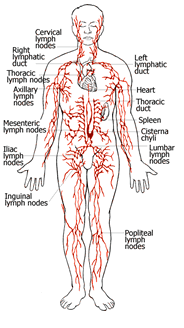
The lymph system is commonly referred to as the body’s sewerage system. It works by acting in harmony with the blood, surrounding every cell in the body and protecting each one by removing dead cells, blood proteins and any other toxins and excreting them from the body. The toxins are then removed from the body through our waste products, mucus, or our skin.

The body is hugely dependent upon the lymph system, to the point whereby if the lymph system was shut down for 24hrs you would die as a result of the trapped toxins and proteins surrounding our cells.

In addition to deep breathing, rebounding can be a further way to stimulate your lymphatic system.

The lymph that is collected around the body drains through two ducts into the blood, which are located at the base of the neck (around the thoracic duct). By breathing we stimulate the flow of the lymph, and through deep breath we can encourage the flow to be both cleansing and powerful. Once we breathe, the duct sends the lymph into our blood flow, then onto the liver where it metabolises and then onto the kidneys where the toxins are filtered.

 
Deep breathing is so important because, unlike our blood flow, the lymph system does not have a ‘pump’ to push the lymph fluids around our bodies. Rather, the lymph system requires the muscular movement which is created by breathing.

As well as acting as a filter, the lymph system is also able to destroy bacteria, viruses and abnormal cells, such as cancer cells. So enough of the anatomy lesson, lets talk abou how we should breathe. Here is an excersice that I want you to try.

Breathe In the Following Ratio

Breath in for 1 count

Hold for 4 counts

Breath out for 2 counts

for example – if you were to breath in fo 4 seconds,then you hold your breath for sixteen seconds and then breath out for eight. If you are able to do this ten times, three times a day (morning, evening, and before bed), you will see a huge difference to your energy, clarity and your ability to ward off illness.

This is why runners, yoga enthusiasts don’t get sick that often.

So pratice your breathing, work it into your pre-shot routine. Go have fun and I can promise you that you will be cool under pressure and finish off that career round.

Feel free to share this blog if you find it helpful by hitting one of the social site buttons below. Leave a comment as well

See you on the lesson tee and don’t forget to, well you know,

Jason

20 Days With the Guru, Day 10: How Important Is The Caddy To a Player and How to Be Your Own Luper


Sara Brown

Caddy programs at golf courses are not the norm any longer but if you ever get the chance to play a round of golf with a caddy, I highly recommend it. Professional golfers are used to having someone carry their bag during a round but a good caddy can mean so much more to the performance of the player. Recently, Sara Brown (big break star) made it through q school to earn

The Golfers Brain

her LPGA Tour card. For those who don’t know this, her boyfriend, Derek Radley is one of my good friends as he used to work with me at the golf school. Derek has been by Sara’s side through the grind of playing the futures tour and ultimately making the big jump to the tour by caddying for her. Here is an article that I found that highlights an instance where Derek had to make a tough call as a caddy (and a nervous boyfriend) coming down the stretch. click here to read the article. Congratulations to Sara and best of luck on the tour in 2011.

So how important is a caddy? Does the decisions they make, what they say or how they say it make a difference to the performance of their player? Absolutely. This is where it is important that they know the players tendencies, moods, mannerisms so that they know when to say something and also when to say nothing. This is why the best players tend to have caddys that have been with them for a long time. The most notable are Phil Mickelson and “Bones Mckay” and Tiger and “Steve Williams”. Here is a great article about Bones that I found. click here

A good caddy has the ability to help his or her player focus on the shot at hand with a simple phrase like “pick a good target” or “smooth swing big guy”. The caddy can also be a sounding board for venting frustration after a bad shot. So caddying is more than just getting a correct yardage, handing the player a club or raking a bunker. We have seen many instances where the caddy plays a big role in a young players first win by keeping them focused coming down the stretch. So what can the average player do on the weekend when they don’t have a caddy to talk to them or calm them down after a bad shot. WE MUST BE OUR OWN CADDY AND PLAYER COMBINED! SO HOW DO WE DO IT? HERE ARE SOME KEYS TO BEING YOU OWN CADDY:

THE CADDY PRE-SHOT ROUTINE AND SELF-TALK

A pre-shot routine should last around 40 seconds. The first half of that is what I call the caddy stage. This would include: 1)planning the type of shot you want to play, 2) getting a yardage, 3)choosing a club, 4)assessing the conditions…lie of ball, wind, up hill or down hill etc. The POST ROUTINE is also very important. I teach my players
ANCHORING techniques. How you react to a shot is critical in the success of the next shot, good or bad. example: When a Sorenstam shot 59, in order to keep her emotions even keel, her coach Pia Nilson told her to giggle to herself after every shot (good or bad). Obviously anchoring is easier after a good shot so let’s focus on the bad ones. I give my players 6 seconds to get upset before they have to let it go or when ever they put the club back in the bag (whichever comes first). Self Talk is also important (the caddy in you). How many times have you beat yourself up, called yourself a bad name (big dummy or worse)…. How did that work out for your next shot. Let it Go, brother. How many times have you stood over an importance shot and a thought popped into your mind like, “just DON’T HIT IT IN THE WATER!” where did it go…….The water. The subconscious mind can not differentiate between positive and negative commands. So you just hit the ball where your brain told your body to hit it. Next time how about asking the question,”Where’s My Target?”

Not to get into a whole mental discussion but you must be your own best friend, like Bones or Stevie. Be kind to your self and use self talk to pump your self up or motivate not to annihilate.

The play our best golf when we allow our subconscious (the garden) mind take over. The conscious mind (the gardner) seems to always get in the way. Thats enough for today so I will leave you with some food for thought, some bread for the head. Before every shot, we plant something…..seed of hope or doubta …………we can choose to plant flowers or we can plant weeds……….Champion Golfers plant beautiful flowers

Let’s connect: to follow me on twitter @twitter.com/onplanegolf

See you on the lesson tee,

Jason

20 Days With the Guru: Day 2: Set Your Expectations Accordingly….This Just In – GOLF IS HARD


Day 2 of the Guru blogging chronicles leads me to a topic that I have been thinking about for some time. STUDENTS EXPECTATIONS!…..When a student asks me how long it is going to take to reach their golfing goals, I try to be honest with them as to not dispirit their eagerness to learn. Every case is different. As like a marathon race (not a sprint!), some get to the finish line quicker than others. The catch is, with the right coach, philosophy,plan,  time, commitment and sacrifice…..Everyone will cross the finish line. The key is to set your goals and expectations accordingly. In the golf swing, we are using a bent stick with a weight on the end….making an 18 foot circle and trying to hit the ball on the clubface in a sweet spot the size of a dime. Let’s face it. GOLF IS HARD and any person that tells you otherwise or any teacher that says,”I try to keep it simple,” Is out of their mind. I have coached many great athletes that have played NFL football, Major League baseball,  Division 1 college basketball, tennis and professional lacrosse and they all say the same thing. Why can’t this be as easy as (______). Because golf is hard people. Harder than any other sport I can think of.  That is why I love it so much because it doesn’t matter what level that you get, you will never be satisfied, never mastered and you never completely own it. You are lucky to just rent it for a few months like Tiger Woods in 2000. Ask Tiger how hard golf is right now….you with me?  Here is an example: I consider myself a better than average athlete. I played baseball, basketball and football at one time before deciding to play golf in college. I haven’t played or shot basketball for several months (since the Achilles rupture, hehe), and I can guarantee that  I could go out to the court, practice for a few minutes and then shoot at least 80% from the free throw line and make a few three pointers. If I took that much time off from golf, there is not way that I could play to the equivalent level. I could go into the batting cage and make contact with a fastball after a short amount of work (I actually did it last week with my kids). Not that I could play professionally but you get the point, right.

YOU CAN’T CHEAT GOLF, SO DON’T TRY

To improve at golf, there has to be many hours of dedication, repetition and sacrifice. You can’t just pick up a club, read a tip from a magazine and go play your best. I have no sympathy for the student that takes lessons, doesn’t practice and complains that they aren’t getting better. It takes repittition people and you can’t fake it.

BE EASY ON YOURSELF

After asking the question why did you think you could shave 25 shots in 6 months to a student, here is the excellent feedback that I got that helps me understand why people fall into this trap.

1. the professioanals on TV make it look so easy

2. I work hard and anything I set me mind to I usually succeed at (I love this attitude by the way)

3. I have the best coach in the world (I swear he said it….just kissing up but I will take it)

All valid points but we have to understand that unless you are playing for a living, golf is a hobby. We shouldn’t take it so serious as to let it affect us as people. Your golf score is not who you are as a person.

STICK TO YOUR PLAN AND SET MINI-GOALS

Now I am not saying that if you are getting worse that you should be happy, just fire the coach (just ask the Cowboys). I am saying that if you trust your coach, your plan and are seeing improvement…..keep plugging away and you will get there. Set reasonable goals so you aren’t always disappointed and enjoy this great game. Remember……It is a marathon not a sprint and you will be fine. Talk to you tomorrow

Follow me on twitter @twitter.com/onplanegolf

See you on the lesson tee,

Guru

Your Golf I.Q. Part 2: How To Raise It


As my previous post on how to raise your golf I.Q. got a tremendous amount of feedback from my peeps from Guru Nation and Twitter, I know that you have been patiently awaiting the follow-up post. You may have found yourself in a one or a few of the categories that were included in the former post and you are thinking,”Hey Guru, I want to change. How do I raise my Golf I.Q.? I have bought into the “As If” philosophy and am ready to start thinking above my current level of play. Help me help you! How many of you googled Boiler Room? Organized your clubs or Burned your iron head covers? That’s what I am talking about, so who’s coming with me? As I write this post, I am watching Justin Rose trying to hang on to win his second P.G.A. Tour event and just shows you how hard it is to win at the highest level. Did he lose his swing or did he just lose his mind last week. We will see how he does coming in. Back to this post. Here is my list to help raise your golf I.Q. and get  you in the mindset that “You are the Best Player in the World” (thank you Alan for that wonderful comment)

1.  Learn to dress like a player: Don’t be afraid to wear a white belt and/or white pants. If we are emulating the best players in the world this is important. If you dress like a player, you just might play like one. I have not seen anyone on the tour that has a belt with a sailfish or your club logo on it…..I’m just sayin. Dress as If and no high socks either. I don’t care if they have a swoosh on it….save that for the basketball court. You know who you are! Get a white belt.

2.  Put a hybrid in your bag: Don’t be afraid of technology. Next to the golf ball, the hybrid is the biggest jump in technology in the last 5 years. Take the 2 and 3 iron out of your bag and insert hybrid. You will thank me later.

3.  Read up on your golf history. How many majors has Jack Nicklaus won? 18 people. To have a passion for the game, you must know some history. I suggest you learn about the greats of Hagen, Hogan, Trevino, Ouimet, Old Tom Morris etc.

4. Take at least 4 lessons per year. I don’t care is Tiger thinks he can get better without a coach. Golf is a sport where feel isn’t real and even the best players need another set of eyes and some motivation to get better. Do your research, find a coach and stick with him/her. If you don’t you can’t complain that your game is  getting worse.

5.  Get fit for a new driver on a launch monitor. It is amazing what the correct fit will do to maximize your driving. The numbers don’t lie and an expert fitter can get you twenty yards in a heartbeat. Is your driver holding you back, go find out. I recommend Stan Roach at www.danarader.com.

6.  How are your wedges and putter? In the year of the last year of non-conforming grooves, buy a new wedge of at least 58 degrees. If you don’t own or can’t use a lob wedge you may as well add 5 shots to your score before you tee off. Aside from putting, pitching is the most important part of the short game………learn to pitch it and you can’t with your pitching wedge….just saying. recommend the Callaway X/Jaws or Cleveland with zip grooves. This is the last year that they will make them with non conforming grooves.

7.   Be a stat keeper: If you are not aware of your basic stats, how do you really know your strengths and weaknesses. Take inventory of your game so you know what to work on. The educated golfer works on the things that they do well so get out of your comfort zone and start to work on your weak areas like putting. I recommend www.shotbyshot.com. Let’s be smart about our golf games and where to practice.

8. Understand the physical basics of the golf club. An educated student understands that you must do two things with the golf club. 1) swing the club on or parallel to the plane that is created at address. 2)strike the ball with the shaft leaning toward the target…..Impact people. Any other philosophy is not golf!

9.  Do Not Fall Victim To Golf’s Misconceptions: Head down, left arm straight, tuck the right elbow…..NO! Here is are thoughts of an educated student: swing the club on plane (see #8), hit the inside quadrant of the ball, release the head with the body, the low point of my swing is even with my front shoulder, flat lead wrist/bent rear wrist, swing to right field, stay connected, find the slot, hit the lowest shot possible around the greens, I practice my putting because it IS important.

10. Be your own best friend: I can’t believe what you just said to yourself! In an recent excercise that I did with one of my elite juniors, I said,”Imagine that you are on playing lessons with the pros and you are the pro.” “Describe what you are going to do with this shot.” I heard him say that he was going to kinda hit it over there and sorta let it land at this spot and hope it trickles down to the hole……No, No, NO. You have to be committed and exact with what you are telling your brain and body to do. Let’s be committed to every shot. If you talk like this to yourself, stop. Justin Rose did and he just won for the second time this year. I suggest reading the 30 second golf swing by T.J. Tomassi.

Good Luck and don’t forget to breathe. The fact that you are reading this blog, raises your I.Q. already…..thanks so much.

See you on the lesson tee and I hope you had a happy 4th,

Guru……………..704-542-7635

Guru’s Keys To Breaking 80:”How To Join This Elite Club”


The Bullet Proof Vest For Golf

Every golfer has goals. Mostly of breaking one of three scoring barriers: breaking 100, breaking 90 or breaking 80. The lower you get the more difficult this achievement becomes. According to NGT Research, there are over 60 million golfers in the world today and less than half of them will never break 100.  33% will break 90.  However, only 5% will ever break 80.  That’s 3 million people out of 60 million golfers. So this makes breaking 80 an elite club for sure. If you have done it once in your life, congratulations. For those of you who follow the guru’s blog already know my formula for breaking 100 and breaking 90. Recently, one of my twitter friends posed the question,”What are your keys to breaking 80?” So after some thought and a bit of research, Here are my keys to success. Building from my list of breaking 90…………..

1. Drive the ball in play and average 230 yards. I am assuming that you are shooting in the low 80’s from the back tees at this point.

2. Most Important: You must average 8 greens in regulation. Assuming you make at least 2 of 8 birdie putts and don’t three putt. This leaves 10 greens that you have to chip, pitch and hit bunker shots.

3. Get it up and down an average of 40 percent of the time. This leaves us a few shots to play with

4. Limit three putts and average 32 putts per round. 2nd most important stat.

Get in the habit of keeping your vital statistics of your rounds of golf. FIR, GIR, Putts/round and up and down pct. If you are looking for a website to keep stats and track your progress, I suggest ShotbyShot.com.  This will give you starting point and show you how close you are to reaching this barrier that most golfers can’t cross. Of course, this is just my opinion and there are many factors that go into a golf game that help make up the level of player but this is a great place to start. Here are a couple of ideas that just might get you over the hump if you are trying to turn 81 into 79.

1. Use the 80/20 rule. If you do find trouble, don’t be Phil Mickelson and try to hit the career shot. If you can’t pull it off at least 80 percent of the time, play it safe. Punch it out and make your bogey.

2. Aim for the middle of the green. Refer to my past post of the stop light theory. There are very few green lights out there, proceed with caution and hit more greens.

3. Work on your mental side. Focus on pre-shot routine and TARGET and quit playing golf swing. Ask yourself 2 questions before every shot……”Where’s my target?” and “How do I want to play this shot”…..Sure beats standing over it saying, “Just don’t hit it in the water”

Best of Luck with your golf and enjoy the journey. I will see you on the lesson tee.

Are you tweeting? Friend me up @twitter.com/onplanegolf and get use the @sign to join the conversation.

Guru……….. call 704.542.7635 to schedule a lesson or check out our website at danarader.com

Are You Shooting at Every Flag?


I haven’t posted much on the mental side but this is something that I teach in my playing lessons every time. Most amateurs have no business even looking at a flag that isn’t in the center of the green. If there were no flags in the greens, what would you shoot? Most of you would play better. Here are my three factors that will help you decide on how to pick smarter targets.

1. How are you swinging? Do you have you A, B or C swing? Always have a pulse on your momentum. This will help you stick to your game plan. If you are playing well or playing poorly, stick to the plan.

2.  What club are you hitting? I suggest you rate your clubs. 1=favorite 2=medium 3=I loath this one

3.  Where is the flag located? I use the stop light system. Red Light: A tucked pin that you should never shoot at unless you are playing a captains choice. Yellow Light: An exposed pin that is close to the front or back of the green. You must be careful with your club selection because you could leave it short or knock it over the green. Green Light: A pin that is in the middle of the green and you can fire at all day

When making decisions on your approach shots, the ideal situation is when you have your A swing, A #1 club and A green light pin. This is what we call The Go Zone. If you are struggling with your swing, hitting 2 and 3 rated clubs and getting red and yellow pins………..Play it Safe. Hit more greens and shoot lower scores. Stay tuned for the next installment of The Jeff Passage Project….coming soon

See you on the lesson tee,

Guru

SBS Championship- A Tale Of Two Routines


As we look at the first P.G.A. Tournament of the season, after we get past the fact that we would love to be in Hawaii, we take a closer look at what champions do and how golf is played at the highest level. As I continue my quest to make you a more educated viewer of golf tournaments in attempt to learn something to help your own game, let’s see what we can learn from the final group in the SBS Championship. We have two top players that have both won U.S. Opens and had an excellent 2009. So why did Geoff Ogilvy shoot 67 and Lucas Glover stumble to a 76 after leading the tournament after 3 rounds? Continue reading “SBS Championship- A Tale Of Two Routines”