For many of you, the week of the Masters constitutes the start of your golfing season. Even if the weather isn’t great where you live, after you watch the tournament it makes you want to go play. As this is the 25 years after the greatest Masters Tournament, the 1986 Masters, it brings me back to a philosophy that many legendary coaches bring into the start of any season. Revisiting the basics. Every year, Jack Nicklaus would go to his coach, the legendary Jack Grout and say,”Let’s start over and review the basics.” Grip, Posture, Ball Location and alignment. The great UCLA basketball coach, John Wooden would start every season by showing his players how to properly put on their socks as to not create blisters early in the season and jeopardize valuable practice time. Coach Halas, the Green Bay Packers coach started every training camp by introducing his players to,”Guys, this is a football.” No one is too good for a spring brush up. My mini-tour players and advanced tournament players always start the season by asking me to check their grip and posture because they understand that without these things being in place, the rest of the swing is working on a faulty foundation. So this is a call to action for all of you golfers out there getting ready to start your season. Before you start to practice and in grain some bad habits, go to your coach and ask them to begin with the basics and work from there. You will be glad that you did. Here is a video that I did last year that will give you a head start to checking your grip and posture. Two of the most important basics that will help you put the ground floor on the house of your 2011 golf swing.
To schedule your lesson with the Guru and get your season started off right call 704-542-7635.
One of the most frequent questions that I get as an instructor is,”Guru, How do I get my swing back on track when things go wrong on the golf course.” If I could market that answer I would be a rich man. After studying the best players in the world and watching how they manage their swings while playing, this is the best answer that I could come up with. As you watch the Masters Tournament this week, look out for these Strange looking rehearsal swings and check back with me next week. Leave your Masters pick or any comments below.
Please share this vidoe post with someone if you feel it was helpful
This past Tuesday I had the opportunity to speak at the Area vi spring meeting of the Carolinas P.G.A. A big thank you to Woody Allen our area director for asking me to present to the group. I was very excited to share with my fellow professionals some of the things that I have learned in the past few years in the realm of instruction and also how to use social media and marketing to help their business and themselves grow. I have to thank a few important people who helped me construct my presentation and gave me outstanding feedback and ideas on how to deliver this important message. First to my lovely wife, Tiffanie who helped me with my Powerpoint and made sure that I had the presentation that I wanted and also for putting up with my long hours on the computer and on the phone with my mastermind crew. I don’t deserve her but without her support I would not be where I am today. To my mastermind crew who allowed me to bounce ideas and gave me great insight on the information that I was presenting: John Graham (johngrahamgolf), Rob McGill (golfprorob), Jason Helman (jasonhelmangolf) Jay Reid (jayreidgolf) and Scott Fossum (scottfossumgolf). Special thanks to my student and friend, Gene Casiola for helping me with my opening. I have a lot to work on with my public speaking but I wanted to share the video and allow my peeps to give feedback on how I can improve. I really enjoyed my time and I appreciate everyone who came up after the talk to thank me or ask for advice. If you ever need to ask a question or if I can help any of you in any way feel free to email me @jasonsuttn@aol.com or hit me up on twitter.com/onplanegolf. I broke the presentation into 5 parts because it was about an hour and 15 minutes so if you don’t get to all of it I will house it on my corporate speaking page. Let me know if I can be a speaker at your function or group. Enjoy the video and please leave a comment below or share with someone. I appreciate your support and your feedback:
See you on the lesson tee. To schedule a lesson please call 704-542-7635
This is a custom two day school that I do for James Donnelly, Todd Halpin, Kevin Clark and Chris Caso every year. I thought I would just turn the camera on, let it run and see what came out of it. This is a talk that I give my students in how to get their changes from the lesson tee to the golf course. In part 2, listen for the ball flight question from JD, a very educated golfer asks these questions. Our customers are getting smarter and more educated so you have to be ready. Let me know what you think of this impromptu look at what I do on a daily basis. Here is part 1:
Here is part 2:
Please share this if you think it is useful and leave a comment at the bottom
follow me on twitter @twitter.com/onplanegolf
To schedule a lesson with the Guru please call 704-542-7635
I think we can apply this to our golf games and our jobs, whatever you may do. Thanks for the gret post and for the kind shout-out. I know I will be thinking of these swing thoughts as I prepare for some upcoming speeches. Thanks JD.
swing thought”
You’ve probably heard that body language is important when communicating.
How important? UCLA Professor Emeritus of Psychology Albert Mehrabian believes that non-verbal communication accounts for more than 50% of the success of getting your message across. (To be exact, Mehrabian believes that words account for 7%, tone of voice 38%, and body language accounts for 55% of a listener’s ability to warm up to you or your message.)
There are nearly twenty non-verbal cues that make the difference between bad and great body language for communicators. However, when I conduct communications training/coaching sessions, I typically don’t share that list at the beginning of a session.
Why? I’m a golfer.
What if a golf coach told you: “Feet still…shoulders start the swing back…hands over your back foot…hinge at your waist…swivel your back to the target…pause at the top…start the downswing with the hips…drop the arms to the inside…strike the ball with a descending blow…rotate the forearms…finish high with all of your weight on the front foot.” How well do you think you’d swing?
Instead, a good golf coach would give you a swing-thought – a simple key that would enable all the other things to happen. It might be: “Swing around your sternum and drop your arms inside.” (I’m currently working on this one now with the terrific Jason Sutton of the Dana Rader Golf School.)
So, here’s my one body-language swing-thought for anyone addressing a large group of people or conducting a media interview:
“Be a more confident version of yourself, even if you have to fake it.”
With this one tip, I typically find that people begin to naturally address most of the items on the body language checklist. This list includes:
Adopting a more athletic and engaging posture
Speaking more deliberately and impactfully
Taking time to breathe and think
Using your hands to punctuate and illustrate key points
Making better eye-contact with the reporter/audience
Moderating your vocal speed and volume
The tip isn’t a magic bullet, but I’d say it has a success rate of about 4 out of 5. When it doesn’t work, then I’ll begin to address a few of the finer points, or I’ll try to introduce a new swing thought, customized to address a person’s body-language faults.
I hope this tip helps you…almost as much as I hope to begin hitting a consistent draw.
On Wednesday April 13th, I will be teaming up with Golf Digest Top 50 Instructor and Golf Magazine Top 100 instructor, Todd Sones, for a full day scoring game school. The school will run from 9:00 until 3:00 and include lunch and impact golf school manual. You will learn all the shots from 30 yards and in including how putter fitting can help your stroke. This is a rare opportunity to work with one of the best short game instructors in the game today. The school will be held at The Dana Rader Golf School and the cost is $495.00 per person. Space is limited so call the school @ 704-542-7635 to sign up today. Here is a video of the types of shots that you will learn with Todd and Jason.
See you on the lesson tee. Only 7 spots available to call today 704-542-7635
Recently I attended our Carolinas section Teaching Summit at Myrtle Beach. Our feature spreaker was Michael Breed. You might have seen him of the Golf Channels “golf fix”. You know….”The let’s do this” guy. I was interested to see him because you never know how people are in real life as opposed to a television show. I have to tell you that I was presently surprised at some of the things that he shared in his talk. I am always resectful to the guys that are up on stage because I would love to be that guy someday sharing information to other professionals and giving back to the section. So as long as I am in the audience, I try to approach with an opn mind for learning. There are different ways that teachers can do a presentation (teaching theory or motivational). Michael was definitley leaning towards the motivational side of things. So here is how it went.
He opened up his talk by showing a video of himself with people that he had met through his career in golf while he blasted a country song called “I’m a lucky man” which I thought was interesting. He started out with a quote by Chuck Swindoll that states:
“The longer I live, the more I realize the impact of attitude on life. Attitude, to me, is more important than facts. It is more important than the past, the education, the money, than circumstances, than failure, than successes, than what other people think or say or do. It is more important than appearance, giftedness or skill. It will make or break a company… a church… a home. The remarkable thing is we have a choice everyday regarding the attitude we will embrace for that day. We cannot change our past… we cannot change the fact that people will act in a certain way. We cannot change the inevitable. The only thing we can do is play on the one string we have, and that is our attitude. I am convinced that life is 10% what happens to me and 90% of how I react to it. And so it is with you… we are in charge of our Attitudes.” – Chuck Swindoll
Be thankful when a student comes out for a lesson because”they chose you” and we shouldn’t take that for granted.
Big on technology and the use of video. He thinks that the future lies in phone applications. He is creating some of his own
He said he tries to communicate to his students and on the tv show on a “3rd grade level”. Made me think of a statement that I heard Martin Hall make which is : Understand it like Homer (Kelly) but communicate it like Harvey (Penick).
Book Recommendations : The Talent Code (which I have read which made me feel good) and several books from John Maxwell (which is one of my favorite authors as well)
He said “If you credit other people for your information, you appear smarter. Great point as information is passed down from coach to coach, be sure to tell them where you got it.
He said that he a socratic teacher. So I looked up the definition and this is what I found:
Be a Socratic Teacher: definition of “the Socratic Method of Teaching : His most important contribution to Western thought is his dialogical method of enquiry, known as the Socratic method or method of elenchos, which he largely applied to the examination of key moral concepts and was first described by Plato in the Socratic Dialogues. For this, Socrates is customarily regarded as the father and fountainhead for ethics or moral philosophy, and of philosophy in general.
The Socratic method is a negative method of hypotheses elimination, in that better hypotheses are found by steadily identifying and eliminating those which lead to contradictions. The method of Socrates is a search for the underlying hypotheses, assumptions, or axioms, which may unconsciously shape one’s opinion, and to make them the subject of scrutiny, to determine their consistency with other beliefs. The basic form is a series of questions formulated as tests of logic and fact intended to help a person or group discover their beliefs about some topic, exploring the definitions or logoi (singular logos), seeking to characterise the general characteristics shared by various particular instances. To the extent to which this method is designed to bring out definitions implicit in the interlocutors’ beliefs, or to help them further their understanding, it was called the method of maieutics. Aristotle attributed to Socrates the discovery of the method of definition and induction, which he regarded as the essence of the scientific method. Oddly, however, Aristotle also claimed that this method is not suitable for ethics.
A skillful teacher can actually teach students to think for themselves using this method. This is the only classic method of teaching that is known to create genuinely autonomous thinkers. There are some crucial principles to this form of teaching:
The teacher and student must agree on the topic of instruction.
The student must agree to attempt to answer questions from the teacher.
The teacher and student must be willing to accept any correctly-reasoned answer. That is, the reasoning process must be considered more important than facts.
The teacher’s questions must expose errors in the students’ reasoning or beliefs. That is, the teacher must reason more quickly and correctly than the student, and discover errors in the students’ reasoning, and then formulate a question which the students cannot answer except by a correct reasoning process. To perform this service, the teacher must be very quick-thinking about the classic errors in reasoning.
If the teacher makes an error of logic or fact, it is acceptable for a student to correct the teacher.
****I think all great teachers are a form of this. Ask better questions and get better answers.
He then talked about the importance of playing lessons and helping golfers get from the range to the golf course. Here are some mental ideas that might help coaches and players alike:
1. The Law of possibility – He makes the student aware of all of the possible outcomes of each shot and then gets them to focus on the desirable one. ex. it could go left , it could go right but it could also fly at the target
2. If Don’t / Then Don’t – very simple strategy that I teach as well. If you find yourself thinking ” don’t do something”, then don’t hit the shot. start your routine over.
3. What you tell yourself doesn’t have to be true, As long as you believe it. (anyone think of Seinfeld here?). ex. I am the greatest athlete in the world.
4. Try to put the student in pressure situations: ex. crowded first tee or the last hole of a good round. Then you have a chance to help them
5. Watch your language: Do not say if, only say when!
I didn’t realize that his teaching specialty was putting. He considers himself a putting teacher and the tour players that he has worked with come to him for putting info. Likes the old school putting books by Horton Smith (which I own and highly recommend), Willy Park, Bobby Lock. Horton Smith was the first one to discuss hooding or delofting the putter. We know this as a forward press. Michael did a series of tests with different lofted putters and measured the distance. The less loft, the greater the distance the ball rolled because of the contact point on the ball. The more forward the shaft leans, the higher the contact point and better the roll. He recommends 3 degrees of forward shaft lean at impact. He likes the shoulders slightly open to help see the line and the eyes just inside the ball. He doesn’t believe in an arc or plane in putting either. So to conclude, he shared his story of how he got to be where he was.
The Whole Story
15 years ago he visited the local newspaper and they let him start to write some golf tips. He then visited a local radio show and offered to do some radio and they gave him a show. In the process he talked a local TV station into letting him do a golf tip on the news. He realized that he was pretty good on tv and he put together a pilot video for show. He submitted it to the Golf Channel 8 years ago and they said no. A few years passed and the Golf Channel gets bought out and wants to create new programming. They find his tape and say, this is our guy. They want to do the show on Tuesdays but he couldn’t do it because he had to do his job at the club. His owners were looking to cut his budget by 25%. He goes to the owners and says, I will cut my salary 25% if you will give me Tuesdays off. They thought he was the greatest. The rest is history. So if you think that he is an overnight success, you are wrong. He just got after it and made things happen. That is what I admire about him the most. Thats why he is up on stage and I was in the audience. I enjoyed the presentation and I hope you enjoy this recap.
In this video, I show one of the ways that I help to develop a better impact position with my students. Pay attention to the young man who does the demonstration as he is going to be a good one. His name is Aaron Walker. Please share some drills or ways that you help your students with this all important area of the golf swing?
As I continue to film new episodes of Guru TV, If you have come to my blog late and haven’t seen some of my old video shows, I thought I would bring back a few of the archives from days of old. This is a video that I did with one of my students and my TPI fitness expert that I work with, Mark Kane. As we start the golfing season it is important that you understand more about your body. What can it do and what it can’t do is important information to have in order to target these weak links in your fitness program. I highly suggest that you seek out an educated T.P.I. golf fitness instructor that can help develop a program that meets your needs. It always surprises me how many golfers that don’t know about The Titleist Performance Institute so click on the link to get more information
Follow me on twitter @twitter.com/onplanegolf and join the conversation
Please share this with a friend if you find it useful
See you on the lesson tee (704-542-7635 to schedule your time with the Guru)

 You’ve probably heard that body language is important when communicating.
  with the hips…drop the arms to the inside…strike the ball with a descending blow…rotate the forearms…finish high with all of your weight on the front foot.” How well do you think you’d swing?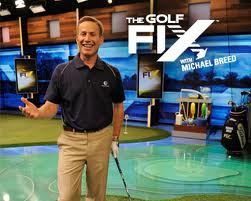
 The Golf Guru Show