20 Days With The Guru, Day 11- Guru TV – The Back To The Target Drill
December 16, 2010
See you on the lesson tee,
Jason
See you on the lesson tee,
Jason
see you on the lesson tee,
Jason
 How do you know what to practice? Most golfers tend to practice what they are good at because it is fun. You hit your favorite club so you can look good on the range because you are self-conscious about what you look like and how you are perceived. This is normal human behavior as no one wants to be embarrassed or look bad especially when it comes to golf. The serious and intelligent golfers practice their weaknesses instead of their strengths, you just have to be courageous and be able to take a good hard look at your entire game. So let’s say that you have bought into what I just said, the key is to first KNOW your WEAKNESSES. Only then can we get the most out of our practice sessions and really start to see improvement. I use a great piece of technology that will allow you to track your progress, target your weaknesses and be able to put together an intelligent practice program every time you go to the
practice ground. It is called SHOTBYSHOT. This is the best software to track your progress that I have ever seen. What I really like about it is that it compares your stats in each area of your game to your goal handicap. (example:if you are a 5 handicap and want to be a scratch, you will see what your stats should be in each area to reach your goal. It then highlights your weakest area so you know what to focus on in your practice). It also gives you precise stats on your putting from specified distances that you record after each round). I use this to Taylor practice sessions for my tour players and elite juniors. It makes it easy for the player and the coach to create a plan for improvement.
Once you start to record some scores into shotbyshot.com, here are some general recommendations for practice structure and a few drills that can give you measurement in each area of your game. Here is a link to Peter Sanders Blog (owner of shotbyshot.com)
Disclaimer******YOU MUST OWN YOUR GOLF GAME! AND YOUR PRACTICE!  Your coach should not have to force you to practice, if so, you don’t deserve to get better. Remember,”YOU CANT FOOL GOLF,”
DRILLS FOR MEASUREMENT
The Median Drill (short game)
also called the eleven ball drill. You can use this on any short game shot……pitch, chip, bunkers etc. Pick a shot. You can use multiple targets if you have more than 1 pin on your practice green. Hit eleven shots to your targets. Take away the closest 5 balls. Measure how close to the hole your 6th ball is. This is your distance.your goal is to decrease this distance. Clear measurement.
14 Ball Drill (driving accuracy)
Pick out an imaginary fairway on your practice range. Maybe two flags as wide as wide as your average fairway as a reference. Going through your golf course routine, hit 14 drivers as you would in a round of golf. Count how many that you hit into your imaginary fairway. MEASUREMENT! Set your goals accordingly.
30 foot drill (putting)
Measure off a 30 foot putt. It is approximately 10 steps. Lay a club or dowel rod 3 feet behind the hole. Hit ten putts in attempt to make the putt or leave the ball in between the 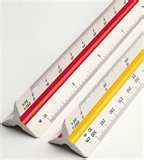 hole and the stick. Count how many you get in the zone. Measurement. This will help with your distance control.
Whatever your practice plan is, always include some form of putting practice.
So I hope this helps organize your practice in the upcoming season always remember,”In order to get to where you are going, you must know where you are. Only then can you figure out how to get there”
See you on the lesson tee,
Jason
As the P.G.A. Tour schedule wind down and we have time to catch our breath, we should  all find a quiet place to help us think. So what should we think about. What should we dream about. Should we look back on the past season of golf? Should we dare look ahead to the next year and want we want. The answer is YES, YES AND DID I MENTION YES. I don’t know where I find you in your golfing career. Some of you may be contemplating whether to play for a living. Some of you might be finishing up a college career (like the young Englishman that I gave a lesson to today), A few of you are looking to break new scoring barriers such as 90 or 80 and some might be just getting started with this great game. Regardless of where you are in golf, as long as you in it. That is what is important. As the stats reveal every year, there are just as many golfers leave the game as there are taking it up…..I am here to try to inspire you to embrace golf as you would your favorite blanket and let’s dream big for 2011. So what do you want Santa Guru to bring you for Christmas this year? Let me share my list of the 12 things I want under my tree:
12 new students with a passion for the game
11 junior golfers that want to play college golf
10 rounds of golf (compared to the 7 that I played this year)
9 new ideas about teaching and coaching that will help my students
 8 flat lead wrists at impact
7 birdies on 9 holes with 6 putts
6 phone calls for people asking me to speak at their seminar or function
5 great book ideas for the winter that will help me grow
4 different major champions under 30 years old (including Ricky Fowler, please)
3 trips to top a top ten golf course (hopefully Augusta National if anyone is wondering)
2 P.G.A. Tour players to coach
 1 Golf Magazine Top 100 List with my Name on it (It is spelled Jason E. Sutton)…..a guy can dream right
What can I do to help you reach your golfing dreams this upcoming year? I encourage all of you to evaluate your goals that you set this year, reflect, set goals for next year and develop a plan to get there. I would love to be a part of it.
Follow me on twitter @twitter.com/onplanegolf
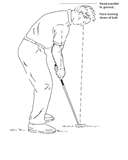 Do your putts ever bounce or get airborne? How do those putts turn out? Not so good, huh. When I teach putting, I stress the importance of solid contact in order to control distance. Solid contact is second only to club face control in the order of importance in a good putting stroke. The question is,”Should you hit up on the ball or hit down to achieve the best roll?” About 10 Years, I had the same question, so I decided to put a video camera on the ground to see what impact characteristics produced the best results.
What did I find?
 A ball hit with a shaft that leaned toward the target slightly produced a ball that had a small skid and then a consistent roll. The ball that was struck with a neutral to backwards leaning shaft tended to hop or bounce. Which way is going to be more consistent, the forward lean of course.
The worms eye view:
Even though the golf ball weighs slightly less than an ounce, on a soft putting green it creates a slight depression on the ground (a hole perse). If you hit a putt on the upswing, you will drive the ball down into the front of the depression and the ball will hop.
A Forward Press Helps:
A typical putter has 3 to 5 degrees of loft on it. In order to get a consistent roll, the last thing you want to do is add more loft. Good putters tend to be neutral or take loft away at impact. This is why I like to see a slight forward press at set up. This means that your hands will be positioned just ahead of the club face. I use high-speed video when I teach putting and I have found that 4 to 5 degrees of forward shaft lean seems to produce the most consistent roll and contact. The more I use “The Kure” putting solution training aid, the more I like it because it forces you to get your handle forward at impact in order to make the green light to come on. So why not go ahead and start there.
 Hit Down Not Up:
If you have always hit up on your putts for whatever reason, when you lean the shaft forward you will have the sensation of hitting down. If you are topping your putts, you are doing one of three things.
1) your lead wrist is breaking down
2) your weight or your head is too far behind the ball
3) your ball position is too far forward. Start with placing the ball a putter head length inside your lead foot.
A drill to find low point in your putting stroke
Place the grip end of a golf club about 6 inches behind your putter as you set up to hit a putt. Hit putts as you miss the grip in your backstroke. You will feel your stroke swinging from high in the backstroke to low in the follow through. This will help get your hands ahead at impact.
This something that you can work on in the house on the carpet. Best of luck and I will
See you on the lesson tee,
Jason
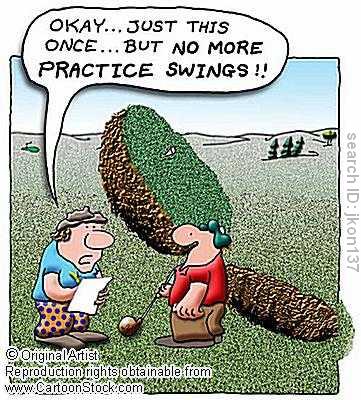 Day 2 of the Guru blogging chronicles leads me to a topic that I have been thinking about for some time. STUDENTS EXPECTATIONS!…..When a student asks me how long it is going to take to reach their golfing goals, I try to be honest with them as to not dispirit their eagerness to learn. Every case is different. As like a marathon race (not a sprint!), some get to the finish line quicker than others. The catch is, with the right coach, philosophy,plan, time, commitment and sacrifice…..Everyone will cross the finish line. The key is to set your goals and expectations accordingly. In the golf swing, we are using a bent stick with a weight on the end….making an 18 foot circle and trying to hit the ball on the clubface in a sweet spot the size of a dime. Let’s face it. GOLF IS HARD and any person that tells you otherwise or any teacher that says,”I try to keep it simple,” Is out of their mind. I have coached many great athletes that have played NFL football, Major League baseball, Division 1 college basketball, tennis and professional lacrosse and they all say the same thing. Why can’t this be as easy as (______). Because golf is hard people. Harder than any other sport I can think of. That is why I love it so much because it doesn’t matter what level that you get, you will never be satisfied, never mastered and you never completely own it. You are lucky to just rent it for a few months like Tiger Woods in 2000. Ask Tiger how hard golf is right now….you with me? Here is an example: I consider myself a better than average athlete. I played baseball, basketball and football at one time before deciding to play golf in college. I haven’t played or shot basketball for several months (since the Achilles rupture, hehe), and I can guarantee that I could go out to the court, practice for a few minutes and then shoot at least 80% from the free throw line and make a few three pointers. If I took that much time off from golf, there is not way that I could play to the equivalent level. I could go into the batting cage and make contact with a fastball after a short amount of work (I actually did it last week with my kids). Not that I could play professionally but you get the point, right.
YOU CAN’T CHEAT GOLF, SO DON’T TRY
To improve at golf, there has to be many hours of dedication, repetition and sacrifice. You can’t just pick up a club, read a tip from a magazine and go play your best. I have no sympathy for the student that takes lessons, doesn’t practice and complains that they aren’t getting better. It takes repittition people and you can’t fake it.
BE EASY ON YOURSELF
After asking the question why did you think you could shave 25 shots in 6 months to a student, here is the excellent feedback that I got that helps me understand why people fall into this trap.
1. the professioanals on TV make it look so easy
2. I work hard and anything I set me mind to I usually succeed at (I love this attitude by the way)
3. I have the best coach in the world (I swear he said it….just kissing up but I will take it)
All valid points but we have to understand that unless you are playing for a living, golf is a hobby. We shouldn’t take it so serious as to let it affect us as people. Your golf score is not who you are as a person.
STICK TO YOUR PLAN AND SET MINI-GOALS
Now I am not saying that if you are getting worse that you should be happy, just fire the coach (just ask the Cowboys). I am saying that if you trust your coach, your plan and are seeing improvement…..keep plugging away and you will get there. Set reasonable goals so you aren’t always disappointed and enjoy this great game. Remember……It is a marathon not a sprint and you will be fine. Talk to you tomorrow
Follow me on twitter @twitter.com/onplanegolf
See you on the lesson tee,
Guru
I feel like I am in a bit of a golfing rut. Writers block as they say. The problem isn’t the lack of ideas, it is too many ideas to choose from. So in an attempt to get some blogging 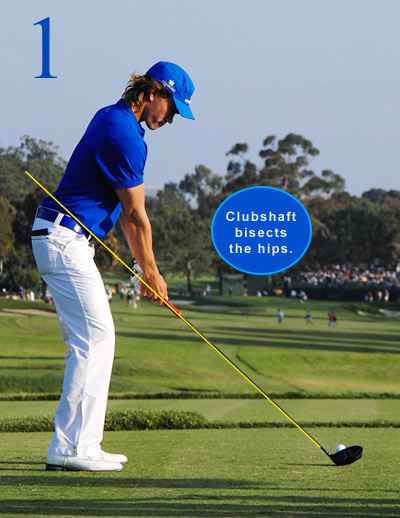 “FLOW”, I will be writing a tip, idea or whatever is on my mind for “20”, yes “20” straight days. The golf channel has 12 days at the academy…I have twenty days with the guru. I will attempt to educate you and entertain you as only my warped little golfing mind can do. So here is your idea for the day………………Understand the golfing instrument. “the club”
1. The club face, the club head and the club shaft all make up the tool that we use to propel the ball at the target. There are many methods, styles and ideas on how to create an efficient golf swing but it doesn’t matter as long as you adhere to the physicality of the way the club is built. (now it is up to you and your coach to figure out which one works for you). No matter what you are trying to do, there is no debating that there are two things the club must do to direct the ball in the manner that you wish.
1. Swing on a tilted “circle” on or parallel to the angle that the club rests on the playing surface “the ground”.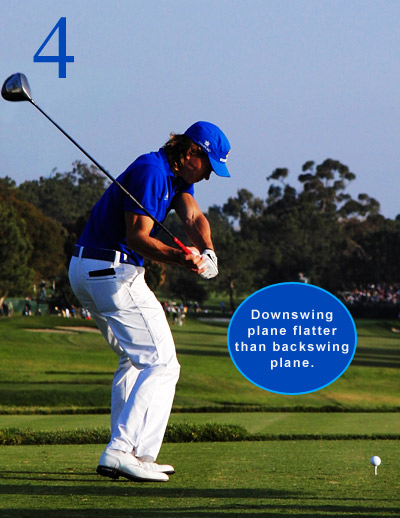
AN EASY WAY TO UNDERSTAND PLANE: The 5 Parallels
Assuming a stance that is square to the target, the club should be parallel to the target line at waist-high (1), parallel at the top of your swing when the club is perpendicular to the ground (2), parallel to the target line at waist-high on the downswing (3), parallel to the target line at waist-high on the front side (post impact)’(4) parallel to target line at three-quarters in the follow through.(5)2. Club face should be slightly open to the target line at impact and the ball should be struck on the inside quarter. The face of the club is only square a split second as the ball separates from the face.
3. The shaft of the club must lean towards the target in the impact zone as this is the key to compression and solid contact (also is the way the ball gets airborne).
For you expert golfers out there, you would be surprised at how many golfers don’t know these key physical basics of how to use the club, so bear with me as I never assume that my students or my audience knows anything……like a shanker that thinks he is hitting the ball off the toe of the club so they stand closer to the ball……what?
As we approach the winter season, get your golfing area in your house that will allow you to do some mirror work. I will expand on the importance of indoor practice as we move towards Christmas.
This is the best time to take a golf lesson because you aren’t playing as much so you are more likely to commit to a swing change. Stick with me and we will get an improvement plan in place.
Follow me on Twitter @ Twitter.com/onplanegolf
Until tomorrow,
Guru
As I reflect on my year and look ahead into the future, a key tool that I use is a writing journal. I have a journal for each area of my life: Spiritual, Family, Personal Development and Teaching. Before I can move forward, I must make certain that I am heading in the right direction. If you are serious about improving your golf game, I encourage you to start writing. No, you don’t have to write a book. Heck, you don’t even have to use proper grammar. As long as it makes sense to you, that is all that matters. I encourage all of my tournament players, elite juniors and serious golfer fanatics to participate in this practice of journaling. I have read hundreds of golf books over the years, some good and some not so good. No matter what I try to take something out of every one of them that will make me a better teacher or player. Nick Price wrote a book in 1997 called,”The Swing: mastering the Principles of the Game.” Although the instruction portion was average at best, the last chapter was interesting because Mr. Price published his swing journal that he kept while working with David Ledbetter. (The before and after pictures of his swing was quite interesting as well). Here is what he wrote which I think does a nice job of summing up the importance of keeping a journal from a major champion. He writes, ” During the course of my career I have kept a journal of my thoughts, primarily about my swing as I was working on it. I did not do this on a regular basis, but simply jotted notes down as they occurred to me, to reinforce ideas in my mind. Often after working with David Ledbetter I wanted to think about what we had discussed and to work things out in my own mind. Writing thoughts down helps me focus on what I want to do, and why.” When I look back through the journal now, I am struck by how I was obviously struggling toward the clear understanding of the swing that I sought. It is a never-ending journey that I enjoy-most of the time and keeping these notes helped me clarify matters.
Keeping a journal is a great way to keep thoughts that work (or don’t work) to remind yourself of what you are working on the last time you were on the lesson or the practice tee. Here is an example of one of Nick Prices’ journal entries:
Supination : This is created when the left hand remains bowed through impact. The forearm rotates after impact, releasing the clubhead down the line of the target, still in the plane of the swing. This is undoubtedly the secret to consistent ball-striking, especially with the irons. When the left wrist is bowed incorrectly through impact, errant shots will result, the most frequent type being a hook. To insure against this happening, the thumb of the left hand must remain on top of the shaft, with the clubhead coming in low and after impact released. The normal result when this is done correctly is a very piercing flight of the ball, essential for extremely accurate iron play! The things to remember while trying or using this move are:
1. Make sure the club is taken away low from the ball
2. Make sure the backswing is completed
3. make sure the weight is transferred
4. make sure a full turn is achieved
Wow! I don’t know about you but that is alot of stuff to work on in one session. This was only a portion of the post, believe it or not. I think this is the point of my career that I started giving my students less and less to work on in a lesson, right teachers. First understand that he is a tour player and it was his job to practice and secondly, he was a very analytical learner. The point is to jot down ideas that will keep you focused, you don’t have to write a book.
A Mental Excercise
For you “negative nellies” out there that only focus on the bad shots that you hit, try this in your journal. The next time you play, I challenge you to write down all the good shots that you hit (what club it was, yardage, how it looked, how it felt). This will start to project some positivity in your attitude and you will be amazed at how it will help your visualization skills.
So that is enough for now. Please share some of you goals for this past year and goals for 2011. I will post on how to help you set your goals if you are struggling soon. Leave a comment below.
Follow me on twitter @ twitter.com/onplanegolf or friend me up at facebook.com/onplanegolf
See you on the lesson tee (704-542-7635 to schedule a lesson)
Guru…….p.s. HAVE YOU PURCHASED YOUR DANA RADER GIFT CARD YET FOR CHRISTMAS?
Happy Thanksgiving to all of you golfers out there. This is my One Year anniversary of my blog (www.golfgurutv.com) and I am so thankful that you could be a part of helping me grow my community (Guru Nation). I hope that my posts and videos (Guru TV) have helpful and inspiring for your golf game. I am in the process of coming up with ways to improve my TV show and the overall way to promote the site in an attempt to reach more golfers around the world, so stay tuned as I try to make 2011 the best golfing year of your lives. I am often asked what my favorite training aids are and also what I am using in my teaching. As Black Friday approaches and Christmas shopping starts, here are a couple that I highly recommend you take advantage of for your golfing friends and spouses. Use the PROMO CODES and take advantage of some nice discounts. Here is my Christmas list and some archive videos to explain how they work. Enjoy and Happy Holidays to everyone.
The Kure Putting Solution : The best putting training aid on the market (promo code: 1.888.952.PUTT: USE DISCOUNT CODE PCD10231)
The Orange Whip: Great for off-season workouts and maintaining sequence and tempo in your golf swing (Use Promo code: GURU)
The Pivot Pro : Great for you lower body swayers
Follow me on twitter @twitter.com/onplanegolf or Friend me up on Facebook @facebook.com/onplanegolf (Jason Sutton)
To see these training aid in action, join me on the lesson tee by calling 704-542-7635 or visit our website @danarader.com
Guru
I was very flattered that Jason Helman, 2010 Ontario Section Teacher of the Year, contacted me and wanted to come on the “Guru TV” show. We had a great time talking about golf and teaching as we spent the afternoon together as he passed through on his way back to Canada. We shot 2 impromptu videos with very little planning. We just fired up the camera and let it rip. I hope you enjoy.
follow me on twitter @ twitter.com/onplanegolf or friend me up on facebook.com/onplanegolf
See you on the lesson tee,
Guru
 The Golf Guru Show