My Interview with Virgil Herring on Golf Talk America (Archive)


This is an interview that I did with Virgil on 104.5 thezone where we discuss the biggest myth in putting and also Tiger Woods and Chris Como. Mind you,this was in December of last year so don’t beat me up too bad if Tiger doesn’t make it back but I am still optimistic. I hope you enjoy! and leave your comments at the bottom.

http://www.stationcaster.com/player_skinned.php?s=1361&c=6731&f=4002353

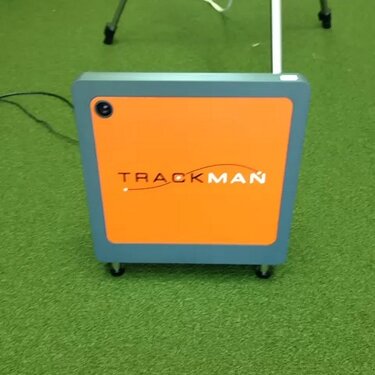
Carolinas PGA Presentation – Teaching w/ Trackman


Trackman

Thank you for reading my blog and watching the videos that I post. This is a presentation on the basics of how I teach with Trackman that I did for about 60 area golf professionals. My staff, Maggie Simons (@maggiesimons) and Josh Spragins (@joshspragins) presented as well and did an outstanding job. This is very basic information for most teachers but could be great for new coaches or students that might be interested in some of the information that Trackman and an expert teacher can provide. I wish I had the last 45 minutes where I show you how I change AOA, how I move my students into creating a feel and a little wedge information that I learned from James Ridyard and Andrew Rice but th camera battery went dead. I also did a presentation on how I teach putting and how I test my players that I will see if it was recorded and post if it came out. I already posted this on twitter but I wanted to get it on my website so if you already have seen it I understand. As always, leave comments or questions below. My talk will be a little more in depth at the Guru’s Workshop on March 23rd, so I hope you can join me and my friends for a great day.


Follow me on twitter @golfgurutv

Guru

How I Use Video For My Members (CGA TV)


This article is not designed to teach you how to use video in a golf lesson but to describe to 41441you (teaching pros/golf pros) how I use video as a communication tool for my members and students. As I come to the end of my 3rd year at the best club in America (Carmel CC), I look back on some best practices that I started that I felt was successful in allowing me to change the culture and the instruction perception to match my vision and goals for my team and for the club. The number one idea that we use to this day is filming video tips that I share with the members every week or two. There is not a day that goes by when I don’t pass a member with a kind word about the latest video tip and how it helped their game or that they need to come down and see myself or one of my team for a lesson. I realized early on that just because you have a large membership it doesn’t mean that they will come to you for lessons. They need to get to know the instructional staff, what they teach and who they stand for and there is no better way than shooting a quality video to let them get an idea of your personality, your presence and most importantly…..what you look like 🙂 I have also toyed with using video newsletters to communicate the programs that you have coming up or a simple reminder of anything that you want them to know about the instruction team such as introducing a new team member or an interview with a guest instructor or expert in the business.

EQUIPMENT RECOMMENDATION

To make quality videos you don’t have to necessarily have the most expensive camera or equipment. I use a simple Kodak Playful camera with HD quality video. The most important piece is the “wireless mic” for sure. The sound quality or lack their of can ruin a video quicker than a bad picture. I use the Asden wireless mic and it works fine for what we do. I also use Microsoft windows movie maker software to do some basic editing but you can purchase more expensive programs such as Sony Vegas which I used to use back in the day.

TIPS AND SUGGESTIONS

1) keep your message clear and concise (try to limit your non-words)

2) keep your videos 6 minutes or less (3 minutes is better but if it is longer it better be good)

3)start videos with a close up of your face and then zoom out as you describe your message. Let the audience see your face

4)Make sure your facing the sun so the picture is not shadowed and then can see you clearly. I did some great videos that were dark awhile ago and learned this the hard way

5) Always try to include a drill or exercise that the viewer can go to the range or putting green and try immediately (call to action is important)

The world is moving fast and the day of reading emails or written newsletters are coming to an end. Video is the what the people want and is the most effective way to communicate and get your members or students attention. I hope this helps as a best practice if you are looking for a better way to boost your teaching or golf shop business.

HERE ARE A FEW EXAMPLES OF SOME VIDEOS THAT I HAVE DONE

Thanks for reading and watching. What are some of your ideas that have worked for you? Dont be afraid to  share

follow me on twitter @golfgurutv


Guru


Using Strokes Gained Putting To Improve Your Putting with Alex van der Linden


BmfOjIBIQAA9Otm


I wanted to post this video for a couple of reasons. 1) I think it is very good information that can help you look at your putting and stats a different way and 2) I wanted to share with my viewers, tweeps and friends a very special person in my life that I won’t get to see everyday like I have for the past year and a half. Alex van der Linden and I met through a mutual friend, Brian Baille, on social media about a year and a half ago. Brian knew that I had been teaching putting and learning more about SAM Putt lab data and reached out to me to let me know that I may want to contact this young man who was a wiz on the putt lab. These opportunities come across your radar and many times we don’t take action but something told me that this is one that I might take a chance on. I called Alex and we met for lunch one Monday that I was off. We proceeded to go to the dojo to test some stuff on the putt lab. When we finally looked up, 6 hours had gone by and I was blown away by the information, knowledge and overall presentation of this young guy that looked like a young poindexter (and so his nickname was adopted). I wasn’t looking to hire anyone and he wasn’t really looking for a job but I had to create an opportunity for the both of us to work together. My first personal assistant was created. Even though he was officially working for me, I always felt that we were working together because I feel like I learned as much from him as he learned from me. He watched me give hundreds of lessons, we discussed swing and putting theory, he assisted me in putting lessons and fittings and slowly we developed a relationship in which we could pretty much read each others minds, which is scary. He was left brain and I was right. He taught me how to critical think and question the so-called answers and I taught him how to take all the information, put the pieces together and present in a golf lesson to the average golfer. It is always great to see young professional learn and grow as Alex has done. I look back on my career and remember when I was his age and think of how far ahead he is to this point. I have seen his life and his career change in the blink of an eye and to think that I may have been a positive influence on it is very rewarding. I am excited to see what the future brings in his next endeavor as he leaves me to join the staff at the Governors Club in Chapel Hill. I feel like that you will be seeing and hearing a lot from this up and coming superstar in the teaching business.

Ladies and Gentleman……It is my great pleasure to introduce my good friend…….The Golf Geek! Follow him on twitter @vandogolf


Best of Luck and God Bless My Friend,

Guru


How Has Your Teaching Changed? Or Has It?


download

During my snowbound days of being trapped in my house, I typically turn to twitter and the telephone to get the teaching juices flowing. So I posted the question tonight on twitter, “What is one thing are you teaching now that you didn’t five years ago due to new accurate information?” I got some very good answers that I would agree with like

1. The ball starts where the face is pointing

2. that hitting down doesn’t make the ball spin more

3. What it takes to hit a straight shotimages

With all the new technology such as Trackman, Flightscope, AMM 3D and KVest and soon to be GEARS…..we have some answers that maybe we didn’t have in the past that could change our views on the golf swing, club delivery, ball flight and equipment. There has been much debate on the research that some of the top scientist are doing that will definite help us understand much of what we couldn’t see with a video camera, such as rotation rates, ground force reactions, wrist speed, torques of the shaft etc. etc. etc. I still think there is a place for observational science as long as it is followed by positive change and results.   I am a big fan of research and although I am not a scientist, I still use these measuring tools to do my own research,  but I think the area that I am most interested once I get my head around this information is……wait for it! HOW DO WE COMMUNICATE THESE IDEAS TO THE AVERAGE GOLFER SO THEY CAN USE IT TO IMPROVE!images (1)

This is why I preach’ “Don’t be lazy in language” Learn to communicate by explanations that make sense and also learn how to move your students properly to create a feel to connect with the change. I know some teachers don’t believe this but this is what I believe. It does not show weakness in a teacher, it just another vehicle for long-term change. Ok back to the topic, sorry!

So here is what I have changed in my teaching in the last  5 years in its simplest form:

1. Knee action – I used to try to keep the flex in the rear leg but realized how I was hampering my student’s ability to get more shoulder rotation with is critical for overall shape of swing. Much more important than creating separation of hips/shoulders. I now let rear leg extend to increase hip turn.

2. How important hand path is to sweet spot controll. Hand path and how it relates to the force vector in the downswing relative to where the club head path is. All good players let the clubhead drop behind the hand path in transition and players that let hands get away from body in downswing get the shanks 🙂

3. How pivot style affects low point control – I definitely teach less weight transfer to the rear foot than I used to. I prefer to keep the center of the shoulders on top of the hips. It is not an absolute but it increases the chances of controlling the bottom of the circle. I know that weight/pressure moves to the backside so don’t start screaming. This has nothing to do with head movement although we tend to use the head as a reference, but I would prefer to not have too much side to side or bobbing.

4. Weight Forward Is a Big Deal – I definitely teach much more hip slide in the transition than I used to. In order to move the path direction to the right, which is what most of the students that I teach need, the weight/pressure has to move quicker and smoother to the front side. Sliding and keeping the hips closed longer slows the shoulders down to allow for the club to shallow out easier which helps the average golfer immensely. If you are trying to spin your hips to start your downswing (unless you are an under planer) you will pull the club out to in and across the ball.

5. More neutral shaft lean at address and impact in pitching  (and shallower A o A) – Thanks to Andrew Rice,  Mr. Vokey and Dave Nevelle from Titleist and Vokey wedges, I now understand how the wedge should interact with the turf properly. I used to teach a lot of shaft lean and a bowed lead wrist at impact. I now understand that this causes the club ….to dig too much and come out too low.I also now know that we need a shallower angle of approach to increase spin (not hitting down). I now teach a more neutral shaft with enough weight forward to still maintain low point and a solid strike. I also want the handle to move up and in at post impact.  For more information on wedges check out my friend Andrew Rice’s site at www.andrewricegolf.com

I have learned a lot more than just this 5 but I will leave the rest for my seminar in March.

download (1)

The point is. The great teachers are always learning. The great teachers aren’t afraid to say that they didn’t understand or I didn’t know that but I am glad I do now. If you are teaching the same stuff that you were teaching 5 years ago then you aren’t paying !attention.  We have to continue to learn from research but don’t forget one of the most important aspects of teaching: BEHAVIORAL SCIENCE. If you can’t relate your ideas to your student, then you have lost the battle of improvement. I don’t care how much you know about the golf swing. The great ones can do it all!

I am counting on YOU to help me grow the game!Behavioral-Science

Thanks for reading and don’t be afraid to share

follow me on twitter @golfgurutv

Guru
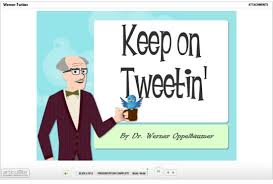
2013 Guru’s Top Twitter Active Teacher List (The Ultimate FF)


twitterAs the end of 2013 draws near, it is a great time to reflect on our year but also to recognize people in our industry that help grow the game in so many ways. I hope that you all have accomplished your goals and are ready to set new ones for 2014. I have had an outstanding year thanks to so many of you and my outstanding team (Adam Ohsberg, Maggie Simons and Alex Van der linden). I can’t tell you how much I appreciate your efforts as I have learned so much from you and enjoy watching your continued growth as professionals and as outstanding people.  Being recognized as the Carolina PGA Section Teacher of the Year is such a huge honor and I am so humbled by this award. Awards like this don’t happen without a lot of help and guidance from my mentors. The people who you choose to be around you says so much about who you are and what you twitter 4stand for.  I hope that the way I conduct myself has made a small impact on the attitude and direction that our industry is heading. The days of putting yourself in a little box, protecting the information and best practices that you have accumulated over the years and refusing to share it with anyone in the hopes that you may get ahead of the next guy is OVER. The days of sharing, discovering through continued research and mentoring others is what we must focus on going forward. Our game and the ones following in our footsteps are counting on us to set the example and share what has been passed down to us with them.  This is the only way that we are to improve our skills as coaches and how we will be able to help guide the average golfer to improvement. This is the what I call the Cycle of Evolution For Growing the Game.  Even though this list focuses on Twitter, the use of social media has grown in many ways and has allowed us as coaches a platform to provide golfers and other coaches with valuable information that will help us all grow and improve.download

The Goal Of The List

The main goal of this teacher list is to highlight individuals that are ACTIVE on twitter and doing the following: 1) sharing quality content 2) engaging with other coaches and golfer…which means answering tweets, using debate in a healthy way (no bashing other teachers) 3) promoting and lifting up other coaches to improve and recognizing good work

Requirement To Qualify for List = Must have at least 2000 Tweets (as I promised from last year). Next Year will be 3000 minimum

hashtag

It has been incredible to see the growth in the number of tweets and the number of followers from last years professionals. I have a couple of special categories for a few amateurs that are doing some great things and a couple of sport psychologists as well. I also am recognizing some of the coaches that I feel have a lot to share but didn’t quite make the tweet count. I hope this will motivate you to shoot some video, start a blog, reach out to some of these coaches that can help you. because they will be willing to help in many ways. I don’t want to hear the excuse that you are too busy teaching and that your lesson book is full. I am pretty sure that most of these folks are busy, I know that I am…..you just have to make it a priority and view it as important. Twitter should be a part of your improvement plan for 2014. Before I get to the list, Happy New Year and I hope to meet you all at the #tweetup13 in Orlando. So here you go…………………!!images (2)

Congratulations to the 18 new inductees that are the first on the list so you can click and  follow them!

Number of Tweets

  • Steven Giuliano                                         3722
  • Mark Russo                                                5409
  • Jeff Smith                                                   2417
  • Mario Bevilacqua                                      3316
  • Jim Ragland                                               3786
  • Kandi Comer                                              4566
  • Mark Strong                                               2546
  • Virgil Herring                                             3062
  • Brad Myers                                                4442
  • Bill Devore                                                  5616
  • Andrew Steep                                            12500
  • Steven McDaniel                                       6579
  • Joe Jezzard                                                4913
  •  
  • Steven Aumock                                         4348
  • Martin Chuck                                            2775
  • Steve Dresser                                           4101
  • Bill Schmedes                                            2353
  • Todd Halpen                                             18800


  • John Graham                @johngrahamgolf                   59000
  • Sara Dickson                 @sara_pga                              26670
  • Jason Helman               @jasonhelmangolf.com          6601
  • Rob McGill                     @golfprorob                           10459
  • Kirk Oguri                      @kirkoguri                             19576
  • Andrew Marr                 @andrewmarrgolf                10676
  • Dennis Sales                   @dennissalesgolf                   11365
  • Andrew Rice                   @andrewricegolf                   4884
  • Mike Fay                          @mikefaygolf                       11091
  • James Ridyard                @jamesridyard                     12121
  • Vikki Vanderpool           @vvanderpool                        5243
  • Mark Sweeney                 @aimpointgolf                      5104
  • Brad Redding                  @bradreddinggolf                   6304
  • Ed Bowe                            @bowegolf                              6489
  • Mark Durland                  @durlandgolf                          2708
  • Andy Griffith                    @andygriffiths1                      6250
  • Ryan Chaney                     @oraclerio                              6912
  • Rick Grayson                    @rickgraysongolf                   5237
  • Ryan Crysler                      @ryancrysler                       20241
  • Josh Boggs                         @boggspga                             2791
  • Hugh Marr                          @hughmarr                           5069
  • Erik Barzeski                     @iacas                                      7865
  • Mitch Walz                         @walzygolf                             7902
  • Robert Campbell               @rcampbellgolf                     2282
  • Petri Parviainen                 @piiter77                              8496
  • Ian Peek                               @ianpeekgolf                       7124
  • Jamie Donalson                 @golfdonaldson                     8281
  • Keith Stewart                      @kjpga                                  2323
  • Matt Diederichs                  @mattdgolf                          18400
  • Blake Graham                     @blakegrahampga               17200
  • Denise Hastings                  @hastingsgolf                         2147
  • Brett Packee                         @brettpackeegolf                4772
  • Joe Mayo                             @trackmanmaestro             7879
  • George Connor                   @connorgolf                         3237
  • Denis Pugh                          @Dpugh54                            9737
  • Derek Hooper                     @derekhoopergolf               2193
  • TJ Yeaton                             @tjyeatongolf                     2750
  • Chris Gibson                        @chrisgibsongolf                4196
  • Jesse Struebing                   @jstruebs                             6739
  • Kate Tempesta                     @KTUrbangolf                  3047
  • Andy Gordon                       @andygordongolf               4545
  • Martin Park                          @parkythepro                   13254
  • Kevin Flynn                          @kflypga                             6949
  • James Martin                       @James_W_martin         2671
  • Meindert Jan Boekel          @BKLGolf                            5722
  • Donal Scott                           @donalscott                         4415
  • Michael Balderstone            @mjbalderstone                  3098

Here are a few amateurs that are doing a great job of growing the game through social media

google plus1. Ricky Lee Potts@rickyleepotts aside from the many talks that he has given at PGA shows and such about how to use social media, he is leading the way with his incredible Google + Golf (almost 10,000 members) group. He utilizes the group to promote teaching professionals with his Friday Foursome hangouts as well as sharing information with golfers all over the world

golf progress2. Nick Chertock –  @golfprogress. Nick is an avid golfer that has started several groups on Facebook including the most popular (Golf Teaching Professionals) group which attracted over 200 top teaching pros to the first LIVE forum at the PGA show. Talking about thinking out of the box . You don’t want to miss this years as it is going to be awesome.

top_dplane_3002. Rich Hunt – @richie3jack  Rich is doing some incredible analysis on PGA tour stats that is changing the way golfers and pros are thinking about different parts of the game. Make sure you get his 2013 golf synopsis that can be found on his twitter page.

Sports Psychologists – Dr. Bhrett McCabe, PHD , Andy Morrison

images (3)

Up and Coming Twitter Coaches (Guys and Girls that have alot to share and need to tweet more)

Corey Lundberg, Brandon Roby,Cameron McCormick, James Hong, Alex Pisano,         Adam Ohsberg, Maggie Simons,Alex van der LindenMegan Padua, Tim Cooke, Scott Chisholm, Allen Burton, Skip Maiwald, Tom Stickney, Travis Lloyd, Aaron Olson

Thanks so much for reading and feel free to share!

Guru

Golfers….Stop Majoring In the Minors!! Keys To Being A Better Student


I haven’t posted anything new in a while and received an excellent topic from one of my twitter friends, Blaze Grinn (click to follow him on twitter), which is “How to keep your students on task?” I know I post a lot about how we can get better as coaches and teachers but this is about the students and ” How To Be A Better Student.” If you are out there trying to get better at this crazy game, how do you do it? This is an important question that you need to ask as we get ready to start a new year and golfing season. We all set goals and expectations but I can tell you that you must assemble a quality team to have any chance to achieve them. The first person you need to hire is your golf teacher. One that you trust, has the knowledge and expertise to answer your questions but more importantly is willing to be a part of your plan to achieve your goals. So here are some important ideas that have to be considered before you take a lesson.

A Commitment Level  That Matches Your Goalsreach_for_the_stars_poster-rdcd2d3071ab84c329c371c2a675982e6_ayhe_152

1. Expectations Must Match Commitment – One of the first questions that I ask every student after establishing a specific goal is “How much time do you have to practice and play?” For example: If you are a 16 handicap and want to be an 8 handicap by years end and you are able to practice once a week and play once on the weekend then you are not being realistic. It’s like myself starting to work for your sales force and wanting to break all of your records but only wanting to work the standard 40 hours a week. It isn’t going to work, so be realistic and share BE HONEST with your coach so you can set goals that you can achieve.

2. Trust Your Coach No Matter What – Your coach has your best interest at heart and I would encourage him to lay out the plan for your improvement and be specific. If might look like, (takeaway, pivot, path) = push draw that doesn’t cross target line (goal). Or it may be a short game or putting specific plan. Whatever it is, you must stick to the plan. If it is not on the list, don’t waste time worrying about it because YOU think it is the right thing. (you are not the expert)

3. Looks can be dangerous – One of the things that I have learned from teaching with TrackmanTrackman is that impact alignments are always more important than the look of a swing. I understand that there are position changes that often need to be made in order to change ball flight but it is about a repeatable impact condition that is important. It is up to the coach to discern whether you can achieve the goal with your individual move and if it is worth changing. Don’t change for a picture but rather a result that will hep you play better.  Most of the time students fall into the trap of trying to look like someone they saw on TV or in a magazine or better yet one of their playing partners. Clarification by the coach is important is this respect and is necessary to make sure you are working on what is important instead of what is perceived to LOOK good. Example: If some coach would have tried to change Jim Furyks’ position at the top, we may have never heard of him. It is a good thing that his father figured out that he was repeating where it is important and didn’t change it.

4. Stay Focused On The Majors – When taking a lesson it is important to not try to get ahead of the teacher of out think the process. Stay focused on the couple of things that the learning picinstructor has you working on and that’s it. Typically lessons fail because the student has a hard time letting go of what they thought they should be working on instead of focusing on what the teacher is trying to get you to focus on. STAY ON TASK! This is why video can be dangerous for some students because they try to pick apart what they had in their mind as the perfect swing. Your coach must guide you to look at ONLY what is important (Major). If they don’t mention it, let it go!

Give Constant Feedback

As much as your instructor is trained in reading your body language, your verbal feedback dufneris crucial to the success of the team. (you and your instructor). It starts with sharing your injuries, past surgeries and aches and pains. I love it when I ask this question at the beginning of the lesson and I get nothing, only to find that the student had surgery on their left knee. No wonder they were having trouble getting their weight forward at impact. Even though you think it is not affecting your motion, let your coach decide as he evaluates your move. Most of the time it matters and you don’t realize it.

5. Share Feels and Observations – There is nothing worse than a quiet student in a golf lesson. Whether the shot is good or bad, giving constant feedback on how you liked the shot or what it felt like is valuable information for the coach. Otherwise we are only assuming and trying to read body language. The words that you use to describe each shot and how it felt gives your coach a clear indication on your learning style and what drills, type of language or external cues to use for your progression.

6. Keep a Golf Journal – With all the technology that we have to help us play and learn journalbetter, I still see value in the “old school” act of journaling. I encourage my students to get a notebook and write down everything from: What they took from each lesson (confirm with your coach), what drills they did in practice and how did they feel, to what didn’t work in their practice session. Failures can teach us some very important lessons that will help us improve. I believe that writing can help organize your mind and help you to stay on task which will help you……….wait for it…….

Major In The Majors! 

Stick to what is important and stop worrying about what isn’t part of the plan. Lets have a great 2014 and I hope you all reach your golfing goals.goal chart

Please leave you comments below with your thoughts and don’t be afraid to share and follow me on twitter @golfgurutv

Merry Christmas,

Guru

Talking Putting With Chris Foley on Lakes, Woods and Irons Golf Show – My Interview


Here is my interview with Chris Foley on his golf show in Brainerd, Minnesota. Thank you Chris for asking me to be on. In this interview we are talking about putting and S.A.M. Putt Lab training.


Interview with Chris Foley


Follow me on twitter @golfgurutv

Leave your comments below and don’t be afraid to use the share buttons below. Thanks for listening.


Guru

The #1 Myth In Putting and How To Change It


In my last article I discussed what I feel is the most important factor in distance control (feel and touch) in the putting stroke. Aside from knowing how to read greens (www.aimpointgolf.com) controlling the distance your ball rolls is critical. How do myths and misconceptions is golf get started? Someone has an idea, tries it, feels like it works and shares it with someone else. The word spreads and we have a myth or fact. The difference is that a fact is researched, tested with accurate data and hard numbers. I trust the numbers. Since having a data collector like the S.A.M. Putt lab, my staff and I have been able to learn a lot about what creates a great putting stroke and we have been able to help more of our players improve with some simple ideas and drills.

Cruise Through Impact don’t punch it!

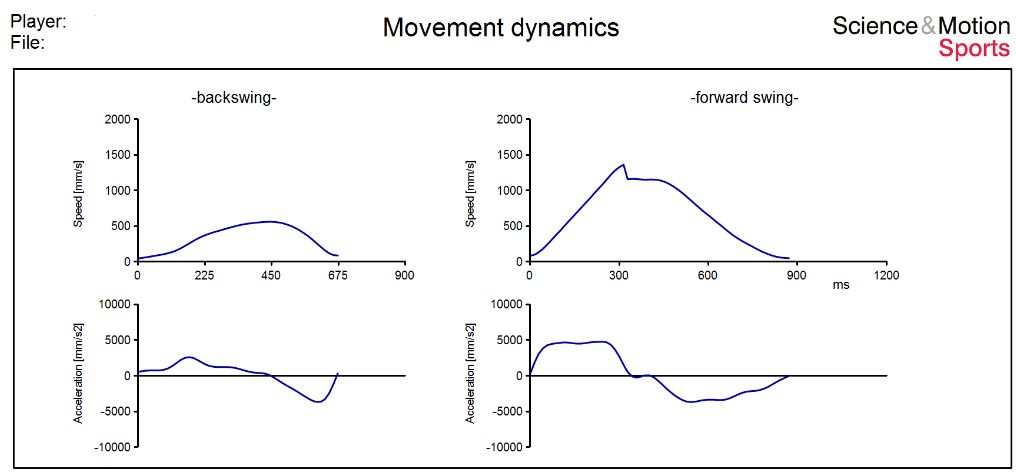
Good putters arrive at impact mostly at a constant acceleration rate which means that their peak velocity is before impact. In my opinion, the average golfer overaccelerates because of 3 reasons:

1. They have been told by their buddies or other golf pros that when they leave a putt short they decelerated

Over acceleration
Over acceleration

2. they don’t have enough backswing  because they are trying not to make a mistake (tentative). They think shorter is more efficient

3. The don’t have enough speed in the backswing to have a smooth acceleration rate through impact.


How To Change It

The best way to change this profile, smooth out the stroke and also create some balance to the length of the stroke is as follows:

1. Take the putter back with more speed

2. If it is too short for the length of the stroke, add some length. (trial and error)

Constant Acceleration

3. Don’t forget to brake at the finish (don’t be sloppy)

****You must get your putter velocity up to speed sooner in order to create a (cruising) through impact.

Consistency In Whatever you do Is Key

I understand that their are good players that can overaccelerate prior to impact and putt pretty good. But the best players arent always the best putters and can always improve. Whatever you do if you do it with a high consistency rate with repeatability you can make it work.

Closing Remarks – Results and Testing

I have shared this idea with few LPGA Tour players  EGolf pros, elite juniors, top amateurs including our club champ and many every day golfers and they it always makes sense to them and they have improved so their is something to it. I will keep testing it and researching it.

Let me know what you think, if you can improve on it or am I completely out of my mind. All I want to do is share great information with other golf coaches and help players play better.

Thanks for reading and don’t be afraid to share!

Follow me on twitter @golfgurutv

Guru