P.G.A. Merchandise Show Review ’11


As the 2011 PGA Show comes to a close, I wanted to reflect and give my experience from my week in Orlando. For those of you, pros or just avid golfers alike, you must go at least once to see just how massive this things is. I heard on the radio that if you walk all of it, you will have clocked around 10 miles. I walked every bit of it and some of it several times so I definitely got my exercise. I think that this was my best Show that I can remember and I am going to tell you why. As I have posted in some previous blogs, the main reason that I go is to get around people who I find interesting and that I can learn from. The gadgets and products are great and I will get into that but it’s the people you meet and spend time with that make the trip a success. I will break this down diary style since my laptop has currently died and didn’t make the trip or I would have been blogging as I go like my good friend John Graham http://www.johngrahamgolf.com).
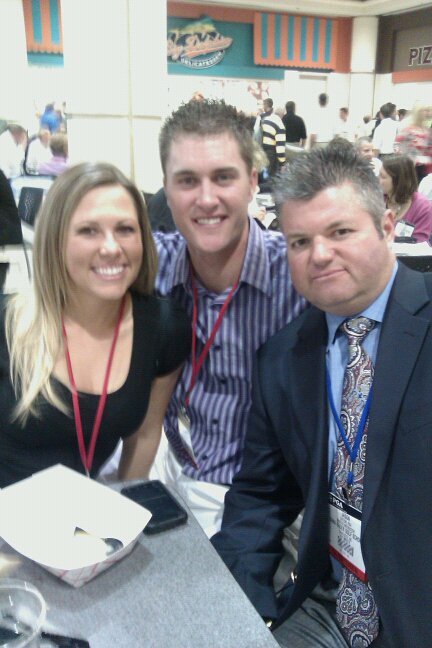
Sara Brown, Derek Radley and Me

Thursday (Day 1): Twitter has definitely made the world smaller and has allowed me to meet some great people along the way. The day started out by meeting up with Jason Helman (jasonhelmangolf.com) my friend and teaching pro from Canada. We walked the show for most of the morning to check out the new gadgets in the world of teaching. We met up with my good friend Derek Radley and his girlfriend Sara Brown (big break star and Rookie LPGA player), We had some lunch with her dad and the commisioner of the Futures tour. It was like walking around with a rock star as everyone recognizes Sara from TV.  After a great meeting with my Callaway rep, Tim Garrett,  to order my new clubs for the year, I ran into Rob LaRosa, Head Professional from Sterling Farms CC. We then made our way over to the Aimpoint booth to meet up with John Graham (@johngrahamgolf). We all walked over to the Swinkey training aid booth to
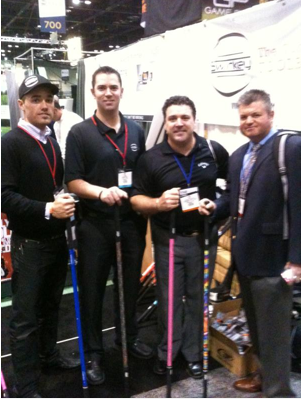
Swinkey Time

meet the boys http://swinkey.com and discuss the product and take a few pictures. So day one was just feeling out the location of the stuff we were interested in and meeting a few of the tweeps. After the show is when the good stuff happens if you are there. For those that follow me already know about the TWEETUP. This is a gathering of guys and girls that know each other on twitter. John Graham was nice enough to put it all together so about 30 of us met at Millers Ale house that night. Here is a list of some of the guys that I met:  David Wurzer, Jason Helman, Dan Carraher, Ricky Lee Potts, John Randle, Dennis Sales, Claude Harmon, Joe Hafera, Nick Clearwater, Sean Lalley, Rich Hunt, Todd Halpen, Bobby Siravo, Jamie Donaldson, Mark Sweeney, Bernie Najar, Ralph Perez, Andrew Lewis, Sara Dickson, Kirk Oguri, John Dochety, TJ Yeaton and Mario Bevilacqua. I wish I could have spent more time with everyone but I managed to get an idea of everyone’s teaching philosophies and backgrounds just by observing and listening to their conversations. I apologize for not taking more film as this one would have made a great reality show and surely would have went viral in an hour, but didn’t want to make anyone uncomfortable. I wish I would have taken pics. I was so busy talking that I forgot to eat.  No one got hurt although Doc (John Dochety) almost hit Ralph (gotham golf blog) with a front side chop as they battled over a #4 accumulator discussion. At the end, they hugged it out and we all made it home safe. I thank all of you for being willing to share all of your brilliant golf info so freely as this is what is going to help our industry grow and make us better coaches. It was great to finally put some of the names with the faces (and twitter handles) together. I also got to spend some time with two of my mentors and top 100 teachers, Chuck Evans and Charlie King which was great. I always learn something after spending time with them. I ran into new top 100 inductees, Charlie Sorrell and Mark Steinbauer and congratulated them on their accomplishment.
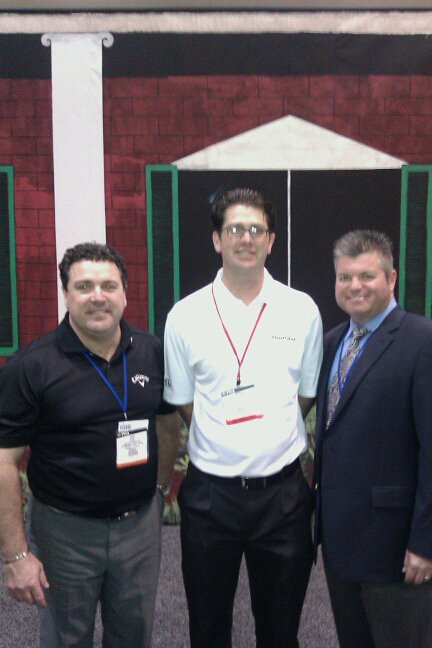
Jason Helman and John Graham at the show

Friday: The day started with checking out and getting more info on training aids. I know you all are waiting on my reviews so you can run out and buy or hopefully take a lesson from me. I will be doing video reviews as I get to use them in the coming months but here are my list of aids that I found interesting:

1. Swinkey (www.swinkey.com). One of the most versatile aids on the market for sure. I saw many swinkeys in the hands of people walking around the show so I think Todd and the boys did well. I highly recommend this product for any serious golfer who wants to improve. I would do a video review on it but unfortunately I don’t have an aid. I think I will check with Jim McLean and borrow his as I heard he got one for free, (just messing with you Todd). It was great to meet Disco Stu as well, he made his way around the show displaying the product with his cool World Cup jacket on. (great idea by @jasonhelmangolf) This company has a bright future for sure. Right On!

2. The Medicus Vision Stick: (www.medicuscatalogue.com) Endorsed by my good friend Chuck Evans and I look forward to using this one for path and low point training

3. Tour Striker: (www.tourstriker.com) Not a new product but I picked one up because I love the idea of helping players with impact and forward shaft lean. You have probably seen the infomercial on the golf channel.

4. Power Lag + Flat Wrist Pro (www.Powerlagpro.com): This is a devise that fits on your lead wrist and the back of your trail wrist to help feel the correct angle on your downswing. Developed by Sam Shah who invented the pivotpro. I will let you know how this works

5. The Perfect Release: (www.perfectrelease.com) An interesting aid that Martin Hall used on his first show on the Golf Channel. It is a bungee cord that connects your trail arm and the club shaft.

Possible candidates:

1. Drain-O Instant Pro Putting Fix -(http://www.drain-o.com/). A putting path aid made up of two tripods and a curved wire. I did shoot some video on this one. Might get one in the future.

2. Putter Master (www.puttermaster.com): A bar that is positioned across the wrists and helps keep your forearms square.

So the day ended with the an excellent putting seminar with my good friend Todd Sones and he was joined by Mike Shannon, the putting instructor from Sea Island. These two guys and who I learned how to teach putting and I always learn something new when spending some time with them.

Saturday: Last day at the show concluded a great week. I caught up with my new running mate from Ontario, Jason Helman and we caught a couple of short seminars on the main stage. I enjoyed the one with Suzy Whaley and her junior golf program with stations and fitness games that got the kids excited. Definitely the wave of the future of junior golf. Creating young athletes and then teaching them to play golf. I hit some of the new Callaway equipment on the trackman which was pretty cool. It got me excited to get back and play some golf when it warms up. Mr. Helman and I met John Graham and a friend for dinner to spend some more time before the week ended which was cool. I got back to the hotel and thought my night was done and then it happened. I get a call from TJ Yeaton, John Dochety and Mark Walder and we realized that we were staying in the same hotel so we met for drinks. For the rest of the night I was schooled in the world of Mac Ogrady’s MORAD system and some great stories about their experiences as only doc can describe it. You will be hearing from these guys as they are some of the brightest golf swing professors that I have ever met. There is so much more that I could tell you but you will have to get that from me on the lesson or a phone conversation. I want to thank Jason Helman for putting up with me all weekend and John Graham for allowing me to meet so many new friends. Let me know if I can do anything for any of you as I am in debt to you all.  What a great way to kick off the season.

Share this with someone and follow me on twitter @twitter.com/onplanegolf

To work with me at the Dana Rader Golf School call 704-542-7635 or visit our website @ danarader.com

See you on the lesson tee,

Guru
Winter Practice – Mirror Work


As we all get cabin fever this winter, I am constantly getting questions of how you can work on your golf game indoors. There are several ways to be effective inside but few are as valuable as “mirror work”. Of course you can putt in the house (hopefully with the Kure) and chip balls into the sofa, just don’t skull it please……..but standing in front of a mirror and going through the positions that you are trying to change can be helpful. Slow motion swings require patience but can change you faster than banging balls at full tilt when it is difficult to actually feel everything that is going on. So before you start your mirror work here are a few rules:

1) Understand what you are working on and where the club and your body should be. Hopefully your instructor has made it clear to where the club should be or body positions etc. ( If not you could be doing more harm than good)

2) try a weighted club, a swing fan or an Orange whip trainer to your session for a bit of a fitness workout.

I will be shooting a few videos on this subject when I get the time but until then, enjoy a video archive on changing the club face in the mirror.

                                                                                                                      .

Follow me on twitter @ twitter.com/onplanegolf.com or friend me up on facebook @ facebook.com/jasonsuttongolf.com…….to work with me at the Dana Rader Golf School call 704-542-7635 to schedule some time.

See you on the lesson tee,

Jason

TRADITIONAL TEACHING-FIXING APPROACH VS. RESEARCHED-BASED PLAYFUL LEARNING


What is your teaching philosophy? What do you consider a successful golf lesson? How do you know if the student gets it? These are all questions that should keep coaches up at night, I know it does me at times. How do we improve our teaching process in order to help the student learn more efficiently. One of my mentors, Martin Hall, told me once,”If the student gets better, good teacher, if they get worse, bad teacher,”. I believe this is true as there are many ways to reach a goal.  I am sure if we put all the top coaches in a room together and gave them the same student, we would surely get a myriad of answers, fixes and directions in which we would take them. We all have our opinions that we stand behind (methods/non-methods) but how do we really know. On my continued quest to become the best coach that I can be,  I am going to do a series of posts that hopefully will be thought-provoking and cause you to consider your philosophy (RIGHT OR WRONG) and how to improve it. The key to learning is to have an open mind and be ready for new information. So here we go! In the age of technology with (trackman, k-vest, video analysis and 3 d simulators) and updated information about ball flight laws (the d-plane, cp release vs. cf release, angular momentum and hsp vs. vsp, stack and tilt, morad, one plane, two plane etc ) and new equipment and training aids, we have more information as coaches that can help the student through the learning process than ever before. The ability to apply the information that you have learned or memorized is the key. Because without positive results, what good is the information. It just makes us feel smart or educated. The key is not to leave out the most important factor, “The Student”. I teaching has always been built around a student centered approach, whatever you teach this is the most important.  I am reading an interesting book written by Michael Hebron, whom I greatly admire, called “Play Golf To Learn Golf”. There is so much information that he has researched that it would be impossible to share all of it so I want to give you a few nuggets that will describe his philosophy on what he calls “Playful Learning.”

Whatever I know, or what I am given credit for knowing is not very much when compared to what could be known (I am going to put this on my bulletin board for sure). To keep investigating, looking for “the yet uncovered,” to help people grasp unfamiliar concepts so they can make progress, is my philosophy.

Mr. Hebron states:

  • Whenever you try to help a golf swing you can win or lose-but when you help a golfer you always win. Help golfers become less dependent on their coach.
  • The student and their needs are always more important than what the instructor wants. The aim of effective instruction is to be a practical guide. (sound familiar)
  • Any approach to instruction must take the “nurture of learning” into consideration, if it is going to be effective.
  • Mankind is born playful, and when we play  to learn, we don’t learn to play (hmmmm.?)
  • Workable instruction does not try to change poor habits, it changes poor insights, and develops patterns or access to knowledge
  • Many golfers see their poor habits as “riddles” that can’t be solved and often look to someone else for answers that only they themselves can answer and solve. Progress in golf is founded on the problem on the problem solving skills of the student (see options)
  • Teaching is really the art of assisting discovery
  • A “breakthrough” in learning is a breakout, or breakaway from a past point of view, opening new learning paths.
  • Most golf advice and swing models are based on someone’s description of body parts in motion, overlooking the alignment and application of force with the club through impact. The ball flight laws should be exchanged for the golf club laws.

Are the wheels turning yet, let’s see if this helps. Here are some random thoughts on “Playful Learning”

  • Trying to teach is different form helping someone to learn
  • Learning is influenced by change and unfortunately many individuals believe making changes requires trying to “get something right”, or trying to fix something. Studies show that fixing has never been learning, and trying to “get it right” creates the kind of stress that fragments progress.  (my next topic of video pro models “helpful or not”)
  • Efficient approaches to learning ask students what they would like to improve.
  • Efficient approaches to learning improve a students capacity to learn.
  • Students want to learn. Judge them and students will not make the kind of progress they are capable of.
  • Pointing out mistakes is a poor motivator
  • One last one: “It is the student who often reveal the best way to help them experience the kind of learning that lasts.

The main thing that Mr. Hebron is trying to convey is:

Ask the right questions, Listen to the student and always keep the student involved in the learning process and we can all say that we gave it our best effort as coaches. Be careful of the language that we use, the pictures that we create and the expectations that we put on our students. I have plenty more to discuss but I will let you all digest this and talk amonst yourselves. Remember, they don’t care how much you know until they know how much you care. Keep caring and we will all figure this thing out together.

Feel free to leave a comment below and use the share buttons appropriately if you think this is helpful

**Follow Me on Twitter @twitter.com/onplanegolf.com

See you on the lesson tee,

Jason

Are You Getting The Most Out of Your Workout? Get Out Of the Box!


As you know I work hard on my fitness. I am a big runner and recently completed my third marathon this past October (Chicago Marathon). I am not fortunate to have a very high metabolism, so i have to work hard to keep my weight down and to stay fit. I gain weight by just looking at a chocolate chip cookie. If you are one of those guys that can’t gain weight, I hate you, seriously.  One of my goals this year, to help improve my running and my golf is to get stronger in my core and upper body. My next race is the New York Marathon in November so I have time. If you are not getting the results from your workouts, you probably need to mix it up a bit, get out of the box. So I started doing my research and I think I found exactly what I have been looking for. This is my 2011 fitness routine as demonstrated by a PGA tour player.

Hahaha! Gotcha! It can’t be all serious, right. Who would have thought that
Ben Crane had a sense of humor.

Follow me on twitter @twitter.com/onplanegolf

I will be back soon with a serious post, but until then…….best of luck with your workouts and I hope you laughed today

See you on the lesson tee,

Jason

What Can I Do For You?


Welcome to your full service golf information blog. If this is your first day viewing my blog, welcome to Guru Nation. For those of you who follow me, thank you and let’s get busy on making this upcoming golf season the best ever. I have my goals in place and am very motivated to help as many golfers that I can with their games and also help coaches with information that will enhance their teaching. Some of my projects for the upcoming year include: authorship, improving my video/tv quality (Guru TV), writing for magazines, speaking appearances and blogging of course. I spend a lot of time trying to figure out what my audience needs and what they might want, but it is a guess at best. I frequently get the question,”Guru, how do you come up with all of your ideas that you blog about?” Most of my ideas are formed by my students that I work with on a day-to-day basis. My experience on the lesson tee is priceless. I learn something new every week that I spend talking to and helping people. So, In an attempt to achieve my 2 goals for this blog 1) to educate my readers and help your golf game and 2)grow my readership in order to reach more people so I can affect their golf games and their minds. SO I NEED YOUR HELP. Here is my charge to you, yes you.

1. TELL ME WHAT YOU WANT TO SEE IN THE WAY OF POSTS AND OR VIDEOS

2. TELL SOMEONE ABOUT MY BLOG. SHARE THIS BLOG WITH AT LEAST 3 OF YOUR GOLF FRIENDS THAT YOU THINK WOULD BENEFIT FROM THIS INFORMATION

Whether it is players or coaches, let’s get some dialogue going and help me bridge the gap between learning and getting RESULTS, which is the goal of every player or coach.

I look forward to hearing from you and I ask you again

WHAT CAN I DO FOR YOU?

Follow Me on twitter @twitter.com/onplanegolf or friend me up on facebook.com/onplanegolf (Jason Sutton)

See you on the lesson tee,

Jason Sutton

704.542.7635 or danarader.com

Why You Shouldn’t Aim At the Apex of the Break


Stroke mechanics are only half of the battle to putting better. It doesn’t do any good to make a perfect stroke unless you read it correctly. Studies show that most amateurs under read putts which means they miss them on the low side. This is something that I have been preaching to my students forever using string or aim line aids to prove it. Mark Sweeney, the founder of aimpoint technology that you see on televised tour events, has developed a system to help you read putts more consistently. My friend John Graham is a certified aimpoint instructor (check out his blog @ johngrahamgolf.com)  or check the website (@ aimpointgolf.com) for more info. This is a wonderful video that demonstrates what I am talking about. I look forward to learning more about this system and maybe getting certified to instruct it. In the meantime. PLAY MORE BREAK. You will putt better in the long run.

Follow me on twitter @ twitter.com/onplanegolf

See you on the lesson tee,

Guru

“The Kure” Putting Chronicles, Day 6: Diary of a Passionate Golfer by Alan White


Hello Nation,
Here we go with day 6 installment.

Today is the day.
Headed to the course mid-morning for a round before the bowl games get into high gear. I am anxious to see if the KURE has had any impact on my putting. But before I get too far ahead of myself,  remember I needed to replace some dead batteries before I could get the KURE back into action. This mission was accomplished early this morning after the wife and I went out for some breakfast. I did a quick battery replacement, took 10 balls and went through the full routine. Going through the aim, stance and stroke. I wanted to get the feel of the KURE back since I missed a day yesterday. I did this right before leaving for the golf course.

Since we are closing in on day 7 lets go on a quick recap of drills and practice sessions. I tried to spend 30 quality minutes a day with the KURE. I started the original session with just aiming the putter and progressed over the next sessions by adding getting into my stance while keeping the club aligned to the target and finally making a stroke concentrating on getting the green light that shows the club was square at impact. I also left the KURE set up and as I passed by it during the day I would stop and hit 5-10 putts. I probably have a total 2.5 hours of focused practice not including the “ad hoc” putts or the time I spent playing around at different distances, angles, etc.

Now back to today and what happened when we took the KURE training to the course.

Guys and Gals listen up. It started on hole #1. I rolled in a 25 footer, followed up with a solid 12 footer on #2, then an 18 footer on 3. Before you know it I had 1 putted the first 3 greens. Now I know what is going through your heads at this point but believe me, I am a no BS kind of guy. I can certainly understand your skepticism at this point but read on it actually gets better.  I lipped out on 4 and 1 putted again on #5. This was 4 one putts in the first 5 holes.  Now don’t get me wrong I had a few 3 putts today as well but I have never come close to 6 putts in a 5 hole stretch. At least before today.

Today’s General Discoveries.

I had a great run of putting today. Was it because of the time spent with the KURE? Ultimately who knows for sure. Golf if a funny and amazing game. Putting even more so. This much I do know. I spent quality time over the past few days working to improve my putting. I re-enforced this practice by going over my routine with the KURE right before heading to the course. I then had one of my best days putting ever. Coincidence?

I don’t believe in coincidence.

Tomorrow will be the last installment. I will try and summarize the Good and Bad with the KURE. Tune in then
Alan

*****I WILL HOOK UP THE PHONE NUMBER AND DISCOUNT CODE FOR “The Kure Putting Solution” after Alans last post on Sunday for anyone interested in purchasing one.

See you on the lesson tee and happy New Year,

Jason

The Kure Putting Chronicles, Day 5: By Alan White


Hello GURU nation,
Here we go with Day 5 installment.

Well I have to apologize as today’s installment will be short. Yes I hear you, Hallelujah you say, We want the GURU! We want the GURU! Well you only have 2 days left so “grin and bear it”

It seems that I must have jinxed myself talking about batteries. During the ball games last night I would take advantage of the commercial time outs to race upstairs and get a few putts in. As it turns out I must have forgot to turn the KURE off before I went to bed. As Phil Mickelson would say “I was an idiot”. Since I am feeling a bit lazy I am not going to make a special trip to Wal-Mart tonight, I will pick some up on my way to the golf course tomorrow morning.

Today’s General Discoveries

  1. The KURE will not run forever without replacing the batteries.
  2. I will  say and I hate to admit this but, remember those little yellow and green lights I lamented so much about last night? I think I miss them.


Sorry GURU and the nation but with the help of the energizer bunny I will be back tomorrow in full stride.

Alan

The Kure Putting Chronicles, Day 3: A Diary Of A Passionate Golfer by Alan White


Good afternoon Guru Nation
Here is day Three’s installment with the KURE.

Today’s session began as normal for me. Double checking the KURE. I have not removed any components since the initial setup and after today’s check-out the KURE is still spot on. I started the session where I left off yesterday, using the “rock in” to check out my initial aim as I set the putter behind the ball. The results were a little better than yesterday. I did 3 reps of 10 tries and went 6,7,7 of ten. Still not where I want to be, as they say “old habits die hard”. The thing that still shocks me is how hard it is to line up the putt correctly after doing it wrong for quite some time. To me this is quite different from making full swing changes. In a full swing change things FEEL a lot different. Using the KURE things LOOK a lot different. The eye/brain just does not want to co-operate.

Today’s “General Discoveries” will focus on how the KURE is different from other putting training aids that I have used. I have used many aids in the past. Chalk lines, stretched strings, the eye-line mirror, plane board, etc. so I have some experience with these aids. So how is the KURE different?
    
1.  The biggest difference I have seen so far is that the KURE uses no lines. Lets take the old standby, a chalk line. I have used a chalk line in the past with varied results. The problem I always had was if a line was present setting the putter down on the correct aim became easy. Heck that was a no-brainer, just follow the line right?. The same is true with the mirror board, strings and other. Regardless of how much I would try to “ignore” the reference line it was always there helping lead the way. Not so with the KURE. With the KURE you have to visualize the line then set the putter down with no “hints” as to what is correct. If you get the yellow light you are good to go. If not you can quickly check to see where you error was. This is some pretty solid feedback.

2. I listed this second but it is really a tie. The KURE gives you immediate feedback on the face alignment of the putter at impact. How cool is that? Short of video I do not know of another aid that gives you this information. If you get the yellow light, make your stroke, get the green light, the ball will be going to the target. Again pretty good stuff.

3. It allows you to experiment with some level of confidence. Ever wonder if using just your right hand to align the putter was better for you than using both hands? How about cross handed vs. conventional. I think that using the KURE would help in determining if the changes you are thinking about making or are actually trying to make are better. Think about it. If you can line up the putter correctly 10 out of 10 times using just your right hand and only 6 out of 10 times using both hands that would be good information to have.

4. The KURE uses batteries (3 types). My chalk line does not. Yes I know. In the age of laser range finders and GPS systems with fly-over mode batteries are almost as essential as a tee. But,,,,I still rue the day that drive to the practice range setup the KURE only to realize that a battery has expired.

In summary, the KURE is beginning to grow on me. Once you get familiar with it and think about the things you can do it’s pull becomes stronger. With the weather continuing to moderate the snow should melt by Tomorrow.  I hope to take it to the practice green and get some “real” experience with it.  

See you tomorrow.

Alan

The Kure Chronicles with Alan White, Day 2: Diary of A Passionate Golfer


Day 2 With The KURE
Good evening Guru Nation here is day two’s installment on the KURE.
I did not remove any of the KURE components from my putter overnight but I did re-check everything again before I started today. I even enlisted the help of my assistant again and had them aim the putter until they got the yellow light then visually checked from ground level behind the putter. Nothing had changed overnight. The KURE was still spot on.  

With the base line set I was ready to begin. Also unless otherwise noted all of this was done in the 6-8 foot range. First I will talk about a few “general discoveries” on the KURE that I have learned over the past two sessions.
1. Settings on the aiming module. The module has 3 different levels of difficulty, Beginner, Amateur and Pro. The range of acceptance gets progressively narrow as you move up in difficulty. I played with the Beginner level for a few minutes and felt that it was a little too lenient and the Pro level a little to hard for my skill at this time. I settled  on using the Amateur mode. I can tell you that the Pro setting is VERY critical and I look forward to working my way up to it.

2. Putter feel. For you perfectionist out there (I tend to lean to that side myself) when you attach the aiming module to your putter, the putter “feel” definitely changes. To me, it deadens the feel of the ball coming off of the face. After a couple dozen putt’s I was able to acclimate to the feel but I wanted to get this point out there. The feel of your putter will change!  But hey this is mostly about getting the putter face aligned correctly so this is certainly not an obstacle to be overly concerned with.

3. Side to Side variation. In a perfect setup the practice ball would be on a line that extended straight out from the Spider (target module). What I found out is that the KURE will work just fine with balls that are placed 1 foot to either side of that exact target line (I suspect that it would work with balls placed even further out but the space in my hallway did not allow any testing beyond the 1 foot to either side, maybe tomorrow I will try this). To me this is a very important point because it allows me to place  3 balls each a foot apart when I am practicing.  This allows me to aim to the same target from a slightly different spot each of the 3 times. This prevents me from getting into the habit of just pulling balls into the same spot each time. If you are like me it is easy to repeat the aiming process it you never move your feet/body and just pull a new ball into place. To me this is a BIG plus.

4. Working Distance. In the video and manual it talks about using the KURE in the 6-8 foot range. This is fine because this is where alignment really starts to have a large impact, but I used the KURE in my hallway to a distance up to 25 feet with no issues and only one exception. That was with the KURE set on the Pro level, it is just a little to sensitive at that distance to be effective. BUT it worked beautifully on the Beginner and Amateur settings.

Now on to today’s practice session. Today’s practice focus was on what I term the “Rock In”. Everyone does this differently but it is the process of setting the putter behind the ball and have it aimed at the target. The goal is to have the putter on the target line when it is set behind the ball (yellow light goes on). If you remember from yesterday, what my “eye” perceives as pointed at the target was actually a couple of inches left of the target on an 8 ft. putt. Well nothing changed overnight and on my first try I was only able to get 3 yellow lights out of 10 tries. All my misses were left. I went through 4 more repetitions of 10 each. My best score for the night was 7/10 on the last rep. With every miss being to the left.

In summary, Since my initial surprise on how far to the left I was aiming I have tried to “catch” the KURE in a lie. I have had no success in that endeavor. My mind is struggling with what a correctly aimed putter looks like and wants to believe that the KURE is somehow wrong. I have checked, checked and double checked the KURE and have found no deviation in its operation. If the yellow light comes on the putter is aimed at the target. More to come tomorrow. Wish me luck on my road to recovery.

Best,

Alan