Using Strokes Gained Putting To Improve Your Putting with Alex van der Linden


BmfOjIBIQAA9Otm


I wanted to post this video for a couple of reasons. 1) I think it is very good information that can help you look at your putting and stats a different way and 2) I wanted to share with my viewers, tweeps and friends a very special person in my life that I won’t get to see everyday like I have for the past year and a half. Alex van der Linden and I met through a mutual friend, Brian Baille, on social media about a year and a half ago. Brian knew that I had been teaching putting and learning more about SAM Putt lab data and reached out to me to let me know that I may want to contact this young man who was a wiz on the putt lab. These opportunities come across your radar and many times we don’t take action but something told me that this is one that I might take a chance on. I called Alex and we met for lunch one Monday that I was off. We proceeded to go to the dojo to test some stuff on the putt lab. When we finally looked up, 6 hours had gone by and I was blown away by the information, knowledge and overall presentation of this young guy that looked like a young poindexter (and so his nickname was adopted). I wasn’t looking to hire anyone and he wasn’t really looking for a job but I had to create an opportunity for the both of us to work together. My first personal assistant was created. Even though he was officially working for me, I always felt that we were working together because I feel like I learned as much from him as he learned from me. He watched me give hundreds of lessons, we discussed swing and putting theory, he assisted me in putting lessons and fittings and slowly we developed a relationship in which we could pretty much read each others minds, which is scary. He was left brain and I was right. He taught me how to critical think and question the so-called answers and I taught him how to take all the information, put the pieces together and present in a golf lesson to the average golfer. It is always great to see young professional learn and grow as Alex has done. I look back on my career and remember when I was his age and think of how far ahead he is to this point. I have seen his life and his career change in the blink of an eye and to think that I may have been a positive influence on it is very rewarding. I am excited to see what the future brings in his next endeavor as he leaves me to join the staff at the Governors Club in Chapel Hill. I feel like that you will be seeing and hearing a lot from this up and coming superstar in the teaching business.

Ladies and Gentleman……It is my great pleasure to introduce my good friend…….The Golf Geek! Follow him on twitter @vandogolf


Best of Luck and God Bless My Friend,

Guru


The #1 Myth In Putting and How To Change It


In my last article I discussed what I feel is the most important factor in distance control (feel and touch) in the putting stroke. Aside from knowing how to read greens (www.aimpointgolf.com) controlling the distance your ball rolls is critical. How do myths and misconceptions is golf get started? Someone has an idea, tries it, feels like it works and shares it with someone else. The word spreads and we have a myth or fact. The difference is that a fact is researched, tested with accurate data and hard numbers. I trust the numbers. Since having a data collector like the S.A.M. Putt lab, my staff and I have been able to learn a lot about what creates a great putting stroke and we have been able to help more of our players improve with some simple ideas and drills.

Cruise Through Impact don’t punch it!

Good putters arrive at impact mostly at a constant acceleration rate which means that their peak velocity is before impact. In my opinion, the average golfer overaccelerates because of 3 reasons:

1. They have been told by their buddies or other golf pros that when they leave a putt short they decelerated

Over acceleration
Over acceleration

2. they don’t have enough backswing  because they are trying not to make a mistake (tentative). They think shorter is more efficient

3. The don’t have enough speed in the backswing to have a smooth acceleration rate through impact.


How To Change It

The best way to change this profile, smooth out the stroke and also create some balance to the length of the stroke is as follows:

1. Take the putter back with more speed

2. If it is too short for the length of the stroke, add some length. (trial and error)

Constant Acceleration

3. Don’t forget to brake at the finish (don’t be sloppy)

****You must get your putter velocity up to speed sooner in order to create a (cruising) through impact.

Consistency In Whatever you do Is Key

I understand that their are good players that can overaccelerate prior to impact and putt pretty good. But the best players arent always the best putters and can always improve. Whatever you do if you do it with a high consistency rate with repeatability you can make it work.

Closing Remarks – Results and Testing

I have shared this idea with few LPGA Tour players  EGolf pros, elite juniors, top amateurs including our club champ and many every day golfers and they it always makes sense to them and they have improved so their is something to it. I will keep testing it and researching it.

Let me know what you think, if you can improve on it or am I completely out of my mind. All I want to do is share great information with other golf coaches and help players play better.

Thanks for reading and don’t be afraid to share!

Follow me on twitter @golfgurutv

Guru

Putting – “The Art and The Science”


DSC_0335

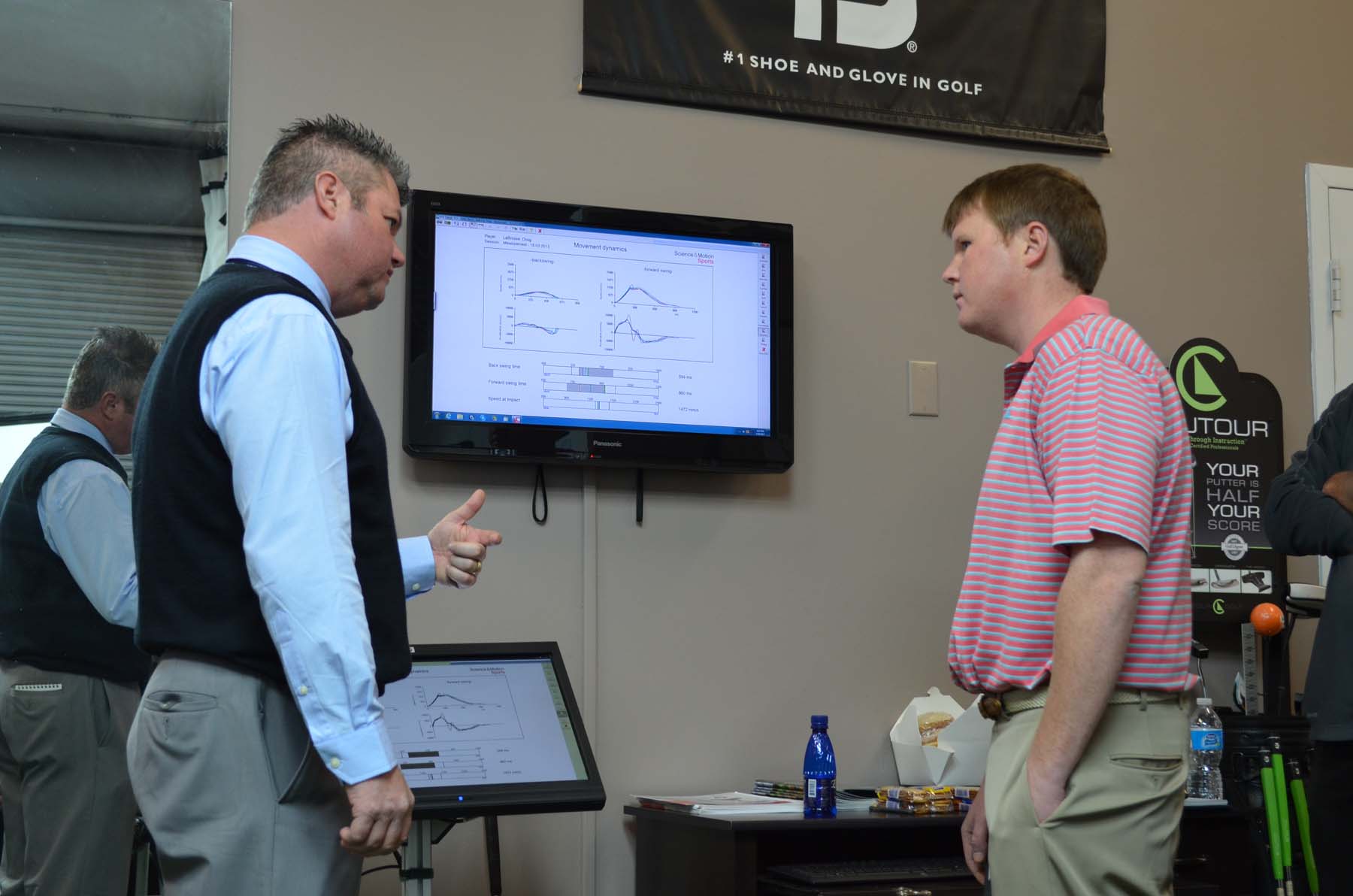
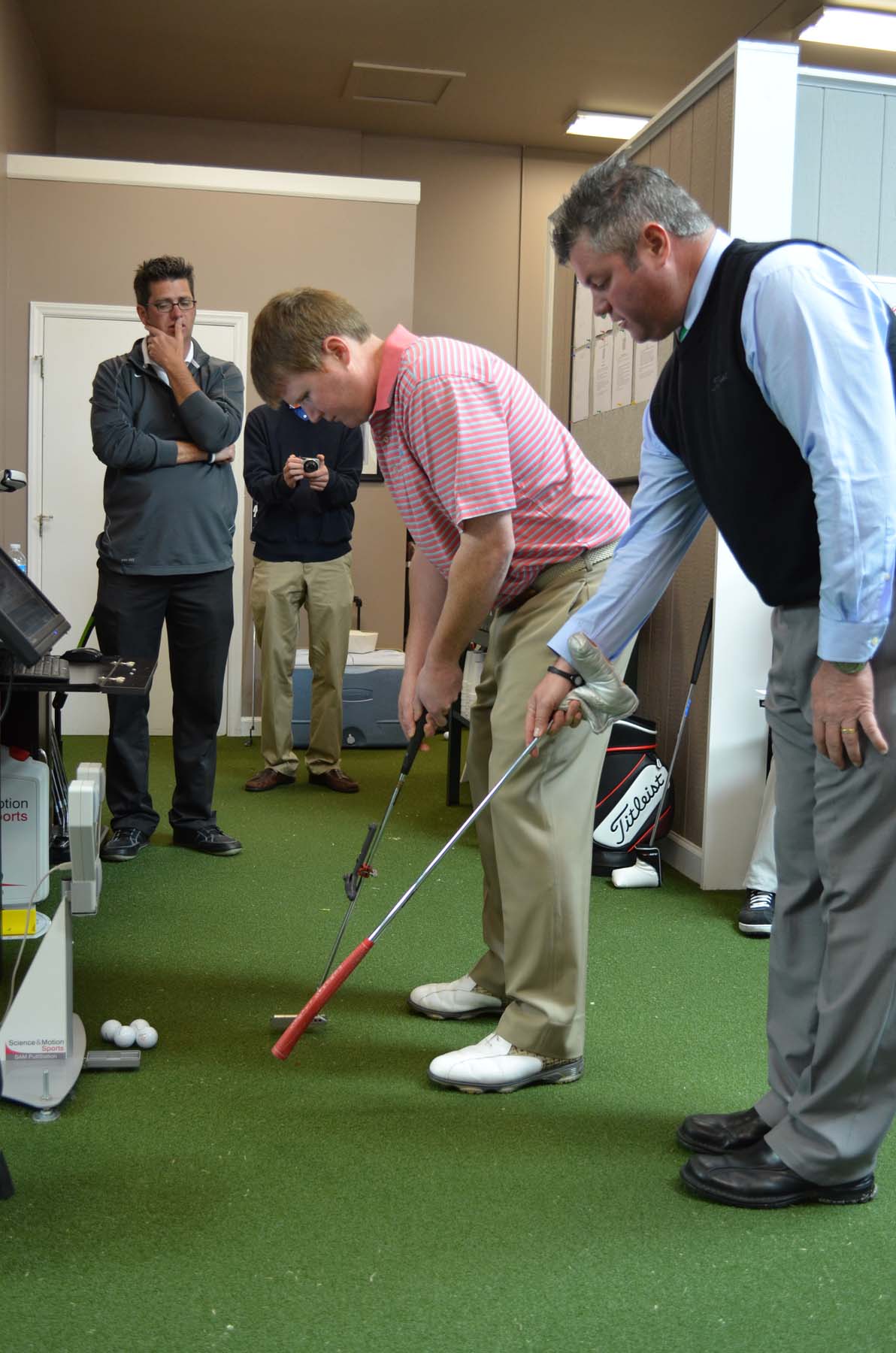
Is Putting an “Art or is it Science?” I think it is a little of both.  I have always considered myself a pretty decent putting coach as I have spent time with some of the best trying to learn how I can help my students more with such a huge part of the game. As a teacher we have to inspire our students to practice and to be willing to make changes that will show up in their score. Two years ago I had taken my putting instruction as far as it could go until I was introduced to two pieces of technology…..AimPoint Green Reading  and The S.A.M. Putt Lab. One for green reading and one for stroke mechanics and feel. I was now armed with a deadly combination that has taken my putting instruction to an entirely new level. I recently hosted and spoke at a PGA teaching seminar with my good friend, John Graham DSC_0314in which we focused on putting. John introduced AimPoint and I revealed some of the studies and findings of our S.A.M. Lab data that we have compiled over the last year. Thanks to my new assistant, Alex van der Linden (aka Poindexter the Golf Geek) for his expertise and helping me crunch the numbers we found some interesting trends and some valuable information that I think has helped us with our teaching. I won’t reveal all of our findings but want to focus on what I think is one of the most important part of being a great putter……TOUCH and FEEL. We know that distance control is important but how do you teach. Just giving your student a series of drills is not the entire answer or it isn’t the one that satisfied me or John Graham.

Speed vs. Acceleration and A Myth Dispelled

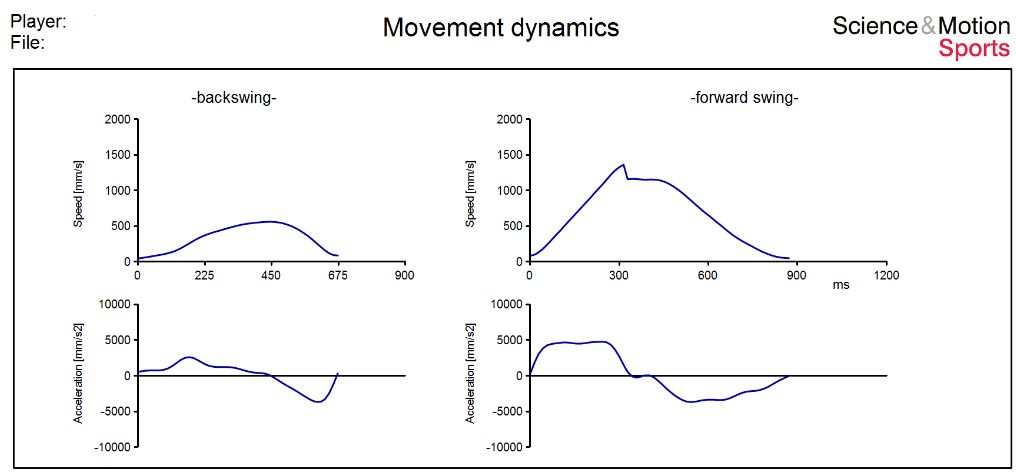
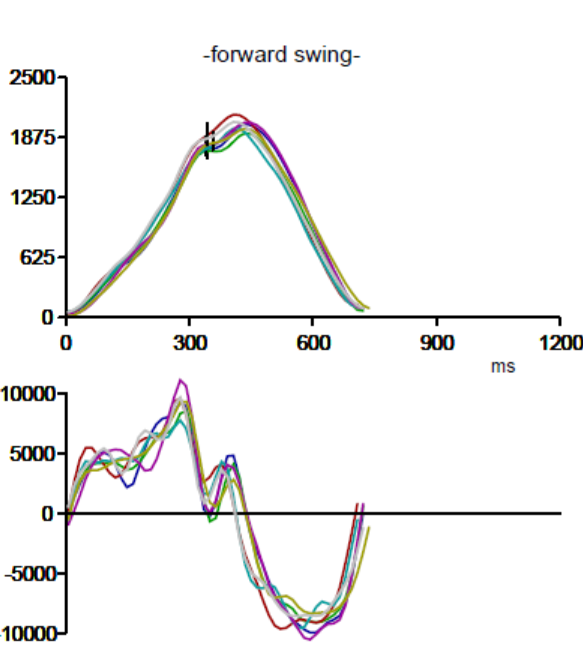
One of the most frequent ideas that I hear the average golfer say that they are trying to doDSC_0340 with their putting stroke is to ACCELERATE through the ball and follow through. They do this because they have the misconception that they always decelerate which couldn’t be further from the truth. Most of the golfers that we tested overaccelerated which means that their peak velocity happened after impact and peak acceleration happened just prior to impact. This makes it very difficult to control your speed. (see graph below)

overacceleration - double hump

What Good Putters Do

We found the opposite when testing PGA tour, LPGA tour, Mini DSC_0288Tour Players and top amateurs. they had constant speed control which included zero acceleration through impact. Good putters had a very flat top to their acceleration graph like the one below. Also I have posted a short video of a recent putting lesson that includes this common misconception as well as a few more helpful nuggets.will collins acceleration profiles

RESEARCH TO PROVE MY WAY OF FIXING THE PROBLEM

I believe that I have a way to change this pattern as I have had much success with my students. This way is easy to understand and is teachable through using the SAM Putt Lab to create the proper feel for the stroke. currently, Alex and I are doing a research project to test my theory to see if there is a distinct correlation between the profiles that we have seen and consistent distance control. Before I reveal my idea I would like to gather more data.

Follow me on twitter @golfgurutv

Here is the #makingeverthing

Guru