My 3 Months With Mr. Trackman: A Coach’s Prespective
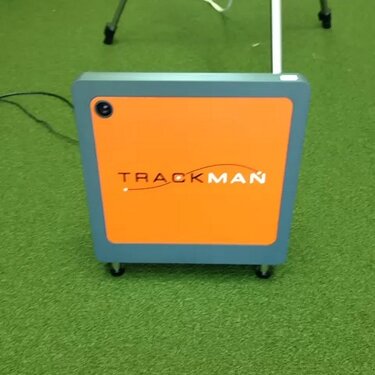

Trackman
Mr. Trackman

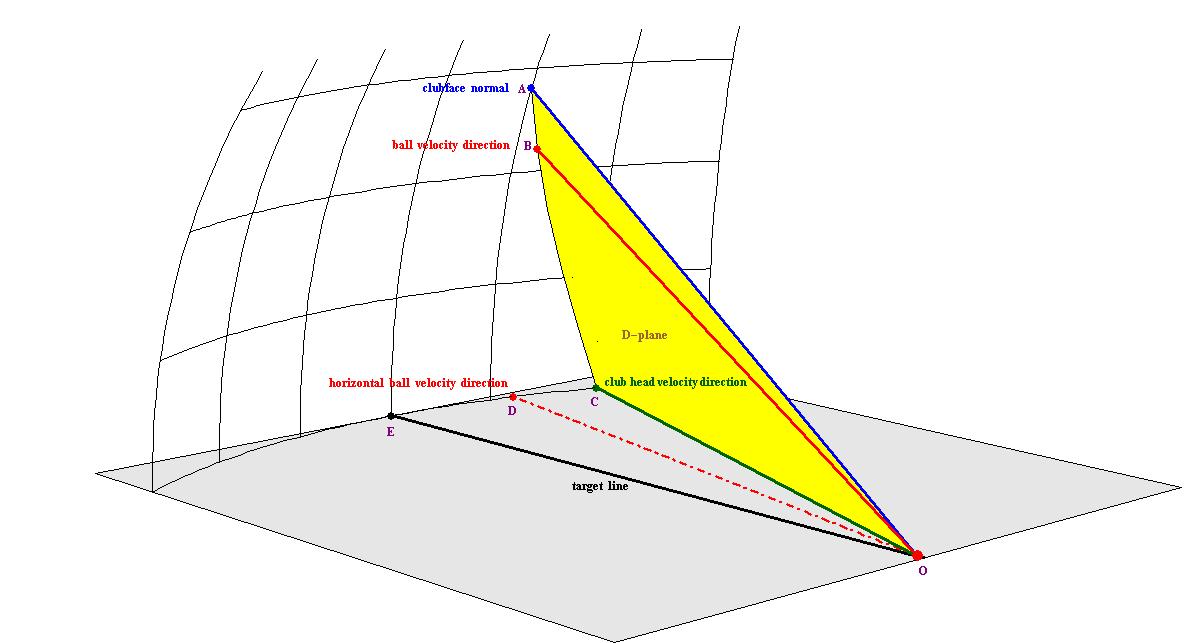
Technology has become a huge part of golf instruction in the last 10 to 15 years. First it was high-speed video and the ability to slow down professional golfers swings and compare them to the average golfer for a comparison. Now it is sophisticated launch monitors for full swing and putting that have taken the analysis to a whole new level for the student and the teacher. Recently on the Golf Channel, Frank Nobilo and Brandel Chamblee were discussing what they called the “New Age” or “The Modern Teacher.” Mr. Nobilo said that these coaches were now using devices such as “Trackman”, “SAMPutt Lab” and “AimpointTrackman Adam style Green Reading“. He brought up names such as Sean Foley, David Orr and my good friend John Graham which was nice of him because these guys need to get credit for bringing these technologies to forefront. I actually had a few of my members email or contact me after they saw this segment to mention to me that they thought that I would fall under this category which was pretty cool. Since I have been using the SAM Putt Lab and teaching AimPoint for almost 2 years, I would have to say that I fall under this “Modern Teacher” category even though I still consider myself old school in many ways as I will explain. Even though I have educated myself on understanding “correct” ball flight, the D Plane and trackman numbers, I have only recently been fortunate enough to actually teach with one. Thanks to Cobra/Puma Golf for allowing us to borrow a Trackman as a promotion for the last couple of months and it has been very educational for sure. I will attempt to put into words some of the things that I have learned while using trackman and give you my thoughts on this old school vs. new school teacher idea that has been thrown around by many of you as well as our friend Mr. Chamblee who has proclaimed that technology such as Trackman is hurting the game.

There has been alot of discussion amongst my fellow teaching professionals on twitter and some facebook forums of the importance of being able to get and ultimately deliver “accurate information” to the golfer. I couldn’t agree more with this sentiment but it still remains that the teacher is still responsible for interpreting the information and ultimately communicating it to the laymen golfer for them to improve. I have many of my students that I work with today that could interpret trackman and SAM Putt Lab numbers but wouldn’t have the first idea about giving a quality golf lesson. Are you with me so far?

Using Trackman (Old School meets New School)

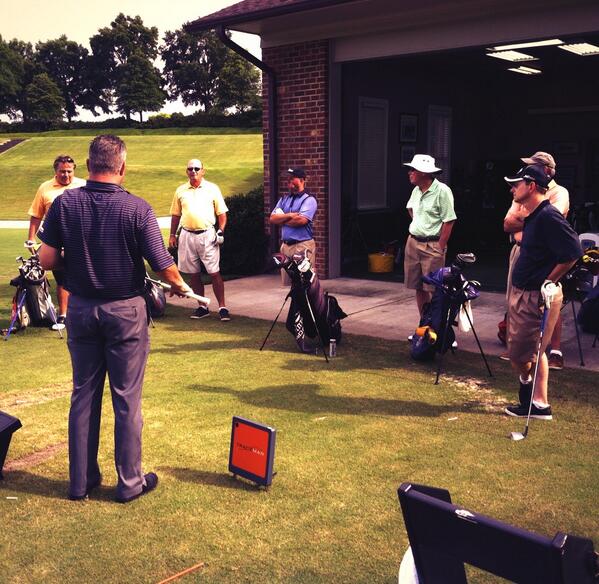
After teaching with Trackman for almost 3 months, I have to remind myself and and my trackman with groupstaff that standing behind the machine and barking out numbers and telling them to move the numbers is not teaching golf! This is where the old school meets the new school in my opinion. Trackman is merely a great device to give us the information on what the club is doing that we may not be able to see with the naked eye. It has allowed me to 1) Bring the D Plane to life for my students with a definitive ball flight explanation 2) Given me a quicker solution to the problem and 3) Given my student some measurement to the change that we are making in the lesson. Trackman is not method biased. It is still up to the teacher to 1) interpret the numbers 2) communicate the important piece to the student that needs to change and 3) GIVE THE STUDENT THE FEEL AND/OR DRILL TO MAKE THE CHANGE. #3 is where I feel that alot of new teachers fall short and don’t know how to help the student move the numbers or make the long lasting change. This is where my old school meets new school (did I say that already?)
DON’T BE AFRAID TO GET YOUR HANDS DIRTY (Get In There Man)

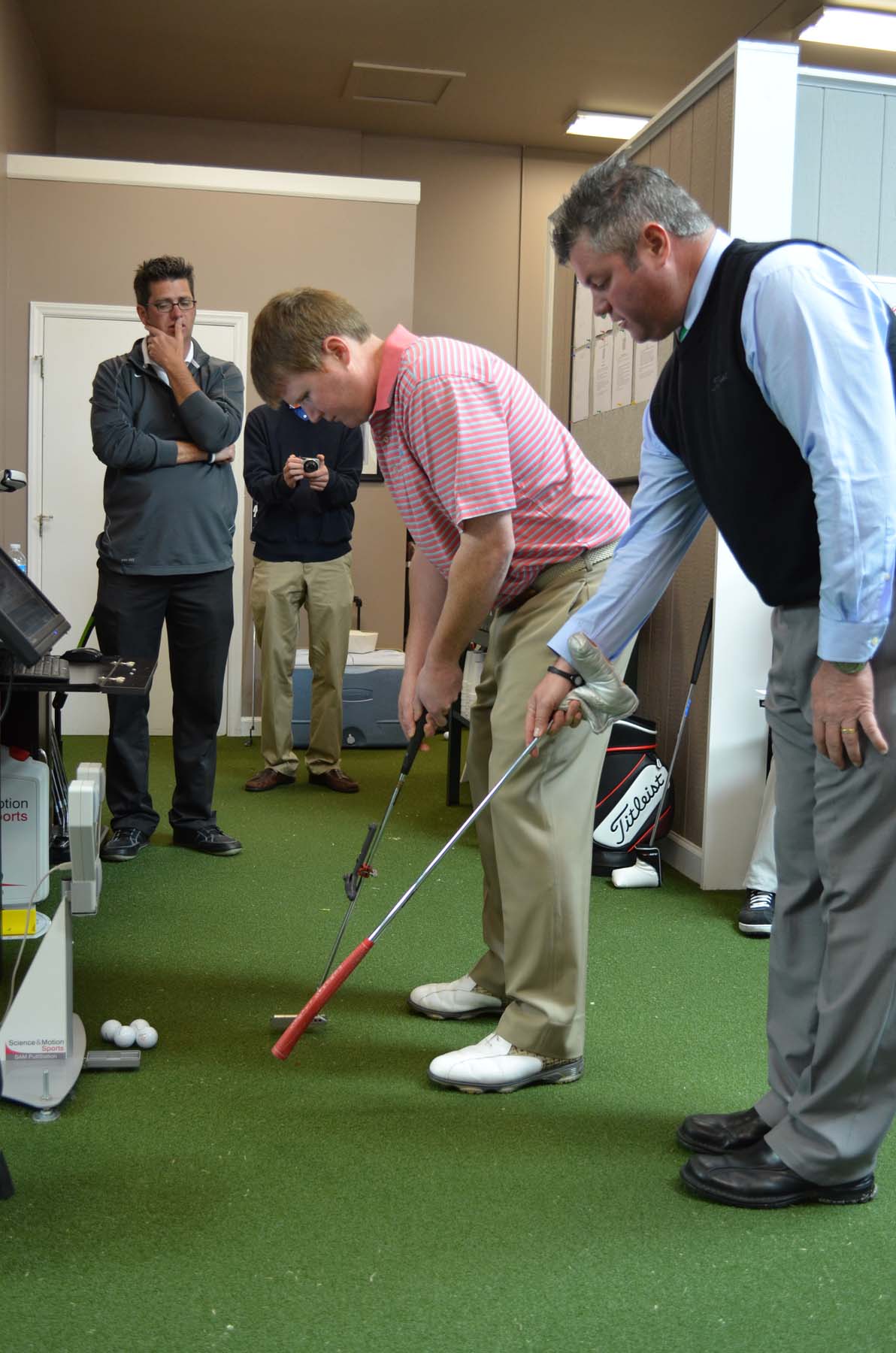
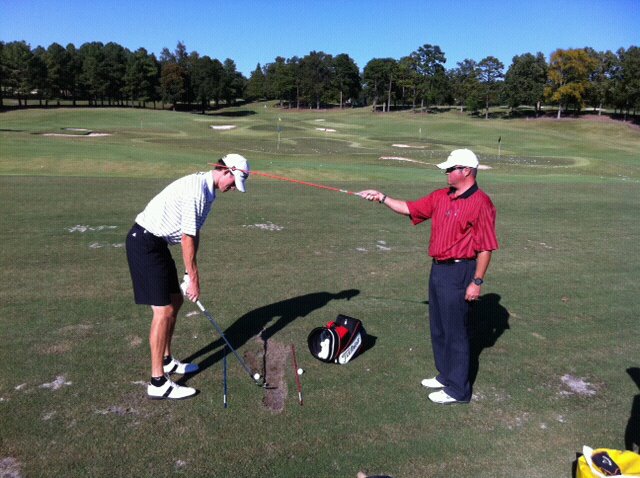
For those who have watched me teach or have followed me in the past know that I am very big on manipulating the student. This means getting in there and moving the club and307368_2312140281042_1175444144_32381510_1363374772_n or body in an exaggerated fasion in order to create a feel for the opposite move in order to make a change. This is an acquired skill that has to be practiced.  After you have decided on what you are working on with your student, you can’t rely on them to just do it without you creating a feel through moving them or giving them the appropriate drill. Because if you tell the student that you need the path number to move from -6 guru manipulatingdegrees to plus 2 and can’t make it happen, then you have a very frustrated student on your hands and trackman has done nothing but expose you as a coach who can’t get results, so be careful. Once the student sees the numbers change and the desired results they can use it to create a repeatable pattern. This is the feedback that I have received from my students about their experience on trackman.

Key Things That I Have Learned On Trackman

For those of you who have been using Trackman this will be remedial but I am just giving you my thoughts on using trackman the last few months.

1) Impact Location is crucial – Especially with hitting the driver, unerstanding gear trackman gurueffect is huge. It make the D Plane numbers look silly and you have to explain this to your students. I use Dr. Sholls powder and video replay to figure out the impact location on every shot.

2) Golfer Alignment and Trackman Callibration Is Important – Trackman only knows the target line that you callibrated it to. It doesn’t know where the golfer is aiming or how they are standing relative to the target. Similar to camera angles in video, the target line is important in how the numbers are interpreted.

3) Angle Of Attack – This Is the most difficult dimension to calculate if you don’t have trackman. I am pretty good at guessing path and face numbers (it is a fun game to play during a lesson) but AoA is difficult. Using video is helpful to diagnose why someone hits down too much or up too much depending on the club your are working on. Some pieces that I look at regarding AoA are: 1. handle location 2. the distance from the front shoulder and the ground (Thank you James Ridyard) which is a direct reflection of how bent the knees are at impact and for how long.

Its All About Spin Loft – The Angle between Club Orientation and Club Direction. (Not really just had to put that in there for my boy Ryan Cheney) (@oraclerio) follow him on twitter, you won’t be disappointed.

The main numbers that I use when teaching (not fitting) is: Face, Path, Angle of Attack, Swing Plane, Dynamic Loft, Spin Loft, Axis Tilt. – With Driver I would add: Smash factor (ball speed/clubhead speed), Launch angle and spin rate.

Path vs. Face debate

There has been several threads and conversations over the last several months with teaching pros about what to fix first…..swing path or club face. I will say that in the past (before I fully understood D Plane) I tended to fix the face first with OK results. Now that I understand starting direction and curve, I would say it has evened out and probably work on path more than ever but I don’t neglect the fact that golfers do respond a face change that will change the path. My point is that it a subjective change depending on the characteristics of the students pattern you are working with. A lot of time I will make a grip change (face) and work on path without even mentioning the face but I did change it. The genius still lies upon the expert teacher that will make the appropriate correction to create the desired ball flight of the STUDENTS GOALS! I use video to look at positions and how they relate to the numbers on trackman to get to the quickest solution. If you are only fixing one side of the equation then I think you are short siding the student.

When To Use Technology

Every student will not benefit from Trackman all of the time. You have to be able to read the student and tell whether they need to feedback. I typically keep it running but don’t show them the numbers unless they ask or I want to show them the change, not unlike video analysis. Listening and reading the students learning style is crucial in using it effectively.

Recap

Overall I have been very pleased with the results and the feedback from my students about using trackman. The students experience is the ultimate feedback and it has been overwhelmingly positive which improves our chances of getting our own orange box. The thing that I hope you got out of this piece is that Trackman is simply a measuring tool for the teacher and student but it does not take the place of the expert coach that has to guide the learning experience and change for the pupil.

I have alot to learn but now I feel like I have the device to give me the answers……..

Thanks for reading and feel free to share if you deem worthy. As the season winds down, i will start to write again and continue to do what I love……gather, share and mentor other teachers to help us all grow the game.

Follow me on twitter @golfgurutv

Guru

Talking Putting With Chris Foley on Lakes, Woods and Irons Golf Show – My Interview


Here is my interview with Chris Foley on his golf show in Brainerd, Minnesota. Thank you Chris for asking me to be on. In this interview we are talking about putting and S.A.M. Putt Lab training.


Interview with Chris Foley


Follow me on twitter @golfgurutv

Leave your comments below and don’t be afraid to use the share buttons below. Thanks for listening.


Guru

The Guru On “Titleist Fitters Forum” – My Golf Channel Experience


A few months ago, I was approached by my Titleist rep and was asked to do a few shows on the Golf Channel called “The Titleist Fitters Forum.” I kindly accepted and wanted to share my first episode and a few thoughts on the experience. I did 4 shows total which included the first ever putter fitting segment which I am proud of. For those of you who follow me know that I have been really focusing on becoming a more knowledgeable and proficient putting coach so I look forward to seeing how it came out. The Titleist and Golf Channel people couldn’t have been nicer and more professional. With all the high tech equipment, cameras, lighting and staging of the sets, I took a lot of mental notes that I will put into action as I do my little Carmel Golf Academy TV show for the members at Carmel. I hope you enjoy this short segment and I will post the upcoming shows as they are presented to me. Thanks for all the kind tweets, emails and facebook messages from everyone who saw it on the Golf Channel

Titleist Fitters Forum


Follow Me on Twitter @golfgurutv  twitter 3

Guru

The #1 Myth In Putting and How To Change It


In my last article I discussed what I feel is the most important factor in distance control (feel and touch) in the putting stroke. Aside from knowing how to read greens (www.aimpointgolf.com) controlling the distance your ball rolls is critical. How do myths and misconceptions is golf get started? Someone has an idea, tries it, feels like it works and shares it with someone else. The word spreads and we have a myth or fact. The difference is that a fact is researched, tested with accurate data and hard numbers. I trust the numbers. Since having a data collector like the S.A.M. Putt lab, my staff and I have been able to learn a lot about what creates a great putting stroke and we have been able to help more of our players improve with some simple ideas and drills.

Cruise Through Impact don’t punch it!

Good putters arrive at impact mostly at a constant acceleration rate which means that their peak velocity is before impact. In my opinion, the average golfer overaccelerates because of 3 reasons:

1. They have been told by their buddies or other golf pros that when they leave a putt short they decelerated

Over acceleration
Over acceleration

2. they don’t have enough backswing  because they are trying not to make a mistake (tentative). They think shorter is more efficient

3. The don’t have enough speed in the backswing to have a smooth acceleration rate through impact.


How To Change It

The best way to change this profile, smooth out the stroke and also create some balance to the length of the stroke is as follows:

1. Take the putter back with more speed

2. If it is too short for the length of the stroke, add some length. (trial and error)

Constant Acceleration

3. Don’t forget to brake at the finish (don’t be sloppy)

****You must get your putter velocity up to speed sooner in order to create a (cruising) through impact.

Consistency In Whatever you do Is Key

I understand that their are good players that can overaccelerate prior to impact and putt pretty good. But the best players arent always the best putters and can always improve. Whatever you do if you do it with a high consistency rate with repeatability you can make it work.

Closing Remarks – Results and Testing

I have shared this idea with few LPGA Tour players  EGolf pros, elite juniors, top amateurs including our club champ and many every day golfers and they it always makes sense to them and they have improved so their is something to it. I will keep testing it and researching it.

Let me know what you think, if you can improve on it or am I completely out of my mind. All I want to do is share great information with other golf coaches and help players play better.

Thanks for reading and don’t be afraid to share!

Follow me on twitter @golfgurutv

Guru

Sometimes A Simple Change In Putting Can Make A Big Difference


Thompson Claims Third Career eGolf Tour Title with Flawless Final-Round 65 at Ballantyne


Chris Thompson

By Stewart Moore

Charlotte, NC – Chris Thompson of Lawrence, KS entered the final-round of the weather-shortened Championship at Ballantyne Country Club on Thursday knowing he needed some magic in order to pick up his third career eGolf Tour title. The former Web.com Tour member and Kansas Jayhawk star more than delivered, posting seven birdies en route to a bogey-free 65 and a 36-hole total of 11-under 133, good for a two-shot victory and the event’s $17,000 first-place prize.

The Championship at Ballantyne Country Club was the fourth of 24 scheduled events on the 2013 eGolf Tour schedule, and was contested this week at Ballantyne Country Club in Charlotte, NC.

The week began with a seven-hour delay preceding Tuesday’s opening round, as heavy overnight and morning rain left the golf course unplayable until 3 PM in the afternoon. The extended delay pushed the completion of the first round into Wednesday afternoon, which in turn forced officials to reduce the event to 36 holes.

With only a handful of groups able to complete two rounds by late Wednesday night, second-round play resumed at 10 AM (after a one-hour frost delay) on Thursday morning, with players in the early wave returning to their holes from the night before, and players in the late wave teeing off accordingly thereafter.

Thompson entered Thursday’s final round trailing overnight leader Chris Epperson of Hilton Head Island, SC by five shots after posting a first-round 68 – 16 holes of which were played on Tuesday, with the other two being wrapped up on Wednesday morning.

Epperson, arguably the best player on the eGolf Tour without a victory, finished his 36 holes just before darkness set in on Wednesday night, notching rounds of 69-66—135 to set the overnight pace at 9-under par.

“I knew entering the day that I had to at least get to 9-under to have a chance, but a lot of it depended on what Brent (Witcher) was doing,” said Thompson of the tournament’s 18-hole leader. “I felt like, if I could get off to a solid start, there would be some birdie holes once I made the turn.”

Thompson began his final round on the back nine of the Rees Jones-designed course, posting pars on his first four holes to remain at 4-under for the week. A late surge of birdies on Nos. 14, 16 and 18 vaulted him to 7-under par, at the time just two back of Epperson’s lead.

“It was big for me to get that birdie at 18 because that set me up for the front nine,” said the 36-year-old Thompson.

Chris EppersonChris EppersonThe front nine is where the former Jayhawk “All American” went to work, as birdies at the par-4 first and the par-4 second took him to 9-under par, finally tied with Epperson and at his minimum target score with seven holes still to play.

At the par-5 fifth, Thompson took his first lead of the tournament, posting his sixth birdie of the day to reach 10-under par for the week.

Just two holes later, at the watery dogleg-right par-5 seventh, he sealed his name on the winner’s check, posting one more birdie to reach 7-under for his round and 11-under overall. Pars on Nos. 8 and 9 gave the native Midwesterner a final-round 65 and an 11-under 133 tally in the clubhouse – all done without a single view of a leaderboard.

“I usually like to know where I’m at on the course, but with the rain-shortened event it was hard to tell,” said Thompson, alluding to the fact that players simply remained in their first-round pairings over two rounds. “I’ve played in enough Monday qualifiers where you don’t know how you stand, so I just kept trying to make birdies.”

Thompson, forced to wait roughly two hours to see if he would win, watched as literally zero players threatened his 11-under total. When the final group came to the table at 4:45 PM, Thompson had locked up his third eGolf Tour title, posting a two-shot win over Epperson.

“I really enjoy coming to the South and playing this tour,” said Thompson, who annually competes in four to six eGolf Tour events. “The courses are very good, and the fields are deep to the point where, if you win out here, you’ve played extremely well.”

Thompson’s win may not have come to fruition had it not been for a visit to noted golf instructor Jason Sutton at nearby Carmel Country Club on Wednesday afternoon.

With nothing but time on his hands, knowing he wouldn’t begin round two until Thursday, Thompson and a friend went to Carmel to have Sutton take a look at his putting stroke, using the SAM Putting Lab in order to analyze his setup and path.

“I had been putting poorly all year long – honestly, last week (Irish Creek) was probably the worst I’ve ever putted,” said Thompson. “Jason made a few changes and suggestions, and I putted incredibly today. I felt like I couldn’t miss.”

The win was Thompson’s third since the 2010 season. In 2010, he claimed his first eGolf Tour title at the HGM Hotels Classic at Rock Barn, while win No. 2 came at the Columbia Open in May of 2011. He is now third on the eGolf Tour money list with $19,216 in earnings.

David ErdyDavid ErdyEpperson earned $10,000 for his runner-up finish, ascending to No. 1 on the eGolf Tour’s 2013 money list with $25,430 in earnings.

The runner-up finish marked the best of Epperson’s eGolf Tour career, which dates back to the start of the 2006 season. The former Armstrong Atlantic State golfer has now posted four top-4 finishes in four starts thus far in 2013, and owns a staggering nine top-4 finishes in his last 18 starts on tour – dating back to a solo-third-place effort at the 2012 Irish Creek Classic.

David Erdy of Evansville, IN finished in solo-third-place with rounds of 67-69—136. The former Indiana University golfer earned $7,280 for his efforts – the first made check of his eGolf Tour career.

Erdy nearly missed the tournament entirely when he showed up at 2:30 PM on Tuesday afternoon, thinking it was the day of the practice round (most eGolf Tour events start on Wednesdays). Erdy’s original tee time was 9:10 AM, which in most circumstances would have left him with a “Did Not Show” designation on the tournament scoreboard; however, given the seven-hour weather delay, he had arrived roughly an hour-and-a-half shy of his new 4:10 PM tee time.

Stefan Wiedergruen of Germany, Fielding Brewbaker of Salem, VA, Chip Lynn of Lillington, NC, Marty Jeppesen of Saline, MI and Bruce Woodall of Yanceyville, NC tied for fourth at 6-under 138. Each player earned $3,900.

• The tour would like to thank Ballantyne head golf professional Matt Saggio and his staff for their help in coordinating this inaugural event. A special thanks goes to Ballantyne head golf course superintendent Scott Cochran and his crew for presenting a wonderful venue for the week, and for putting in extra work to prepare the course around numerous delays. Finally, a special thank you goes to the members of Ballantyne Country Club for allowing the tour to utilize their club for the week, and for their tireless efforts in volunteering. Without their support, the event would not be possible.

• The eGolf Tour will take next week off before returning to action for the fourth annual Championship at St. James Plantation, to be contested at The Reserve Club at St. James Plantation in Southport, NC on March 27-30.

Guru

My Masters Week and Picks From A Proud Father’s Prospective


I am pretty sure that all fathers want to give their kids a life that they didn’t have as a child. In my case I am so fortunate to have two wonderful kids, Brittanie (13) and Nicklaus (11). At one time they both played golf but in the last couple of years, Nicklaus Palmer has really gotten the bug for this great sport. As a teaching professional are kids are often looked at as that they are supposed to be golfers and they are supposed to be good at it just because their dad could play or teach. This isn’t always the case as we know and as we slip the parent hat on and take the coach hat off at times we have to make a decision, how much should we push our kids into golf? In this unusual place we run the risk of having the child hate the game forever and often times maybe resent what dad does for a living as we are often away from the house more than normal dads are. In my case with Nick and Britt, I never pushed golf on them. I made a conscious effort to give them the opportunity but to never make it mandatory for them to learn. They both gravitated out of curiosity to the pee-wee clinics and junior clinics at the Dana Rader Golf School which at least game them a glimpse of what it was all about. They both started about 3-4 years old. As Brittanie got older and decided to not play golf any longer and Nick took a liking to football I didn’t think either one of them would grow to love golf as I did as a kid which was fine with me as long as they were happy and active I didn’t care.

THE TURNING POINT FOR NICK

Being in the same town  as a PGA tour event is very cool and I would always take the family out the Wells Fargo Championship for the day to see the best in the world play. The kids enjoyed it and it soon lit a fire under Nicklaus as he would start to beg me to bring him to work so he could practice and play like (Rickie Fowler, Webb Simpson). These guys really do have an influence on young people and I feel great that Nick has some outstanding role models including the members at Carmel Country Club that are so nice as he comes out to practice and play every chance he gets. We just finished up his spring break and he didn’t miss a day of practice at the club. The cool thing is I don’t have to ask him to practice, he just loves it. It has been so neat to see how much he has improved in the last year and a half as he plays his junior tournaments and drags me out onto the golf course whenever I can to give me a run. His first official US Kids tournament about 2 years ago he shot 116. Yesterday after attending the Masters Monday, he shot 35 for 9 holes from the white tees. Hard work paying off for sure as I have never seen a kid practice harder and try to gather information more for an 11-year-old. I keep giving him info and I can’t fill him up which is fun. So back to giving him more than I had……………………….I never had a country club to practice as the only country club that I had been the one I was working at and that has not changed and I never got to go to the Masters until I moved to the Carolinas in 1997 and I havent missed a year. So here is my latest Masters memory through the eyes of an 11-year-old for those who havent heard it yet (if you don’t follow me on twitter)

MY MONDAY AT AUGUSTA

It was a typical day that started at 4 a.m. as we traveled to Augusta. We were the first ones through the gate as we made our way to the perfect practice area and range to watch Nicks favorite player, Webb Simpson, warm up and head to the first tee. We walked around with Webb for his 9 holes and then proceeded to have a few pimento cheese and egg salad sandwiches along the way as we watched the other players on the course practice and play. Nick was extra interested in the young 14-year-old from China as he was only 2 years older than him as he dreamed of playing Augusta at that age. The kid handled himself with maturity beyond his years.  As the day started to wind down, we heard that Tiger was on the practice range so we headed that way. We watched Tiger hit some bunker shots and some putts as he headed out to play a late nine. Thinking our only chance of getting to see him for the last time we must go several holes out so we camped out behind #16 tee with some friends that I ran into. The crowd was getting enormous as they had the same idea of seeing number 1 in the world hit a couple of shots into the green. In the meantime, Peter Hanson from Sweden came up by himself to the tee. I struck up a conversation about the yardage and how I thought my son could hit that green if he had the chance. He couldn’t have been a nicer guy and not thinking it would ever happen, after he hit his shot to the green, he asked me what club would the boy need to hit a shot. Yes, he called Nick out onto the tee to hit a tee shot on #16 at Augusta. As he walked out I couldn’t help think of how nervous I would have been and how incredibly calm he seemed to be as he handed him his 6 iron and went through his pre shot routine like we have worked on a thousand times. Hit the pretty good shot under the circumstances with a crowd cheering like crazy. I couldn’t have been prouder and I can’t thank Mr. Hanson enough for creating such a lasting memory for a young passionate golfer. He obviously gets it! He also is now one of mine and Nicks favorite players for sure. As this was all going on, I completely choked with the video camera and only managed a picture. Luckily a great guy sitting beside me videoed the whole thing and put it on you tube. Enjoy the video and thank you for letting me rant as a proud father of both my kids. I love them so much. The only way it could have been better is if my wife, father and mother in law and my parents could have been there to witness it. Creating memories for sure!

My picks for this years Masters:

1. Justin Rose

2. Webb Simpson

3. Peter Hanson

4. Rory Mcilroy

5. Bo Van Pelt

Have a great week and enjoy the Masters

Guru


Putting – “The Art and The Science”


DSC_0335

Is Putting an “Art or is it Science?” I think it is a little of both.  I have always considered myself a pretty decent putting coach as I have spent time with some of the best trying to learn how I can help my students more with such a huge part of the game. As a teacher we have to inspire our students to practice and to be willing to make changes that will show up in their score. Two years ago I had taken my putting instruction as far as it could go until I was introduced to two pieces of technology…..AimPoint Green Reading  and The S.A.M. Putt Lab. One for green reading and one for stroke mechanics and feel. I was now armed with a deadly combination that has taken my putting instruction to an entirely new level. I recently hosted and spoke at a PGA teaching seminar with my good friend, John Graham DSC_0314in which we focused on putting. John introduced AimPoint and I revealed some of the studies and findings of our S.A.M. Lab data that we have compiled over the last year. Thanks to my new assistant, Alex van der Linden (aka Poindexter the Golf Geek) for his expertise and helping me crunch the numbers we found some interesting trends and some valuable information that I think has helped us with our teaching. I won’t reveal all of our findings but want to focus on what I think is one of the most important part of being a great putter……TOUCH and FEEL. We know that distance control is important but how do you teach. Just giving your student a series of drills is not the entire answer or it isn’t the one that satisfied me or John Graham.

Speed vs. Acceleration and A Myth Dispelled

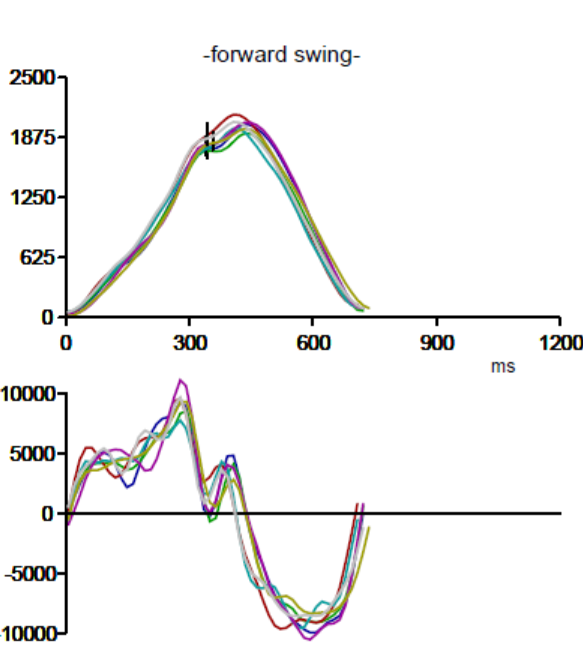
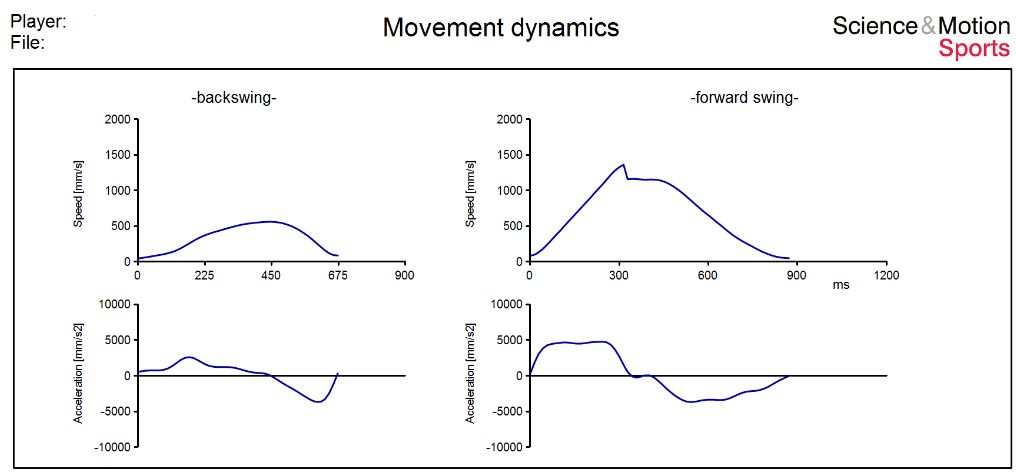
One of the most frequent ideas that I hear the average golfer say that they are trying to doDSC_0340 with their putting stroke is to ACCELERATE through the ball and follow through. They do this because they have the misconception that they always decelerate which couldn’t be further from the truth. Most of the golfers that we tested overaccelerated which means that their peak velocity happened after impact and peak acceleration happened just prior to impact. This makes it very difficult to control your speed. (see graph below)

overacceleration - double hump

What Good Putters Do

We found the opposite when testing PGA tour, LPGA tour, Mini DSC_0288Tour Players and top amateurs. they had constant speed control which included zero acceleration through impact. Good putters had a very flat top to their acceleration graph like the one below. Also I have posted a short video of a recent putting lesson that includes this common misconception as well as a few more helpful nuggets.will collins acceleration profiles

RESEARCH TO PROVE MY WAY OF FIXING THE PROBLEM

I believe that I have a way to change this pattern as I have had much success with my students. This way is easy to understand and is teachable through using the SAM Putt Lab to create the proper feel for the stroke. currently, Alex and I are doing a research project to test my theory to see if there is a distinct correlation between the profiles that we have seen and consistent distance control. Before I reveal my idea I would like to gather more data.

Follow me on twitter @golfgurutv

Here is the #makingeverthing

Guru

2013 Mastermind Crew Roundtable Discussion


The PGA show is many things to different people. For me it’s about opportunities to learn, catch up with old friends and meeting new ones. You have all heard of my mastermind crew (Rob McGill, Dennis Sales, Jason Helman, Kirk Oguri) which is comprised of some of the best coaches and club fitters in the golf business and we all met a few years ago on twitter. This is the second year that we have got together to discuss different topics in the golf world. We havent managed to get everyone together yet as we were missing John Graham, Sara Dickson, Mike Fay and Andrew Marr but we still had a great time with the roundtable. A big thanks to Ricky Lee Potts for moderating it and coming up with the questions and to my Junior Golf leader Adam Ohsberg for doing the filming and editing for the project. I am so fortunate to be involved with this group of great professionals and I hope that you enjoy the videos. I have also linked there twitter accounts to the names above so you can follow them as they are all very active on twitter and are very interested in helping golfers and other coaches improve.

Follow me on twitter @golfgurutv

Guru
 

Guru’s Teaching Workshop with Special Guest John Graham


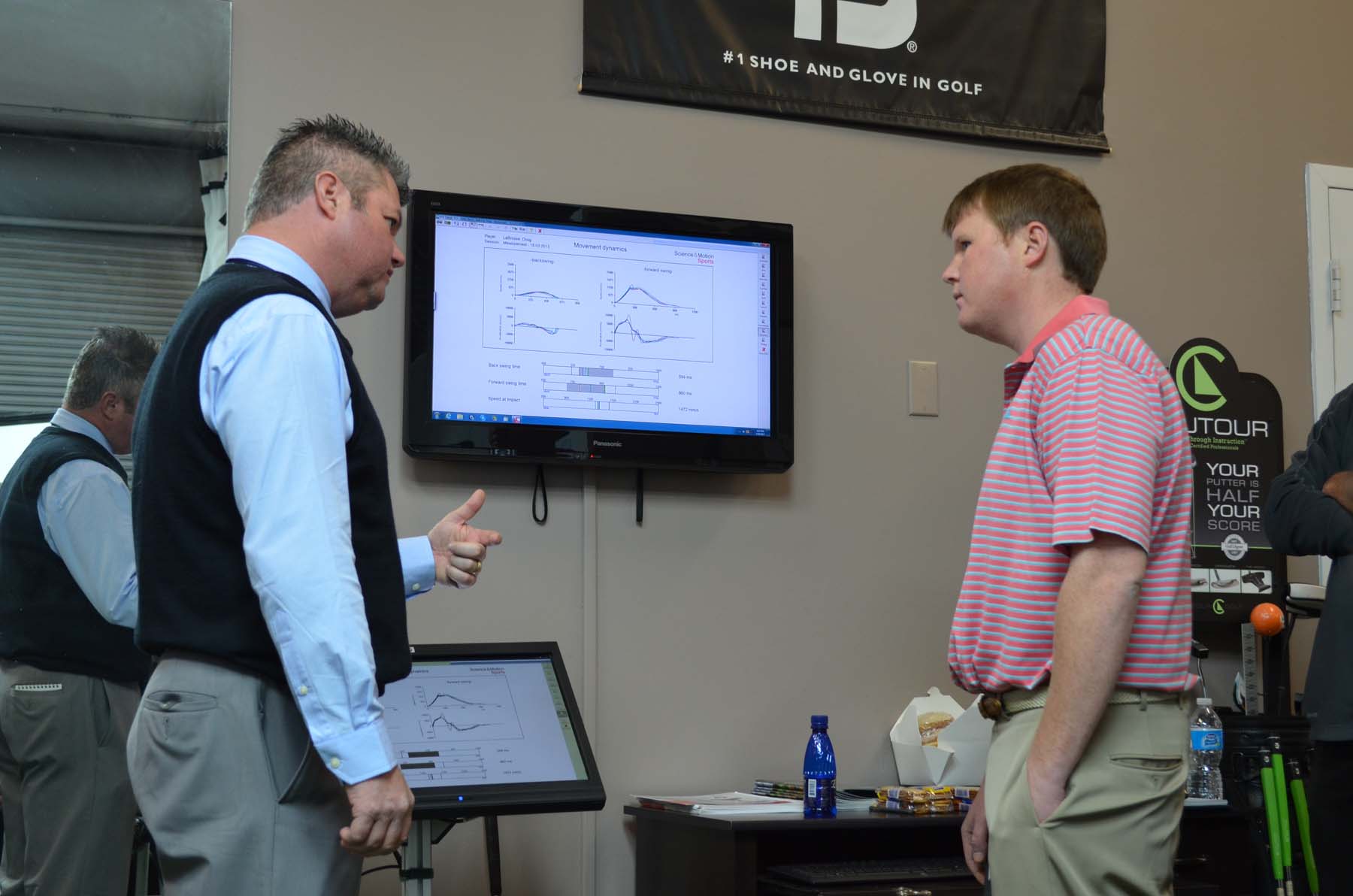
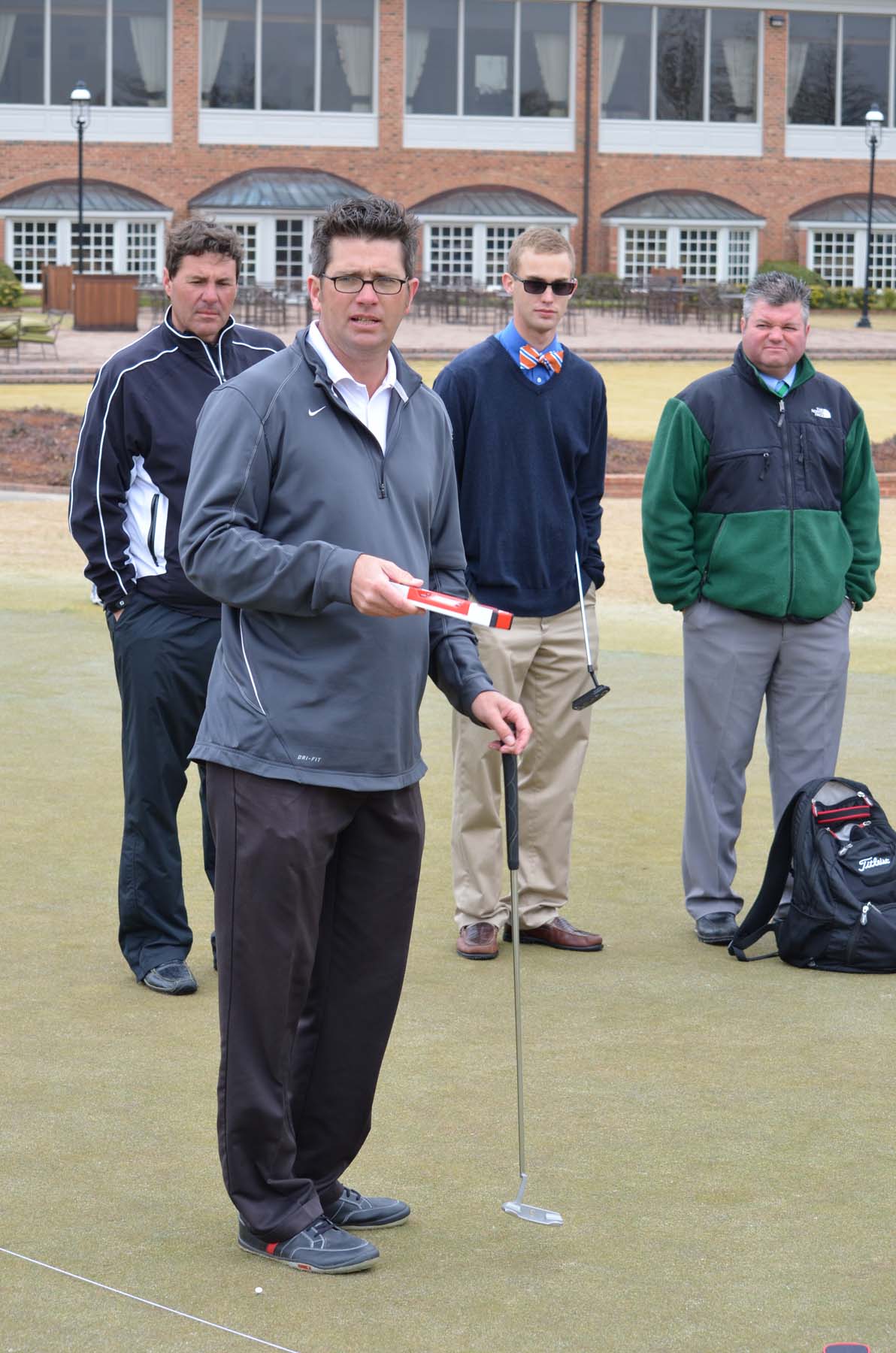
390723_2419228598183_1175444144_32457108_1456842240_nIn the eve of my departure to the National Teaching and Coaching Summit and the PGA AimPoint Certified black.2.0Merchandise Show, I wanted to announce that I would be hosting my second annual teaching seminar at Carmel Country Club on Monday, March 18th. I am also very excited to have John Graham as my guest speaker. John is from Rochester, NY and  is the Director of Instruction at Webster Golf Club. He is also a Senior Aimpoint Green 418262_3045357531015_1175444144_32700438_1144119419_nReading Instructor and an expert in the world of social media. For those of you who don’t know Mr. Graham need to take this opportunity to meet one of the greatest minds in golf instruction today and a very good friend of mine. At this seminar I will discuss my teaching philosophy for the full swing and John and I will share lots of  putting information. John and I have been doing some research using the SAM Putt Lab and have compiled plenty of data in the last year that we will share and discuss with the group. We will also be doing live lessons using the SAM Putt Lab and John will give you and overview of AimPoint technologies with some additional drills that you can share with your students. The cost is $100.00 and will run from 9:00  to 5:00. You will earn 5 msr points for your participation. I have an exciting day of learning and sharing quality golf information for you so I hope you can join John and I for this great event. Here is and overview of my program and how to sign up. I hope to see everyone in Orlando.

  • The 5 Mastermind Skills that every teacher should know – The CGA Framework304280_2312143841131_1175444144_32381511_1042688301_n
  • The art of moving and manipulation the student to create pattern changes
  • How to use technology to speed up the learning process
  • Teaching Putting at the Next Level – Learn the 5 Most Important Aspects of Putting  and how to teach them
  • S.A.M. Putt Lab Data and research will be revealed that will dispel the most common myth in putting
  • Live Putting Lessons using the S.A.M. Putt Lab that will teach you how to move the numbers and help your students improve faster
  • How to use the 4 corners of social media to drive business, create brand awareness andD-plane_2_11 improve your teaching skills
  • An Introduction to AimPoint Green Reading with drills to share with your students

Date:  Monday, March 18th

Place: Carmel Country Club, 4735 Carmel Road, Charlotte, North Carolina

Cost: 100.00/person

Email Jason Sutton @jsutton@carmelcountryclub.org to reserve your spot

 If you have any questions feel free to say hello at the PGA Show. I would love to meet you all.

Guru