GURU TV – “Course Management Basics”
February 11, 2011
See you on the lesson tee,
Jason
See you on the lesson tee,
Jason
 You have heard the saying,”It is hard to make a putt with hour hands around your neck,” we have all been in situations where we get nervous or uptight on the golf course. It usually involves a first tee or a shot that applies pressure because it has a special meaning to us. It could be a final putt or a drive in which we have a chance to break a career low barrier or win a big tournament. Our mind and our thoughts become our worst enemy. We can sabotage a great opportunity to succeed by tightening up our muscles, owe mouth gets dry and we can’t swallow or what?………….Breathe dawg, breathe! That was my caddy bringing me out of my coma on the last hole. We have all heard how important a sound pre shot routine is to transferring a skill that is easily executed on the practice range by ourselves, yet being able to pull it off under pressure become quite difficult.
Several years ago, I attended a teaching summit where I saw a popular sports psychologist, Dr. Dick Coop speak on this very subject. Dr. Coop coached the likes of Payne Stewart and Corey Pavin. He went through all the physical fundamentals of a good routine such as starting from behind the ball, picking an intermediate target etc. The thing that I found interesting was where he said to breathe. Yes, you heard me. Breathe! It seems simple but so important. It is amazin how we forget sometimes Here is what Dr. Coop said:
THE 3 PLACES TO BREATHE
1.Standing behind the ball as you visualize – this is where the tension starts and the fear creeps in. Take a cleansing breath as you picture your shot. It will help you think clearly and keep your rhythm.
2. As you walk into the ball- The pace that you walk into the ball will dictate the tempo of your swing. (sing your favorite slow song in your head).
3.As you waggle and get ready to pull the trigger- This is where most players choke. A deep cleansing breath will help alleviate the tension and ward off any negative thoughts that might creep in. Also, if you focus on breathing you won’t have room for these sabotaging thoughts.
The Importance Of Breathing and the Lympathic System
In order to help my students with there breathing and to learn more about the importance of it, I found a cd program from Tony Robbins, one of my favorite success coaches, that I found most helpful in explaining how and why to breathe. I share this will all of my students as I do a playing lesson or work on pre-shot routine. Here is a exerpt from Tony Robbins program, Enegise for Life :
There are many benefits that arise from making deep breathing a part of your daily routine, most of which are due to the fact that deep, cleansing breaths give your lymph system a helping hand in clearing out the toxins from your body.
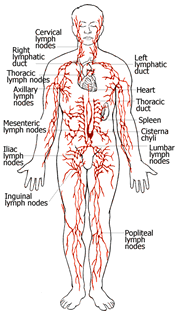
What is the Lymphatic System?The lymph system is commonly referred to as the body’s sewerage system. It works by acting in harmony with the blood, surrounding every cell in the body and protecting each one by removing dead cells, blood proteins and any other toxins and excreting them from the body. The toxins are then removed from the body through our waste products, mucus, or our skin. The body is hugely dependent upon the lymph system, to the point whereby if the lymph system was shut down for 24hrs you would die as a result of the trapped toxins and proteins surrounding our cells. In addition to deep breathing, rebounding can be a further way to stimulate your lymphatic system. The lymph that is collected around the body drains through two ducts into the blood, which are located at the base of the neck (around the thoracic duct). By breathing we stimulate the flow of the lymph, and through deep breath we can encourage the flow to be both cleansing and powerful. Once we breathe, the duct sends the lymph into our blood flow, then onto the liver where it metabolises and then onto the kidneys where the toxins are filtered. |
|
| Deep breathing is so important because, unlike our blood flow, the lymph system does not have a ‘pump’ to push the lymph fluids around our bodies. Rather, the lymph system requires the muscular movement which is created by breathing.
As well as acting as a filter, the lymph system is also able to destroy bacteria, viruses and abnormal cells, such as cancer cells. So enough of the anatomy lesson, lets talk abou how we should breathe. Here is an excersice that I want you to try. Breathe In the Following Ratio Breath in for 1 count Hold for 4 counts Breath out for 2 counts for example – if you were to breath in fo 4 seconds,then you hold your breath for sixteen seconds and then breath out for eight. If you are able to do this ten times, three times a day (morning, evening, and before bed), you will see a huge difference to your energy, clarity and your ability to ward off illness. This is why runners, yoga enthusiasts don’t get sick that often. So pratice your breathing, work it into your pre-shot routine. Go have fun and I can promise you that you will be cool under pressure and finish off that career round. Feel free to share this blog if you find it helpful by hitting one of the social site buttons below. Leave a comment as well See you on the lesson tee and don’t forget to, well you know, Jason |
|
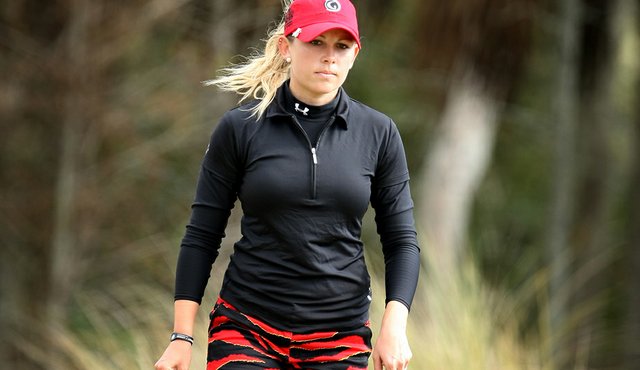
Caddy programs at golf courses are not the norm any longer but if you ever get the chance to play a round of golf with a caddy, I highly recommend it. Professional golfers are used to having someone carry their bag during a round but a good caddy can mean so much more to the performance of the player. Recently, Sara Brown (big break star) made it through q school to earn

her LPGA Tour card. For those who don’t know this, her boyfriend, Derek Radley is one of my good friends as he used to work with me at the golf school. Derek has been by Sara’s side through the grind of playing the futures tour and ultimately making the big jump to the tour by caddying for her. Here is an article that I found that highlights an instance where Derek had to make a tough call as a caddy (and a nervous boyfriend) coming down the stretch. click here to read the article. Congratulations to Sara and best of luck on the tour in 2011.
 So how important is a caddy? Does the decisions they make, what they say or how they say it make a difference to the performance of their player? Absolutely. This is where it is important that they know the players tendencies, moods, mannerisms so that they know when to say something and also when to say nothing. This is why the best players tend to have caddys that have been with them for a long time. The most notable are Phil Mickelson and “Bones Mckay” and Tiger and “Steve Williams”. Here is a great article about Bones that I found. click here
A good caddy has the ability to help his or her player focus on the shot at hand with a simple phrase like “pick a good target” or “smooth swing big guy”. The caddy can also be a sounding board for venting frustration after a bad shot. So caddying is more than just getting a correct yardage, handing the player a club or raking a bunker. We have seen many instances where the caddy plays a big role in a young players first win by keeping them focused coming down the stretch. So what can the average player do on the weekend when they don’t have a caddy to talk to them or calm them down after a bad shot. WE MUST BE OUR OWN CADDY AND PLAYER COMBINED! SO HOW DO WE DO IT? HERE ARE SOME KEYS TO BEING YOU OWN CADDY:
THE CADDY PRE-SHOT ROUTINE AND SELF-TALK
 A pre-shot routine should last around 40 seconds. The first half of that is what I call the caddy stage. This would include: 1)planning the type of shot you want to play, 2) getting a yardage, 3)choosing a club, 4)assessing the conditions…lie of ball, wind, up hill or down hill etc. The POST ROUTINE is also very important. I teach my players
ANCHORING techniques. How you react to a shot is critical in the success of the next shot, good or bad. example: When a Sorenstam shot 59, in order to keep her emotions even keel, her coach Pia Nilson told her to giggle to herself after every shot (good or bad). Obviously anchoring is easier after a good shot so let’s focus on the bad ones. I give my players 6 seconds to get upset before they have to let it go or when ever they put the club back in the bag (whichever comes first). Self Talk is also important (the caddy in you). How many times have you beat yourself up, called yourself a bad name (big dummy or worse)…. How did that work out for your next shot. Let it Go, brother. How many times have you stood over an importance shot and a thought popped into your mind like, “just DON’T HIT IT IN THE WATER!” where did it go…….The water. The subconscious mind can not differentiate between positive and negative commands. So you just hit the ball where your brain told your body to hit it. Next time how about asking the question,”Where’s My Target?”
Not to get into a whole mental discussion but you must be your own best friend, like Bones or Stevie. Be kind to your self and use self talk to pump your self up or motivate not to annihilate.
The play our best golf when we allow our subconscious (the garden) mind take over. The conscious mind (the gardner) seems to always get in the way. Thats enough for today so I will leave you with some food for thought, some bread for the head. Before every shot, we plant something…..seed of hope or doubta …………we can choose to plant flowers or we can plant weeds……….Champion Golfers plant beautiful flowers
Let’s connect: to follow me on twitter @twitter.com/onplanegolf
See you on the lesson tee,
Jason
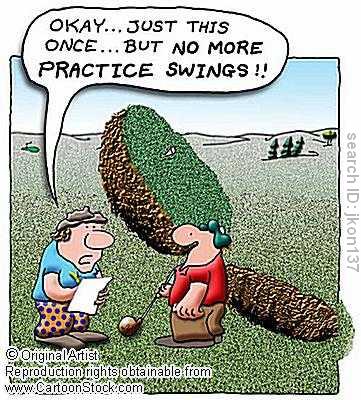 Day 2 of the Guru blogging chronicles leads me to a topic that I have been thinking about for some time. STUDENTS EXPECTATIONS!…..When a student asks me how long it is going to take to reach their golfing goals, I try to be honest with them as to not dispirit their eagerness to learn. Every case is different. As like a marathon race (not a sprint!), some get to the finish line quicker than others. The catch is, with the right coach, philosophy,plan, time, commitment and sacrifice…..Everyone will cross the finish line. The key is to set your goals and expectations accordingly. In the golf swing, we are using a bent stick with a weight on the end….making an 18 foot circle and trying to hit the ball on the clubface in a sweet spot the size of a dime. Let’s face it. GOLF IS HARD and any person that tells you otherwise or any teacher that says,”I try to keep it simple,” Is out of their mind. I have coached many great athletes that have played NFL football, Major League baseball, Division 1 college basketball, tennis and professional lacrosse and they all say the same thing. Why can’t this be as easy as (______). Because golf is hard people. Harder than any other sport I can think of. That is why I love it so much because it doesn’t matter what level that you get, you will never be satisfied, never mastered and you never completely own it. You are lucky to just rent it for a few months like Tiger Woods in 2000. Ask Tiger how hard golf is right now….you with me? Here is an example: I consider myself a better than average athlete. I played baseball, basketball and football at one time before deciding to play golf in college. I haven’t played or shot basketball for several months (since the Achilles rupture, hehe), and I can guarantee that I could go out to the court, practice for a few minutes and then shoot at least 80% from the free throw line and make a few three pointers. If I took that much time off from golf, there is not way that I could play to the equivalent level. I could go into the batting cage and make contact with a fastball after a short amount of work (I actually did it last week with my kids). Not that I could play professionally but you get the point, right.
YOU CAN’T CHEAT GOLF, SO DON’T TRY
To improve at golf, there has to be many hours of dedication, repetition and sacrifice. You can’t just pick up a club, read a tip from a magazine and go play your best. I have no sympathy for the student that takes lessons, doesn’t practice and complains that they aren’t getting better. It takes repittition people and you can’t fake it.
BE EASY ON YOURSELF
After asking the question why did you think you could shave 25 shots in 6 months to a student, here is the excellent feedback that I got that helps me understand why people fall into this trap.
1. the professioanals on TV make it look so easy
2. I work hard and anything I set me mind to I usually succeed at (I love this attitude by the way)
3. I have the best coach in the world (I swear he said it….just kissing up but I will take it)
All valid points but we have to understand that unless you are playing for a living, golf is a hobby. We shouldn’t take it so serious as to let it affect us as people. Your golf score is not who you are as a person.
STICK TO YOUR PLAN AND SET MINI-GOALS
Now I am not saying that if you are getting worse that you should be happy, just fire the coach (just ask the Cowboys). I am saying that if you trust your coach, your plan and are seeing improvement…..keep plugging away and you will get there. Set reasonable goals so you aren’t always disappointed and enjoy this great game. Remember……It is a marathon not a sprint and you will be fine. Talk to you tomorrow
Follow me on twitter @twitter.com/onplanegolf
See you on the lesson tee,
Guru
As I reflect on my year and look ahead into the future, a key tool that I use is a writing journal. I have a journal for each area of my life: Spiritual, Family, Personal Development and Teaching. Before I can move forward, I must make certain that I am heading in the right direction. If you are serious about improving your golf game, I encourage you to start writing. No, you don’t have to write a book. Heck, you don’t even have to use proper grammar. As long as it makes sense to you, that is all that matters. I encourage all of my tournament players, elite juniors and serious golfer fanatics to participate in this practice of journaling. I have read hundreds of golf books over the years, some good and some not so good. No matter what I try to take something out of every one of them that will make me a better teacher or player. Nick Price wrote a book in 1997 called,”The Swing: mastering the Principles of the Game.” Although the instruction portion was average at best, the last chapter was interesting because Mr. Price published his swing journal that he kept while working with David Ledbetter. (The before and after pictures of his swing was quite interesting as well). Here is what he wrote which I think does a nice job of summing up the importance of keeping a journal from a major champion. He writes, ” During the course of my career I have kept a journal of my thoughts, primarily about my swing as I was working on it. I did not do this on a regular basis, but simply jotted notes down as they occurred to me, to reinforce ideas in my mind. Often after working with David Ledbetter I wanted to think about what we had discussed and to work things out in my own mind. Writing thoughts down helps me focus on what I want to do, and why.” When I look back through the journal now, I am struck by how I was obviously struggling toward the clear understanding of the swing that I sought. It is a never-ending journey that I enjoy-most of the time and keeping these notes helped me clarify matters.
Keeping a journal is a great way to keep thoughts that work (or don’t work) to remind yourself of what you are working on the last time you were on the lesson or the practice tee. Here is an example of one of Nick Prices’ journal entries:
Supination : This is created when the left hand remains bowed through impact. The forearm rotates after impact, releasing the clubhead down the line of the target, still in the plane of the swing. This is undoubtedly the secret to consistent ball-striking, especially with the irons. When the left wrist is bowed incorrectly through impact, errant shots will result, the most frequent type being a hook. To insure against this happening, the thumb of the left hand must remain on top of the shaft, with the clubhead coming in low and after impact released. The normal result when this is done correctly is a very piercing flight of the ball, essential for extremely accurate iron play! The things to remember while trying or using this move are:
1. Make sure the club is taken away low from the ball
2. Make sure the backswing is completed
3. make sure the weight is transferred
4. make sure a full turn is achieved
Wow! I don’t know about you but that is alot of stuff to work on in one session. This was only a portion of the post, believe it or not. I think this is the point of my career that I started giving my students less and less to work on in a lesson, right teachers. First understand that he is a tour player and it was his job to practice and secondly, he was a very analytical learner. The point is to jot down ideas that will keep you focused, you don’t have to write a book.
A Mental Excercise
For you “negative nellies” out there that only focus on the bad shots that you hit, try this in your journal. The next time you play, I challenge you to write down all the good shots that you hit (what club it was, yardage, how it looked, how it felt). This will start to project some positivity in your attitude and you will be amazed at how it will help your visualization skills.
So that is enough for now. Please share some of you goals for this past year and goals for 2011. I will post on how to help you set your goals if you are struggling soon. Leave a comment below.
Follow me on twitter @ twitter.com/onplanegolf or friend me up at facebook.com/onplanegolf
See you on the lesson tee (704-542-7635 to schedule a lesson)
Guru…….p.s. HAVE YOU PURCHASED YOUR DANA RADER GIFT CARD YET FOR CHRISTMAS?
 What if you could just think about hitting great golf shots and they would magically happen? Have I got your attention yet? Well, It is not that easy but your mind and your inner vision does have a huge effect on your performance. Mental coaches have really become popular on the PGA Tour and in all sports and for good reason. The ability for the athlete to control their emotions and their mind is what separates the winners from the rest of the field. I am no sports psychologist but have read enough books, talked to enough sports psych docs and worked with enough tour player who work with these guys to be dangerous. I have really tried to improve in this area so that I can help my players with more than just their golfing skills but assist them in their mental games as well. I will write a book someday and one of my so-called titles was “How To Get Bubba To Hit First”. The first thing that you are asking yourself is “Who Is This Bubba Character?” Great question. Have you ever missed a four-foot putt only to rake it back and make the second one. Have you ever made the worst driver swing in your life, out-of-bounds, re tee and stripe it down the middle? Stand over an easy chip shot, duff it, step up and hole it like you were Phil Mickelson. We have all been there, right? That second guy is pretty good. Well, I want you to meet Bubba! The best player that lies within all of us. The Ranger Rick that stripes it on the range and drives 300 yards to the first tee and hit a drive like it was your first day playing golf. So what has changed and why does Bubba play so well and you don’t? Well, it has nothing to do with your skill because you obviously could do it on the practice tee or the provisional drive after you hit it out-of-bounds. It starts with VISUALIZATION! Have you ever heard of the LAW OF ATTRACTION? The Law of Attraction simply says that you attract into your life whatever you think about. Your dominant thoughts will find a way to manifest. Golfers are the worst at thinking about the negatives or simply viewing themselves as lower than they are . I talked in some previous posts about “Acting As If”. Before you can act like a better golfer, you must visualize yourself as better golfer or see yourself hitting the shot that you want. I believe that the best players can visualize each shot so vividly that they have trained their mind into thinking that they have already done it…………Bubba gets to hit first. We do it in our careers. We do it in our lives. We set goals and outcomes that we want to achieve for ourselves and our families. So why not our golf games? There is an excercise called a “Vision Board” where you take a piece of poster board and paste pictures of things that you want to achieve or accomplish. They encourage you to look at it every day as you would your goals an visualize yourself doing these things. Golf is such a visual sport and the best players use their eyes so effectively. Why did Jack Nicklaus take so much time over a putt? Not because he had a lot of swing thoughts. He took time to visualize the putt (in real-time) tracking to the hole, going in, then returning to his putter before he would pull the trigger. That took a long time! Why did Johnny Miller sit in a chair before a tournament, close his eyes and picture himself playing every shot in an entire round before he went to the course……I think he shot 63 in alot of majors in his mind. Visualization or being able to picture the outcome or shot is one of the first things I teach in developing an effective pre-shot routine. Here are the 3 ways to visualize……find out which one works for you and Bubba will hit first more often.
1. Seeing the flight of the ball or shot – You are the camera and you picture the ball flight as it was a video game with a white stripe.
2. Visualize yourself as you stand outside your body – This when you are picturing yourself making the proper swing or short game shot that you want. That is why I think your should always take a video lesson when you are hitting it your best. This way you view what your swing looks like at its best and you can call that image up when you need it.
3. Picture another Player to help your game – I used to picture Ernie Els’ driver tempo and Tiger Woods short iron swing for excellent results. You can choose your models but this is an effective way to maintain tempo and rhythm in your swing or stroke. It is no coincidence that after you return from a tour event and have watched the best players in the world practice or play, that you suddenly develop effortless tempo and rhythm in your swing….for at least a little while, right.
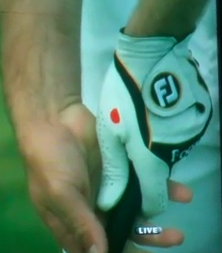
It worked for King Louis (and the red dot) in the Open Champioship and it can work for you. Work on your visualization skills for your golf and for your life and I can promise that you will start to attract the shots and the things that you want in your life and your golf game…….It has worked for me and I know it will work for you
See you on the lesson tee and don’t forget to breathe as you paint the picture,
Guru
1. Keep your head down – The head must be allowed to move somewhat during the swing. A steady head might be more appropriate. The amateur eyes might see the head raise up but remember it is attached to the body. Maintain a consistent spine angle and let your head follow your ball flight to create freedom in your follow through. Otherwise you will be looking at the ground and still killing worms.
2. Tuck your rear elbow on your backswing – This one started with someone watching Hogan swing. Even he had some space under his right arm in the backswing. Tell Fred Couples, Jack Nicklaus, Angel Cabrera or our recent PGA Tour winner, Carl Pettersen to tuck their right elbow and you will ruin their career. Width in the swing is created with a wide right arm in the takeaway. Save the tucking for the downswing when the swing gets narrow.
3. Keep your left arm straight – Tension is the one of the most damaging things to a good golf swing and trying to lock your lead arm can cause this very quickly. Comfortably extended is better terminology. Keep it extended but soft. A little bend will not kill you. Once again, width is created by the right arm. If you are collapsing, try pushing out slightly with the rear arm and you will thank me later.
This is enough for you to chew on for the time being. There are so many more that I will discuss and probably do a show about in the near future. My advice to you is to make sure that when you get a tip that it 1) makes sense in a sound golf philosophy and 2) applies to your error tendencies. An educated student should know what these are. If you don’t, please see a reputable teacher/coach that can help you organize and understand your errors and put together a plan to fix them. Until then….. Don’t Forget To Breathe (the best place is when you get ready to take it away)
See you on the lesson tee,
Guru
 As my previous post on how to raise your golf I.Q. got a tremendous amount of feedback from my peeps from Guru Nation and Twitter, I know that you have been patiently awaiting the follow-up post. You may have found yourself in a one or a few of the categories that were included in the former post and you are thinking,”Hey Guru, I want to change. How do I raise my Golf I.Q.? I have bought into the “As If” philosophy and am ready to start thinking above my current level of play. Help me help you! How many of you googled Boiler Room? Organized your clubs or Burned your iron head covers? That’s what I am talking about, so who’s coming with me? As I write this post, I am watching Justin Rose trying to hang on to win his second P.G.A. Tour event and just shows you how hard it is to win at the highest level. Did he lose his swing or did he just lose his mind last week. We will see how he does coming in. Back to this post. Here is my list to help raise your golf I.Q. and get you in the mindset that “You are the Best Player in the World” (thank you Alan for that wonderful comment)
1. Learn to dress like a player: Don’t be afraid to wear a white belt and/or white pants. If we are emulating the best players in the world this is important. If you dress like a player, you just might play like one. I have not seen anyone on the tour that has a belt with a sailfish or your club logo on it…..I’m just sayin. Dress as If and no high socks either. I don’t care if they have a swoosh on it….save that for the basketball court. You know who you are! Get a white belt.
2. Put a hybrid in your bag: Don’t be afraid of technology. Next to the golf ball, the hybrid is the biggest jump in technology in the last 5 years. Take the 2 and 3 iron out of your bag and insert hybrid. You will thank me later.
3. Read up on your golf history. How many majors has Jack Nicklaus won? 18 people. To have a passion for the game, you must know some history. I suggest you learn about the greats of Hagen, Hogan, Trevino, Ouimet, Old Tom Morris etc.
4. Take at least 4 lessons per year. I don’t care is Tiger thinks he can get better without a coach. Golf is a sport where feel isn’t real and even the best players need another set of eyes and some motivation to get better. Do your research, find a coach and stick with him/her. If you don’t you can’t complain that your game is getting worse.
5. Get fit for a new driver on a launch monitor. It is amazing what the correct fit will do to maximize your driving. The numbers don’t lie and an expert fitter can get you twenty yards in a heartbeat. Is your driver holding you back, go find out. I recommend Stan Roach at www.danarader.com.
6. How are your wedges and putter? In the year of the last year of non-conforming grooves, buy a new wedge of at least 58 degrees. If you don’t own or can’t use a lob wedge you may as well add 5 shots to your score before you tee off. Aside from putting, pitching is the most important part of the short game………learn to pitch it and you can’t with your pitching wedge….just saying. recommend the Callaway X/Jaws or Cleveland with zip grooves. This is the last year that they will make them with non conforming grooves.
7. Be a stat keeper: If you are not aware of your basic stats, how do you really know your strengths and weaknesses. Take inventory of your game so you know what to work on. The educated golfer works on the things that they do well so get out of your comfort zone and start to work on your weak areas like putting. I recommend www.shotbyshot.com. Let’s be smart about our golf games and where to practice.
8. Understand the physical basics of the golf club. An educated student understands that you must do two things with the golf club. 1) swing the club on or parallel to the plane that is created at address. 2)strike the ball with the shaft leaning toward the target…..Impact people. Any other philosophy is not golf!
9. Do Not Fall Victim To Golf’s Misconceptions: Head down, left arm straight, tuck the right elbow…..NO! Here is are thoughts of an educated student: swing the club on plane (see #8), hit the inside quadrant of the ball, release the head with the body, the low point of my swing is even with my front shoulder, flat lead wrist/bent rear wrist, swing to right field, stay connected, find the slot, hit the lowest shot possible around the greens, I practice my putting because it IS important.
10. Be your own best friend: I can’t believe what you just said to yourself! In an recent excercise that I did with one of my elite juniors, I said,”Imagine that you are on playing lessons with the pros and you are the pro.” “Describe what you are going to do with this shot.” I heard him say that he was going to kinda hit it over there and sorta let it land at this spot and hope it trickles down to the hole……No, No, NO. You have to be committed and exact with what you are telling your brain and body to do. Let’s be committed to every shot. If you talk like this to yourself, stop. Justin Rose did and he just won for the second time this year. I suggest reading the 30 second golf swing by T.J. Tomassi.
Good Luck and don’t forget to breathe. The fact that you are reading this blog, raises your I.Q. already…..thanks so much.
See you on the lesson tee and I hope you had a happy 4th,
Guru……………..704-542-7635
What is your golf I.Q.? How do you improve it? What does it mean to be an educated student? As a golf instructor, I talk and interview new students every day. As I get to know them, their golf background and their golfing goals and aspirations, I like to explore what I call their “Golf I.Q.” It starts as I observe the way they walk. The way they stand. The way they dress. The way they organize their equipment and the way they go about addressing the ball as they warm up. How much golf do they or have they played is a big part of it. How passionate is the student about the game is important. It doesn’t necessarily have to do with their handicap. I have seen mid to high handicappers with higher golf I.Q.s than better players. As you know, I am a list guy…..so here is my list of things that will raise of lower your Golf I.Q. See if any of these things apply to the way you go about playing this great game. I hope this makes you a more educated student of the game and helps raise your Golf I.Q.
Things that will lower your golf I.Q.
1. If you have iron covers (don’t be that guy….total bush league) or a rain cove unless you are traveling (nice one Jackie)
2. If you are playing with clubs that are more than 15 years old, saying “I will get new clubs when my swing improves yet you are swinging Taylor Made Bubble copies with the original grips. Don’t be afraid of technology, it will truly help you and your instructor is you have clubs that are fitted and include some forgiveness” : Please see Stan Roach at the Dana Rader Golf School for a correct fitting….http://danarader.com
3. Are your clubs out-of-order? The short irons go in the front and progress to the back and the woods go in the back with the putter. This way you won’t mistake your 9 iron for a 6 iron. Be organized and clean your grooves more than once a year and you can’t complain that you get no spin on the ball.
4. If you stand on the target line and aim your club face, whether it is putting or full swing, and then walk to the side and try to line up. Please Stop. this doesn’t work. Do you see any of the tour players doing this? By the time you get around to aiming your body, you are lost. This goes for you players that are putting the club shaft across your thighs to line up too. (You know who you are!), Guru Nation knows that you aim the clubface and then align your body. Don’t be that player!
5. Don’t be the student that asks the coach after every shot,”What did I do?”. Everyone has their swing tendencies and they usually don’t change. If the coach has explained to you why the ball is doing what it is doing, you should focus on what you need to do to change it.
6. Do you carry a ball retriever in you bag and it needs regripped? (subtract 100 points)
7. If you go to a tour event and yell “You are the man or get in the hole”………Please don’t be that guy. **Also, don’t wear your golf shoes to a P.G.A. tour event unless you are playing. (you know who you are)
8. If you practice full swing shots without sticks or clubs on the ground and complain about not being able to line up (dowel rods are $1.98 at Lowes)
9. If you buy a putter off the rack that is 35 inches long and you are not at least 6 foot 3. The only reason they make putters 35 inches is that is the height that will hang out of your golf bag. Custom fitting is not a joke….I recommend www.coutourgolf.com to get you started. Todd Sones is great.
10. When you describe your golf swing, you use terms like….”swing down the line, trying to keep my head down, keeping my left arm straight, hitting the back of the golf ball, I must have looked up, I didn’t get under the ball enough. If you are trying any of these ideas, you are NOT PLAYING GOLF, CRICKET MAYBE
I know, I know…..you are saying, this is pretty harsh BUT I live by the philosophy of “ACT AS IF.” (For all of you that have seen Boiler Room)If you want to be a lower handicap player, look at what they are doing and emulate them. Play with better players. Mentoring really works (ask Tony Robbins which I am a big fan). If this resembles you in any way, stay tuned for the list that will help you to RAISE YOUR GOLF I.Q. Stay tuned and lets work on you game in an intelligent and effective way that is going to make you better. Get out of your own way and start to see yourself as the player that you want to be.
Until next time, don’t forget to breathe and start by organizing and cleaning your clubs,
Guru
See you on the lesson tee,
Guru
 The Golf Guru Show