As we move through the winter months, mirror work is a great way to keep your swing in check. Checking the club face is merely one thing to look at in the mirror. We can obviously look at your posture, your swing plane or whatever you are trying to change. Here are two things that I didn’t mention in the video that are worth doing.
1. Use a weighted club (like a momentus) and hold your positions for 2 counts as you go through your swing. This could almost be a workout if you do it long enough. It is a great way to create some muscle memory.
2. The second way to change the club face (that I forgot to mention) is how the hands set at the top
A cupped or bent lead wrist will open the face more and a bowed lead wrist will tend to shut the club face more. Neither of these are necessarily wrong, they just have to matchup to the grip and release (see matching components).
Good Luck with your indoor training and I look forward to your comments,
As we move into the first event on the P.G.A. Tour, I want to help you to become a more educated golf viewer. I want you to notice how many different ways there are to swing the club and play at a highest level. Top instructor Jim McLean always said, “If you take the top 5 players on the tour money list, you will see 5 different top of swing positions. He is right, try it sometime. You must have the different components together in the swing that match up in order to create a playable ball flight. For example: an outside to in swing path coupled with a closed club face doesn’t work! You get nothing but low pulls and hooks along with deep divots. Now I am not going to go into every single combination out there but I just want you to understand how two main components work together in various ways to hit straighter shots: Club face angle and swing plane. The swing can be deceiving on television mainly because you don’t always get good camera angles. If the camera is shooting from one side or the other, it skews the look of the swing plane and makes the club look like it is doing something different. So be careful. In the February Issue of Golf Illustrated (hit newsstands today), I wrote a column entitled the 1-2-3 backswing. I have included the video (from my archives) that illustrates the message: There are many ways to get it done. Get a reputable teacher/coach to help you figure out which one works for you. This way you don’t go through your golfing career trying to swing like someone else. Be yourself and find your best swing. Enjoy the video and Go get the magazine and let me know what you think. I look forward to your comments. Look for the next episode of Guru TV on The Importance of Mirror Work and Indoor Practice. Stay Tuned and thanks for checking out my blog
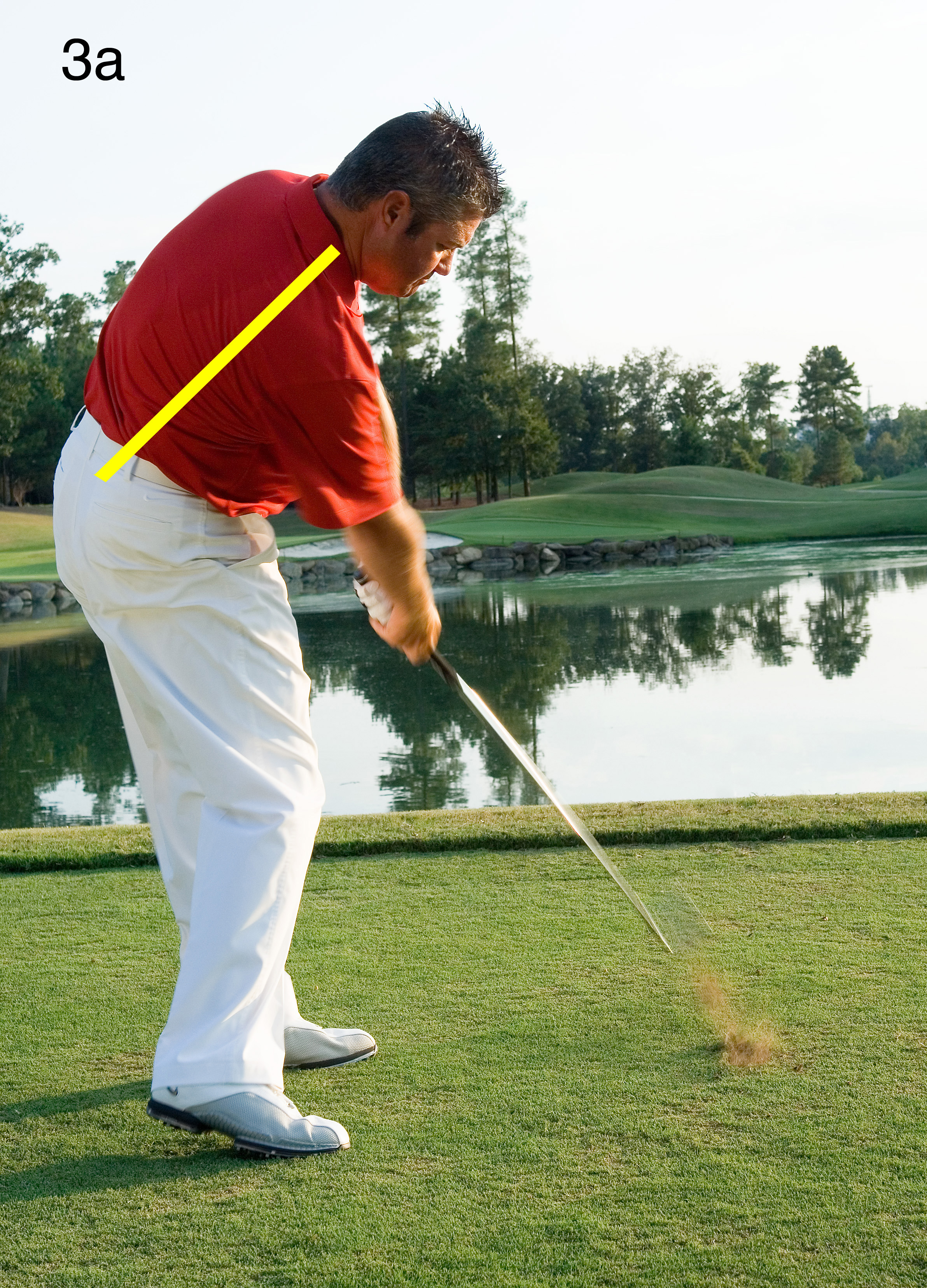
I have an article that comes out in the next couple of weeks in Golf Illustrated. The title of the article is “Post and Rotate.” The main focus of the article is the role of the lower body and the importance of clearing the hips and maintaining your spine angle. One of the most frequent errors that I see is called early extension. This occurs when the hips move towards the ball in your downswing and creates a change in spine angle through impact (see past episode of guru tv on fitness). I work on this move frequently with my students when they have too much hip and leg slide in their downswing which tends to crowd the arms into impact. We often call this getting trapped. Recently, I was working with a student (we will call him Allen) on this very move and I noticed that his rear leg was straightening in his backswing. I have seen this before in golfers and this error can cause a number of swing errors like reverse pivoting, or can cause you to top the ball or hit it thin. Often I will try to create a swing error with my own body to help me to feel what the student is feeling which allows me to explain why a particular problem is occurring. As I made a backswing and straightened my right leg, as my student did, I noticed that I had no way of pushing off my back side to move my hips through. Allen had no way of rotating his left hip backwards because he couldn’t push-off his right side. I hope you are in your living room or den recreating the top of swing with a straight right leg and you clearly understand what I mean. As soon as I got the student to maintain the flex in the right leg, he made a huge change in the amount of hip turn that we were able to create in his downswing. This improved his impact position dramatically. The shaft of the club leaned forward about 15 degrees more than when we started. I need to do a video on this subject but I wanted to go ahead and share this with you while it was fresh. Here are the two things that I did to help Allen to feel this change. One is a feel and the other a drill.
1. Remember when making a change that you need to feel as if you do the opposite. When you make your backswing, feel as if you flex or squat a little in order to keep your knee bent to the top of your swing.
2. Baseball Pitcher Drill – Take the club to the top of your swing. As you finish your backswing, lift your front leg off the ground as a baseball pitcher would and swing your leg across your back leg and balance your weight entirely on your back leg (this makes you keep your leg flexed). As you move forward, plant your left leg and then swing your arms down and through to your finish. This drill will also help you with your timing and transition. If you swing your arms down before you plant your left foot, your timing will suffer.
To reiterate. Keeping the right leg stable and flexed at the top of your backswing, gives you the power to push and drive your right knee and hip toward the target which in turn will clear the left hip as you will see in my article. So go out and get the upcoming edition of “Golf Illustrated Jan/Feb.”
I look forward to your comments as you work on your right knee at the top of your golf swing.
Here is a great drill that I learned from one of my teaching idols, Martin Hall. It will help you feel the lag in your wrists if done properly. Enjoy and let me know how it goes.
Periodically I will post a tour players swing that i think will allow us to learn something that will help my viewers and also give you a better idea of how I break down and look at a golf swing. I have commented several times at how I am impressed with Ricky Fowlers overall game and his swing is a classic example of a player that knows his swing and is comfortable with it. It hs a few unusual things that many would call swing flaws but I call them individual trademarks that all great players have. Examples would be: Trevinos open stance, shut club face and figure eight move through the ball, Furyks dramatic vertical left arm at the top and reroute to find the slot and Nicklaus’ flying right elbow and leg drive. I could go on and on but let’s get to the analysis of Ricky’s driver swing.
The first thing that you notice is that Ricky is not a very big guy, he weighs a mere 135 pounds which dispels the myth that you have to be big to hit the ball long.
First things first: His setup and posture match beautifully to his very flat arm plane. Tip #1 – If you are a one planer (low arms swinger, you better be bent over at address to ensure a consistent trough to your swing circle. If not you will hit thin shots.) Ricky’s spine angle is approximately 90 degrees to the angle of the golf shaft at address.
Takeaway: His clubhead stay outside his hands as his arms swing across his body. Notice how his left arm is slightly lower than his shoulder plane at the top. (Very much like Mr. Hogan)
Swing flaw #1 : At the top of his swing, the club is pointing to the left of the target (often called laid off). Many teachers would change this but I wouldn’t and this is why. The golf swing is a balancing act. You have steep moves and shallow moves. The laid off position is a steep move that counterbalance his flat arm plane which is a shallow move. I hope this makes sense. If the club was on-line at the top or across the line, it would cause his swing to get too shallow or swing too much to the right.
His downswing: This is where he gets his power. Ricky gets incredible separation between his hips and shoulders which is a great power move. Stop the video half way down and notice how open his hips are as his shoulders are perfectly square to the target line. The laid off position that I talked about allows the club to stay in front of him on the way down and square the face at the bottom. Huge key: Notice how his spine angle is exactly the same at impact as it started at address. This allows the impact position to be very consistent. Copy this move if possible
Copy this finish: His finish is free and is result of the incredible sequencing that makes it look so easy. He is a great driver of the ball because he has the ability and confidence to let go. There is no hang on in this swing almost as he was “hitting balls into the OCEAN” – a great driving image.
So I think this swing is very functional and will stand the test of time. Coupled with his brilliant short game and putting stroke and I think you will see young Mr. Fowler have a great rookie season on the P.G.A Tour. Only time will tell.
Let me know if this is helpful and I will do more of this in the future including videos of me demonstrating the moves that I have discussed.
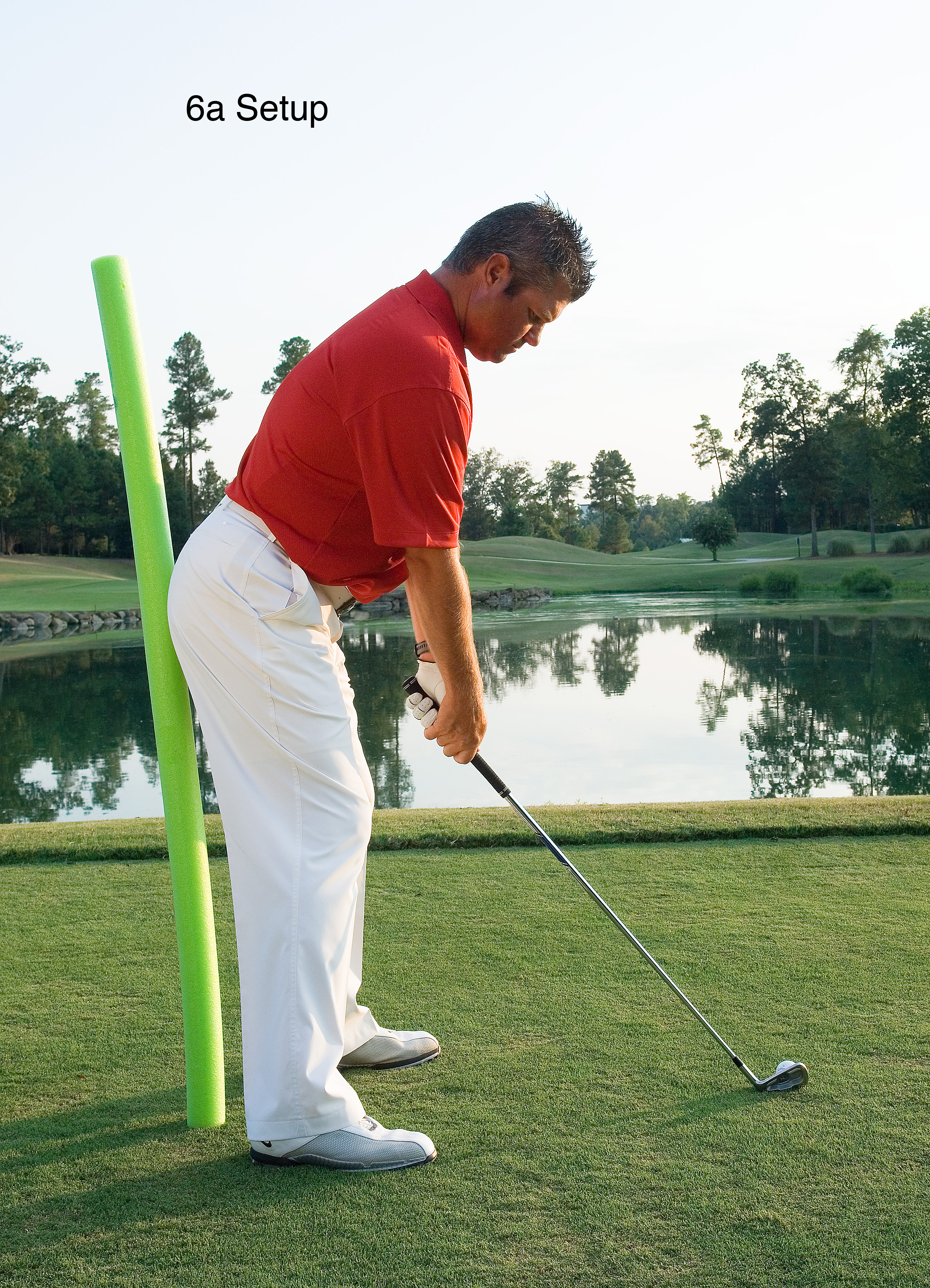
Here is a great drill that will help you if you tend to lose your spine angle in your downswing. This is when your hips thrust forward in your downswing and your upper body moves away from the ground. This is a preview of my upcoming article in Golf Illustrated (Jan/Feb issue) on posting and rotating. This is a key move in the downswing that all the players on tour make where they rotate their hips and push back as their upper body maintains it’s angle throughout. This is why some players appear to squat or go down (Tiger for example). The Noodle drill is easy to set up: Use a broken shaft and a pool noodle. Place against your rear end as you set up to the ball. Start with half swings until you can hit the ball solid without coming off the noodle. Then grow it up to a full motion and enjoy hitting the ball solid. I will definitely do a show on this in the future but I wanted to give you a taste of what I feel is a often overlooked part of the swing. Let me know how it goes if you try this drill
 The Golf Guru Show