GURU TV – The 2 Releases for a Pitch Shot
January 24, 2010
In order to be good around the greens, you must have 3 things: Continue reading “GURU TV – The 2 Releases for a Pitch Shot”
I am a P.G.A . Director of Instruction at Carmel Country Club in Charlotte, North Carolina. 2013 Carolinas PGA Teacher of the Year. I am an AimPoint Green Reading Certified Instructior, K-Vest certified, A certified Coutour Putter fitter, D-Plane certified. I am a christian, married with 2 children. I love to flyfish and am an avid runner
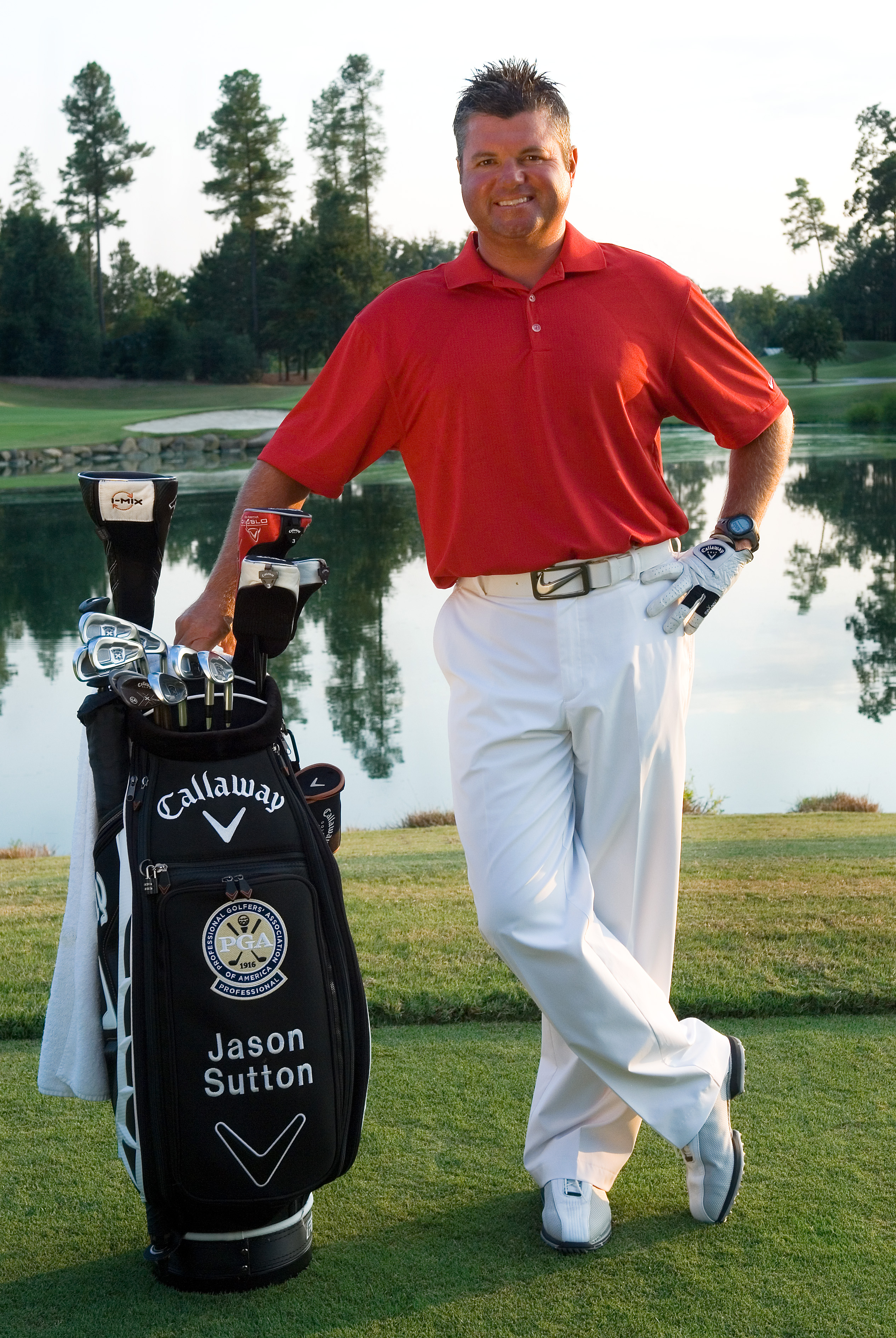
I am often asked,”Guru, what kind of clubs are you playing this year?” I thought that I would give everyone a look inside my golf bag. I have been a Callaway Staff Member for many years and my outstanding sales rep, Tim Garrett, keeps me in the latest technology. So here is a sneak peak of my equipment:
Driver: FT 9 10 degree with a V2 shaft
3wood: Diablo neutral 15 degree
Hybrids: 2(18 deg. & 21 deg. )…….If you don’t have at least one hybrid in your bag, you are giving the field 2 shots
Irons: 4 – PW :Callaway X forged with flighted 6.0 rifle shafts (best irons Callaway has put out )
Wedges: 54 deg bent to a 52 and 58 deg. X (unfinished)
Putter: Coutour mallet style custom putter (Fit by Todd Sones) 65 gram weight 331/4 length
Ball: Callaway Tour ix with guru on the side
Whatever equipment you decide to play, make sure you get fitted by an expert fitter. At the Dana Rader Golf School, we have the best in Mr. Stan Roach. Without Stan I would not be able to help my students as much as I do. You wouldn’t run a marathon in shoes that were too small, right.
See you on the lesson tee,
Guru
The weather was so nice today in Charlotte that I had to get out and hit some balls. You get to witness the first official swings of 2010 from the Guru. I hope you enjoy the video and it inspires you all to hit the range. I would appreciate some comments. Let me know if you love it or hate it. Who needs a lesson?
Guru
Ryan Palmer outdueled Aussie Veteran Robert Allenby down the stretch at the P.G.A. Tour’s first full field event. The Sony Open was a very entertaining and interesting tournament chalked full of top players and veterans hitting great shots and holing big putts. We had the likes of Steve Stricker, Davis Love, Retief Goosen and Carl Petterson all trying to track down maybe the hottest golfer on the planet (Allenby), playing with a bad ankle believe it or not, and Ryan Palmer who is not a household name and finished 150th on last years money list. So what can we learn from watching this weeks event, other than the fact that it does pay to keep the flag stick in while pitching (true). In my continued journey to make all of you educated viewers of golf, not just entertainment, but as a venue to dissect and learn something that will help you with your own game. One of the most frequent questions that I get asked from my students is,”During a round of Golf, how do I keep my swing together for the entire round?”. We have all had rounds that begin great and the wheels fall off or vice-versa, you start poorly and suddenly turn it around. So how do we hold it together and make strings of great swings under pressure. The answer to the question is Continue reading “Meaningful Rehearsals Are Only Second To Exagerrated Ones”
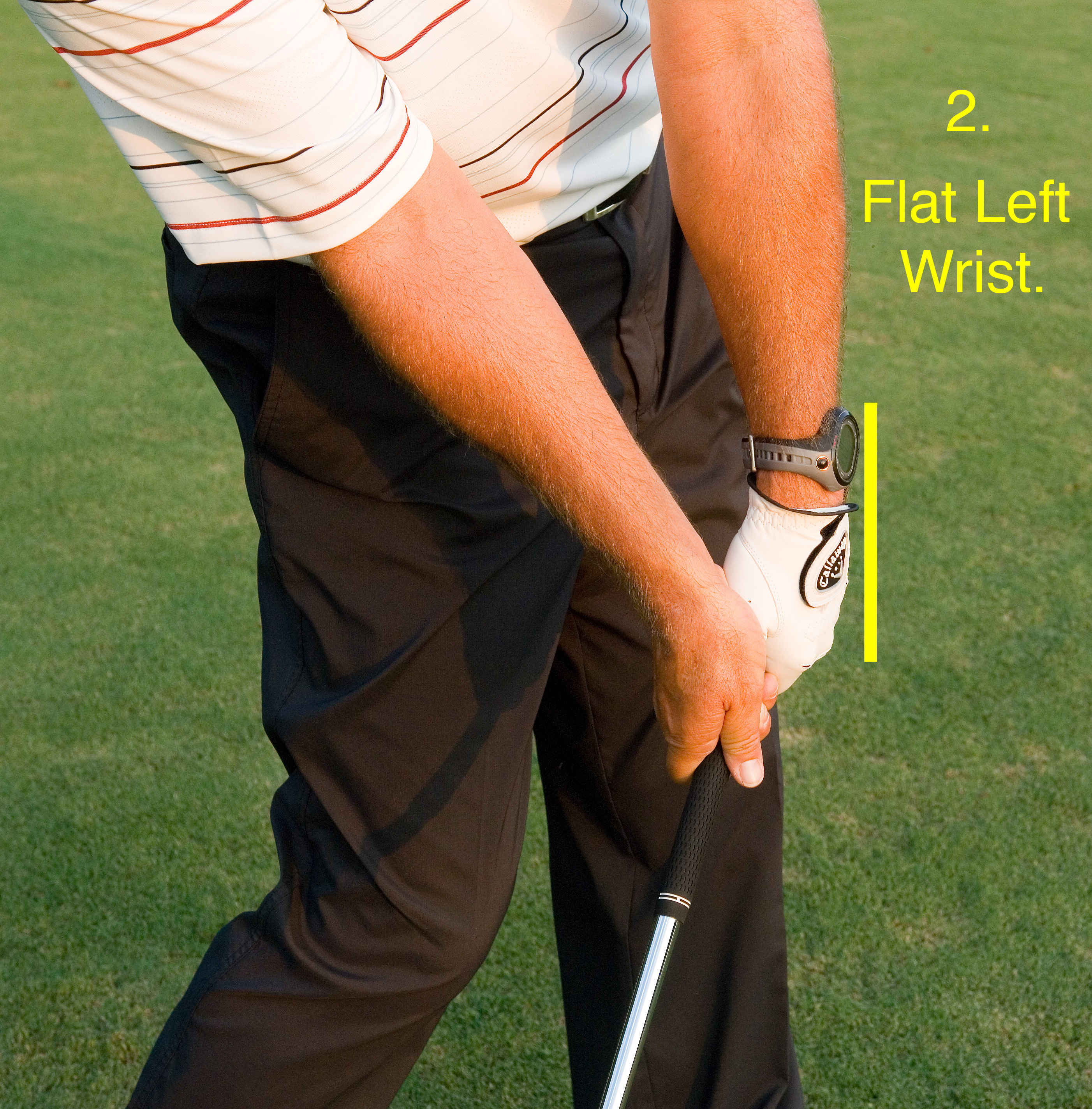
Do your hands look like this at impact or does your lead wrist bend or break down? The most important alignment in the golf swing is when the shaft of the club lines up with your lead arm. This should happen just past impact. Many of you that release the club early, this happens way before you strike the ball. Without a flat lead wrist and a bent right wrist at the moment of separation, you can’t possibly compress the ball and get the most out of your shots.
As I watch the first round of the Sony Open, I can’t help but think of the beach. It couldn’t be that it was a high of 30 degrees here in Charlotte in the last month, right. So I thought I would bring back an archve from one of my first vlogs on bunker shots. Bunker shots are one of the most feared shots in golf. Even though we may only hit a few of these type of shots during a round, if played poorly, they can be very costly to a golfers score. As in most shots in golf, there are different philosophies to use which means that there are myths and misconceptions. I want to cover a few of the myths that I didn’t talk about in my video.
1) The bunker swing is not a cut across move- the video is filmed entirely from a face on view (I didn’t know how to edit shots together at the time) so you can’t see the shape of the swing. Fact: The ball flies the direction that the swing goes, due to fact that you don’t actually make contact with the ball. The direction the swing goes, moves the sand in that direction. Make your normal, on plane swing in the bunker. Adjust your weight forward to move the divot forward if you need to . Which brings me to myth #2
2) The ball will not fly the direction that the club face points. If this was the case, you couldn’t open the face and still hit the ball at the flag.
3) You must open your stance to play great bunker shots. No,No,No,No! Did I mention No? I do advocate a slightly open stance (purely for body rotation purposes) but you can play great bunker shots from a square stance as well. If your full swing pattern is already outside to in, I would be very careful opening your stance too much. This will make you cut across the ball even more and cause you to lose power and distance on your shots (not to mention direction).
A Simple Approach To Bunker Shots:
For those of you who have been struggling in the bunker (to get out), here is a simple approach. Claude Harmon Sr. (Butch’s Daddy) taught this style
1. set up with a square club face and a square stance
2. place 60 percent of your weight on your forward foot
3. lean the handle backwards slightly where the shaft leans away from target
3a. This increases the bounce of the wedge at set-up
4. Take a full swing and make sure you follow through, facing the target
I hope this helps your bunker play and dispels some myths that you might have had. Check out the video or dig into the archives of Golf Illustrated (12 bunker beating tips), June 2008.
Thanks,
Guru
As we look at the first P.G.A. Tournament of the season, after we get past the fact that we would love to be in Hawaii, we take a closer look at what champions do and how golf is played at the highest level. As I continue my quest to make you a more educated viewer of golf tournaments in attempt to learn something to help your own game, let’s see what we can learn from the final group in the SBS Championship. We have two top players that have both won U.S. Opens and had an excellent 2009. So why did Geoff Ogilvy shoot 67 and Lucas Glover stumble to a 76 after leading the tournament after 3 rounds? Continue reading “SBS Championship- A Tale Of Two Routines”
As we move through the winter months, mirror work is a great way to keep your swing in check. Checking the club face is merely one thing to look at in the mirror. We can obviously look at your posture, your swing plane or whatever you are trying to change. Here are two things that I didn’t mention in the video that are worth doing.
1. Use a weighted club (like a momentus) and hold your positions for 2 counts as you go through your swing. This could almost be a workout if you do it long enough. It is a great way to create some muscle memory.
2. The second way to change the club face (that I forgot to mention) is how the hands set at the top
A cupped or bent lead wrist will open the face more and a bowed lead wrist will tend to shut the club face more. Neither of these are necessarily wrong, they just have to matchup to the grip and release (see matching components).
Good Luck with your indoor training and I look forward to your comments,
Guru
As we move into the first event on the P.G.A. Tour, I want to help you to become a more educated golf viewer. I want you to notice how many different ways there are to swing the club and play at a highest level. Top instructor Jim McLean always said, “If you take the top 5 players on the tour money list, you will see 5 different top of swing positions. He is right, try it sometime. You must have the different components together in the swing that match up in order to create a playable ball flight. For example: an outside to in swing path coupled with a closed club face doesn’t work! You get nothing but low pulls and hooks along with deep divots. Now I am not going to go into every single combination out there but I just want you to understand how two main components work together in various ways to hit straighter shots: Club face angle and swing plane. The swing can be deceiving on television mainly because you don’t always get good camera angles. If the camera is shooting from one side or the other, it skews the look of the swing plane and makes the club look like it is doing something different. So be careful. In the February Issue of Golf Illustrated (hit newsstands today), I wrote a column entitled the 1-2-3 backswing. I have included the video (from my archives) that illustrates the message: There are many ways to get it done. Get a reputable teacher/coach to help you figure out which one works for you. This way you don’t go through your golfing career trying to swing like someone else. Be yourself and find your best swing. Enjoy the video and Go get the magazine and let me know what you think. I look forward to your comments. Look for the next episode of Guru TV on The Importance of Mirror Work and Indoor Practice. Stay Tuned and thanks for checking out my blog
Guru
I have an article that comes out in the next couple of weeks in Golf Illustrated. The title of the article is “Post and Rotate.” The main focus of the article is the role of the lower body and the importance of clearing the hips and maintaining your spine angle. One of the most frequent errors that I see is called early extension. This occurs when the hips move towards the ball in your downswing and creates a change in spine angle through impact (see past episode of guru tv on fitness). I work on this move frequently with my students when they have too much hip and leg slide in their downswing which tends to crowd the arms into impact. We often call this getting trapped. Recently, I was working with a student (we will call him Allen) on this very move and I noticed that his rear leg was straightening in his backswing. I have seen this before in golfers and this error can cause a number of swing errors like reverse pivoting, or can cause you to top the ball or hit it thin. Often I will try to create a swing error with my own body to help me to feel what the student is feeling which allows me to explain why a particular problem is occurring. As I made a backswing and straightened my right leg, as my student did, I noticed that I had no way of pushing off my back side to move my hips through. Allen had no way of rotating his left hip backwards because he couldn’t push-off his right side. I hope you are in your living room or den recreating the top of swing with a straight right leg and you clearly understand what I mean. As soon as I got the student to maintain the flex in the right leg, he made a huge change in the amount of hip turn that we were able to create in his downswing. This improved his impact position dramatically. The shaft of the club leaned forward about 15 degrees more than when we started. I need to do a video on this subject but I wanted to go ahead and share this with you while it was fresh. Here are the two things that I did to help Allen to feel this change. One is a feel and the other a drill.
1. Remember when making a change that you need to feel as if you do the opposite. When you make your backswing, feel as if you flex or squat a little in order to keep your knee bent to the top of your swing.
2. Baseball Pitcher Drill – Take the club to the top of your swing. As you finish your backswing, lift your front leg off the ground as a baseball pitcher would and swing your leg across your back leg and balance your weight entirely on your back leg (this makes you keep your leg flexed). As you move forward, plant your left leg and then swing your arms down and through to your finish. This drill will also help you with your timing and transition. If you swing your arms down before you plant your left foot, your timing will suffer.
To reiterate. Keeping the right leg stable and flexed at the top of your backswing, gives you the power to push and drive your right knee and hip toward the target which in turn will clear the left hip as you will see in my article. So go out and get the upcoming edition of “Golf Illustrated Jan/Feb.”
I look forward to your comments as you work on your right knee at the top of your golf swing.
Guru
 The Golf Guru Show